Ask experienced Hadrian's Wall walkers which month they'd choose, and September is frequently the answer. The combination of quieter trails after school holidays, often-excellent weather, golden autumn light, and the wall at its most atmospheric makes September many people's favourite month. If you have flexibility in your timing and want quality over heat, September deserves serious consideration.
What makes September special is the transformation from busy summer to peaceful autumn. Within days of schools returning, the path empties dramatically. The crowds that made July and August challenging largely disappear, leaving you with a walking experience closer to the spring months but with more reliable weather and the added bonus of autumn colours beginning to appear.
This comprehensive guide explains why September consistently ranks among the finest months for walking Hadrian's Wall, covering weather conditions, the dramatic change in visitor numbers, what to pack, accommodation booking, and the unique visual and atmospheric rewards of this golden shoulder season. By the end, you'll understand exactly what makes September special and why so many experienced walkers time their visits for this month.
September Weather: Often the Best of the Year
September weather on Hadrian's Wall frequently delivers the best walking conditions of the entire year. The settled weather patterns that can establish in early autumn, combined with comfortable temperatures, create days that feel designed for walking. Of course, poor weather is possible in any month, but September's track record is genuinely impressive and justifies its reputation among experienced walkers.
Average daytime temperatures in September range from 15-17°C - noticeably cooler than July and August, which many walkers consider ideal. You can walk at a good pace without overheating, climbs don't exhaust you, and the comfortable temperatures allow you to enjoy the landscape rather than fighting to stay cool. These are temperatures that let you wear proper hiking clothes - long trousers, boots, a base layer - without overheating, yet don't require heavy layering either. Check the Met Office for forecasts.
Early September feels like late summer; by month's end, there's a distinct autumn edge to mornings. The transition is gradual but noticeable - early September mornings might start at 12°C and warm to 18°C, while late September mornings can feel properly cool at 8-10°C before warming moderately. This evolution through the month means early and late September offer slightly different experiences.
Rainfall in September varies but is often lower than you might expect. The month can deliver extended dry spells - sometimes running for a week or more - particularly in the first half when summer weather patterns persist. When rain comes, it's typically the frontal type that you can see approaching and shelter from, rather than the surprise thunderstorms of summer. Many September walkers experience largely dry weeks with perhaps just one or two wet days.
The quality of light is September's secret weapon. The lower sun angle creates golden light that photographers prize, shadows that give texture to the landscape, and an overall visual quality that flat summer light doesn't match. The wall seems to glow in September afternoon light, and the crags have a three-dimensional drama that high summer sun flattens. Photography in September is simply better than in any summer month.
Daylight runs approximately 12-14 hours through September - still generous for walking, though noticeably shorter than summer. You can't start as late or finish as late as in June, but there's ample time for comfortable daily distances without rushing. A 9am start and 5pm finish gives you 8 hours of walking time, plenty for 15-mile days with lunch and site visits included.
The Transformation in Visitor Numbers
The most dramatic change in September is the reduction in people on the path. When schools return in the first week of September, family visitors largely disappear. The effect is immediate and pronounced - walking the crags on the first Monday after schools return feels utterly different from the previous Saturday. It's not a gradual reduction; it's a sudden, dramatic emptying.
Where July and August had queues at popular viewpoints, September has empty vistas. Where summer accommodation was booked months ahead, September often has availability. Where summer walking sometimes felt like a social event, September restores solitude. For walkers who value peace and the feeling of having the landscape to themselves, this transformation is September's greatest gift.
You'll still encounter other walkers - this is a National Trail, and it's never completely empty. But the encounters feel different: a nod and brief conversation with a fellow enthusiast rather than navigating through crowds. You might walk for an hour without seeing another person, something almost impossible in August. When you do meet others, they're often experienced walkers who've deliberately chosen September for the same reasons you have.
The famous sites - Housesteads, Sycamore Gap, the central crags viewpoints - are accessible in ways summer doesn't allow. You can photograph without waiting for others to clear the frame, explore Vindolanda and Chesters without feeling rushed, and experience places as they were meant to be experienced rather than as crowded attractions. The sense of connection with the ancient past feels stronger when you're not sharing it with dozens of others.
Day visitor numbers drop too. The car parks that were full to overflowing in August have spaces. The Roman sites that felt like tourist attractions return to being historic monuments that reward contemplation. Even at weekends, September visitor numbers are a fraction of summer peaks.
September's Visual Rewards
The September landscape offers visual rewards distinct from any other season. Summer's lush green begins transitioning toward autumn, creating a palette that includes golden grasses, the first hints of red and orange in deciduous trees, and the purple-brown of faded heather on the moorland. It's neither the fresh green of spring nor the full blaze of October autumn, but something in between that many find most appealing.
The golden light mentioned earlier transforms this palette into something photographers travel specifically to capture. Morning and evening light has a warmth and depth that summer's harsh midday glare doesn't provide. The wall's stones, the crags' textures, the rolling hills beyond all benefit from this softer, more characterful illumination. Photographs taken in September have a quality that distinguishes them from summer shots immediately.
Early September often still shows heather colour, continuing August's purple display into the first week or two before fading to brown. The overlap of heather bloom with quieter conditions creates a brief window that many walkers consider perfect - the visual spectacle of heather without the August crowds. Timing for this requires some luck, but early September walks often catch it.
Mist and atmospheric conditions become more common in September, adding another dimension to the visual experience. Walking through dawn mist that burns off to reveal the wall emerging from obscurity creates memories impossible in clear summer weather. The atmosphere of the Roman frontier feels more tangible in these moody conditions - you can imagine lookouts straining to see through similar mists 2,000 years ago.
Late September brings the beginning of proper autumn colour. The trees along the path - particularly in the wooded sections and around villages - begin their transition to gold and amber. The effect builds through the month, so late September walks see more colour than early ones. The first touches of autumn mixed with the golden light create scenes that reward photographers and casual observers alike.
What September Walking Feels Like
Picture yourself setting out on a September morning. The air has a freshness that July lacked - cool enough to need your fleece for the first mile, but not cold. Dew sparkles on the grass, and mist hangs in the valleys below, though the crags above are clear. You can see your breath, just, but you know you'll be shedding layers within the hour.
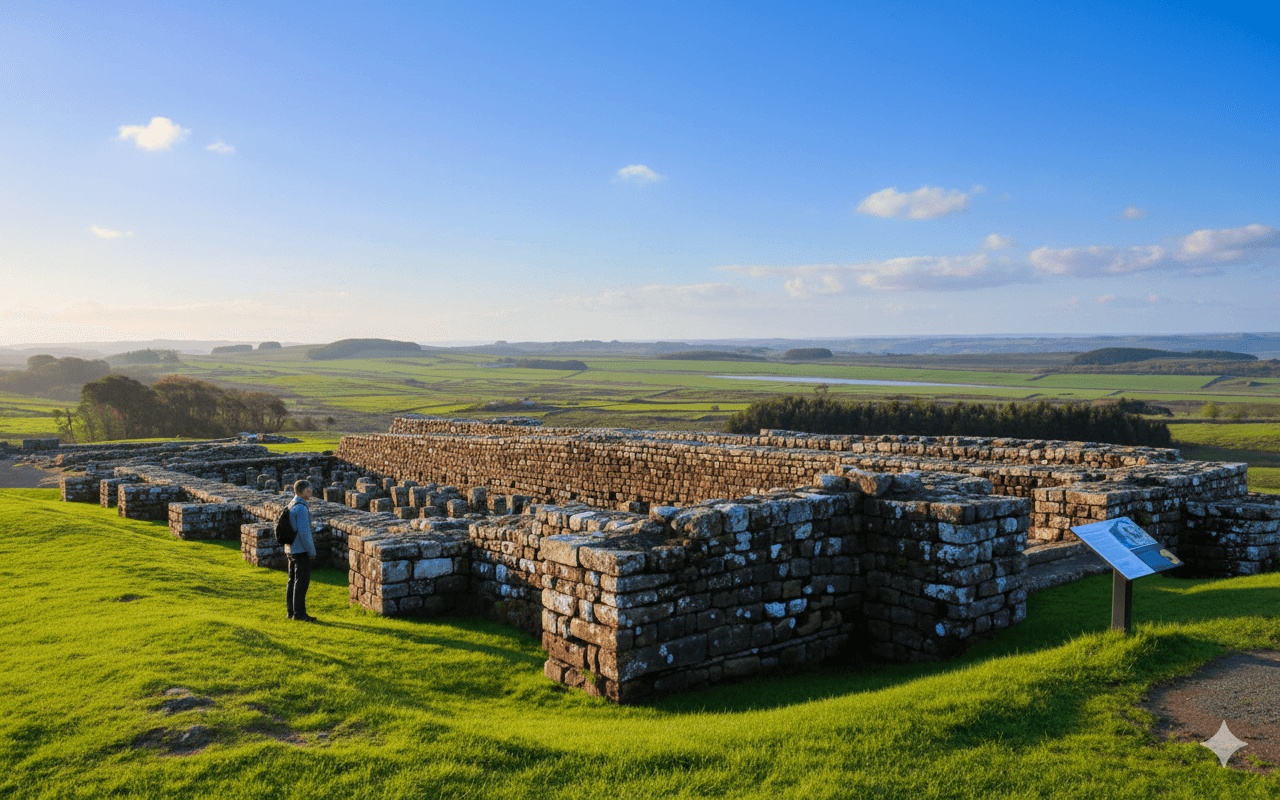
The path ahead is empty. You've been walking for an hour and haven't seen another person. The wall stretches ahead, grey stones against a landscape that's beginning its autumn transition - not yet the full blaze of October, but hints of gold in the grasses, brown tones in the bracken, the purple-brown of spent heather. Walk the most scenic section to see it at its best. The morning light catches the wall at an angle that seems to make it glow.
By mid-morning, your fleece is in your pack and you're walking in a base layer, warm from exertion but comfortable in the mild air. The mist has burned off and the day has opened up - blue sky, scattered clouds, excellent visibility. You can see for miles from the crags. The only sounds are your footsteps, the wind, and the distinctive call of a buzzard circling overhead.
You stop at a viewpoint that would have been crowded with photographers two weeks ago. Now you have it to yourself. Visit Housesteads, Vindolanda, or Chesters with similar peace. You take your time with the view, eating your snack, consulting the map, simply sitting and absorbing the landscape. There's no pressure, no queue forming behind you. This is what walking Hadrian's Wall is meant to feel like.
The afternoon walk has that golden quality that September specialises in. The lower sun creates long shadows and warm light. The crags look three-dimensional in a way that midday summer sun flattens. Every photograph seems to turn out well because the light is doing the work. You arrive at your accommodation satisfied with a day that delivered everything September promises.
What to Pack for September
September packing reflects the transition from summer toward autumn. Conditions are generally pleasant but can swing between warm sunny days and cool, blustery ones. Versatility is key - you need to handle more variation than summer's consistent warmth or autumn's consistent cool.
Layering becomes important again after summer's minimal approach. A moisture-wicking base layer, a fleece or midlayer, and your waterproof gives you the flexibility to adapt through the day. September mornings can be surprisingly cool; afternoons in sunshine can feel warm enough for just a base layer. Easy adjustment between layers - meaning having them accessible rather than buried in your pack - keeps you comfortable.
Rain protection should be proper and reliable rather than the minimal summer approach. A good waterproof jacket and waterproof trousers are worth carrying. September rain, when it comes, can be sustained and cool enough that getting wet becomes genuinely uncomfortable. The weight penalty is small; the security is valuable. Proper rain gear turns a wet day from miserable to merely atmospheric.
A warm hat and light gloves are worth including, particularly for late September. Morning starts can be cool enough that these feel welcome, and if weather turns unexpectedly cold, you'll be grateful to have them. They weigh almost nothing and make a meaningful difference to comfort. On the exposed crags with wind chill, a hat can transform how a cold morning feels.
Footwear should return to proper waterproof boots rather than the trail shoes that work well in dry summer conditions. September paths may be wetter from morning dew and occasional rain, and the ankle support of boots becomes more valuable as you tire toward the end of longer walking days. Good boots are the foundation of comfortable September walking.
Sun protection shouldn't be forgotten despite the cooler temperatures. September sun at altitude can still burn, particularly if you're out all day. Sunscreen, sunglasses, and a hat remain relevant, even if you use them less than in July.
Accommodation in September
September accommodation booking is dramatically easier than summer. The school holiday pressure lifts, many would-be visitors wait until the following year, and availability improves throughout the path. This doesn't mean you can walk up without booking - planning ahead remains sensible - but the stress of peak season booking disappears.
Book 4-6 weeks ahead for September and you'll typically secure your preferred accommodation. Even shorter lead times often work, though you risk finding your first-choice places full if they're popular with the regular September crowd. The central section around Once Brewed and Twice Brewed has limited options and still books earlier than the eastern and western sections where more accommodation exists.
Prices begin to return toward shoulder season levels through September. Early September may still charge summer rates, reflecting the good conditions and remaining holiday overlap, but by late September most establishments have adjusted downward. The value proposition improves significantly - you're getting arguably better conditions than July while paying noticeably less.
All facilities remain fully operational in September. The AD122 bus runs its summer schedule at least through mid-September - see our transport guide for details. Pubs and cafes maintain normal hours, and Roman sites including English Heritage properties and Vindolanda are fully open with standard summer hours. You won't encounter any of the reduced services that affect early spring or late autumn. This full service combined with reduced crowds is one of September's key advantages.
Drying facilities become relevant again as September weather becomes more variable. Most walker-friendly B&Bs have provision for drying gear, but confirming this when booking is worthwhile. After a wet September day, having somewhere proper to dry your boots and clothes overnight matters.
Why Experienced Walkers Choose September
The consistent recommendation of September by experienced walkers isn't accidental. Those who've walked in multiple seasons recognise what September offers - a combination of factors that's genuinely hard to match:
The combination of quality conditions across all factors is hard to match. Weather often excellent, light beautiful, crowds minimal, availability easy, prices reasonable, facilities full - September delivers across the board. No other month matches this balance. There's usually something to compromise on in other months; September minimises the compromises.
The atmosphere of the wall feels right in September. There's something about the lower light, the turning season, the solitude that makes the Roman frontier feel more real than in busy summer. You can imagine the soldiers who walked here 2,000 years ago in a way that crowded July doesn't allow. The sense of being somewhere historically significant is stronger when you're not in a tourist crowd.
The walking itself is at its best. Temperatures perfect for sustained effort - warm enough to be comfortable, cool enough to walk hard. Check our difficulty assessment and duration guide. Paths in good condition from the dry summer. Enough daylight for comfortable distances without summer's excess that makes days feel endless. You can focus on walking rather than managing heat or racing darkness.
If you have flexibility in your timing and want the finest overall experience, September should be your starting point. There are reasons to choose other months - you might want summer heat, or the deep solitude of March, or the spring wildlife of April - but for pure walking quality, September is hard to beat.
Who Should Walk in September?
September suits a broad range of walkers, which is part of its appeal:
Experienced walkers who've tried other months often settle on September as their preferred time. The combination of excellent conditions and quiet trails rewards those who appreciate walking for its own sake rather than just as a way to see sights.
Photographers find September ideal. The golden light, atmospheric conditions, and empty viewpoints create opportunities that summer crowds and harsh light don't allow. If photography is part of your motivation, September is probably your best choice.
Walkers who prefer solitude should strongly consider September. The transformation from August's crowds to September's peace is dramatic, and if being alone with the landscape matters to you, September delivers.
First-time long-distance walkers find September very forgiving. The conditions are mild, the trails are in good shape, and the reduced pressure of quieter paths creates a more relaxed experience for those new to multi-day walking. Our fitness preparation guide will help you get ready.
Those seeking value appreciate that September offers conditions rivalling summer's best at shoulder-season prices. See our cost guide for budgeting. You're not compromising on quality to save money; you're getting better conditions and paying less.
September is less ideal for those wanting guaranteed warm weather for outdoor meals and evening relaxation outside pubs, or for families constrained to school holidays. Solo walkers particularly appreciate September's tranquil conditions. But for most walkers who have flexibility, September delivers. Explore more at Hadrian's Wall Country and Visit Northumberland.
Plan Your September Walk
September on Hadrian's Wall delivers what many consider the finest walking of the year. The combination of excellent conditions, beautiful light, quiet trails, and easier booking makes it the connoisseur's choice. Our baggage transfer service lets you walk even lighter. If you can walk in September, you probably should.
Our walking holiday packages are ideal for September. We handle the straightforward but still necessary booking, arrange baggage transfer for your comfortable walking, and provide all the information you need to make the most of this golden month. Our packages let you focus on walking while we handle the logistics.
Ready to experience Hadrian's Wall at its finest? Get in touch to plan your September walk. You'll understand why so many walkers return to this month year after year - and why those who discover September rarely go back to summer.