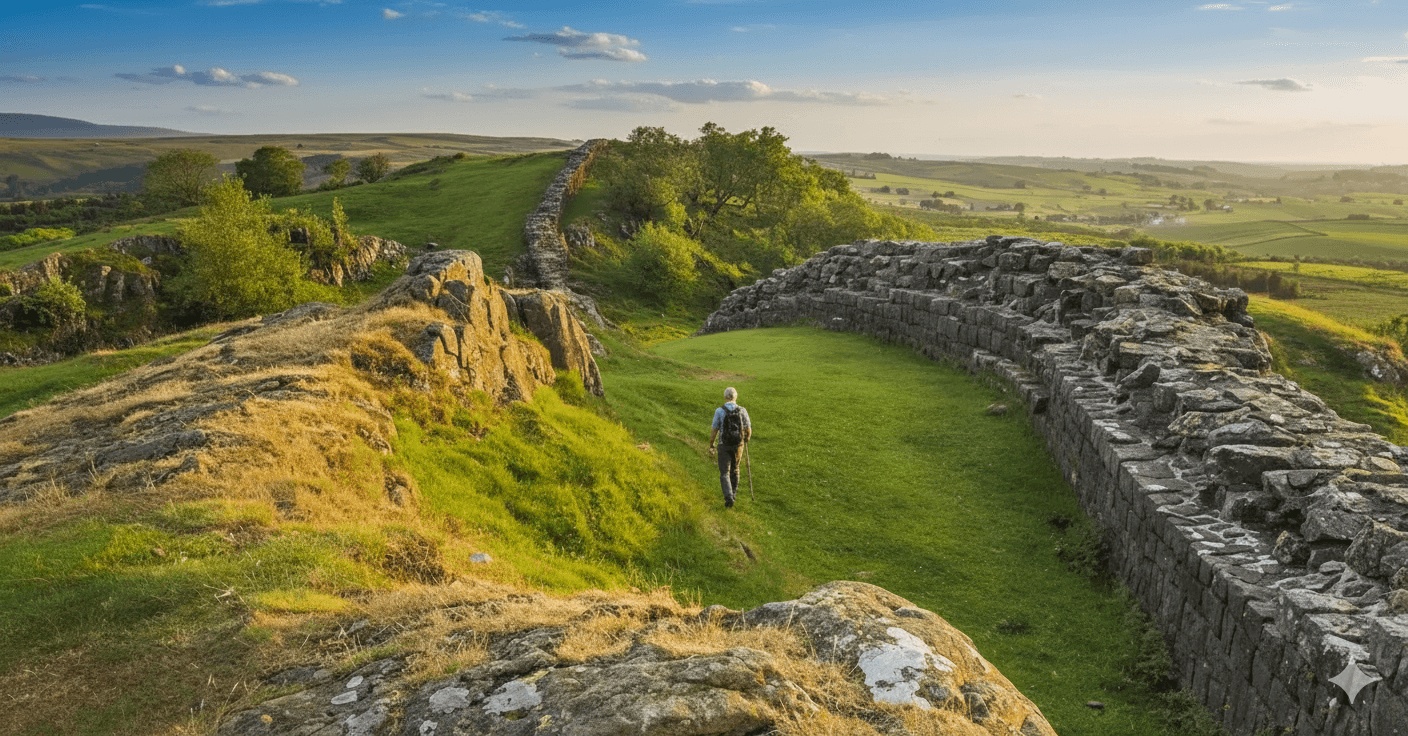
The walk from Steel Rigg to Housesteads represents the absolute pinnacle of the Hadrian's Wall experienceÔÇöa four-mile stretch that condenses everything magical about this ancient frontier into a single unforgettable journey. Here the Wall strides along the crest of the Whin Sill, that volcanic ridge which the Romans exploited to create the most dramatic section of their northern barrier. Every photographer's iconic image of Hadrian's Wall comes from this section, and for good reason: the combination of ancient stones, dramatic landscape, and far-reaching views creates something genuinely special.
Whether you're walking the full Hadrian's Wall Path or simply want to experience the best the Wall has to offer in a single day, this section delivers. The route includes Sycamore Gap (though the famous tree has sadly fallen), magnificent milecastle remains, stunning viewpoints, and culminates at Housesteads, the most complete Roman fort visible on the Wall. Plan this walk carefully, savour every moment, and bring your cameraÔÇöyou'll use it constantly.
Understanding the Terrain
The Whin Sill is a geological feature formed around 295 million years ago when molten rock intruded between existing sedimentary layers. This igneous dolerite proved more resistant to erosion than surrounding rocks, leaving the dramatic escarpment that defines this section of Hadrian's Wall. The Romans recognised immediately that this natural barrier, with its north-facing cliffs and commanding views, presented an ideal foundation for their frontier.
The terrain here is characterised by a series of crags separated by gapsÔÇöhence the names you'll encounter: Peel Gap, Sycamore Gap, Hotbank Crags. Walking the section means repeatedly climbing to a crag crest, descending into a gap, then climbing the next rise. This undulating character is what makes the walk both challenging and visually spectacular. Each summit provides new viewpoints; each descent offers respite before the next climb.
The path surface varies. Some sections follow the original Roman Military Way, a service road that ran behind the Wall. Others traverse grass and rock alongside the Wall itself. After rain, expect muddy sections in the lower-lying gaps. Good waterproof boots with ankle support are essential, not optional, for this terrain.
Starting from Steel Rigg
Steel Rigg car park provides the usual starting point for this walk. Limited parking spaces fill quickly on good-weather weekends and throughout the summer, so early arrival is strongly advised. The car park has toilet facilities (sometimes portable units) and an honesty box for parking fees. No caf├® or shop exists here, so arrive prepared with food and water.
From the car park, the path climbs immediately to the crest of the Whin Sill, rewarding you within minutes with views that set the tone for everything ahead. Looking west, the Wall marches towards Caw Gap and the Cawfields area. Looking eastÔÇöyour direction of travelÔÇöit stretches towards Housesteads across a landscape of rocky outcrops and green valleys.
The nearby Sill: National Landscape Discovery Centre at Once Brewed offers an alternative starting point with better facilities, adding only a modest distance to the walk. Their caf├®, exhibition, and toilets make for a more comfortable launch point, and the walk up to Steel Rigg serves as a warm-up before the main event.
The Walk: Key Features
Sycamore Gap and Milecastle 39: Perhaps the most photographed location on the entire Wall, Sycamore Gap takes its name from the lone sycamore tree that stood dramatically framed between two crags. Tragically, this beloved tree was illegally felled in September 2023, an act of vandalism that shocked the nation. The gap itself remains dramatic, and Milecastle 39 (Castle Nick Milecastle) perches on the cliff edge in spectacular fashion. The views here justify any effort required to reach them.
Highshield Crags: East of Sycamore Gap, the path climbs over some of the most dramatic crags on the entire Wall. The Wall itself is well preserved here, with facing stones clearly visible and the scale of the original structure easily imagined. The north-facing cliffs drop away dramatically, while to the south gentler slopes fall towards the Vallum earthwork visible in the distance.
Hotbank Crags and Crag Lough: The path passes above Crag Lough, a beautiful lake that fills a hollow beneath the crags. This is excellent bird-watching territory if you're interested in wildlife. The crags here offer superb photography opportunities, particularly in morning or evening light when shadows emphasise the terrain's drama.
Cuddy's Crags: Named after St Cuthbert (Cuddy being a local diminutive), these crags mark the approach to Housesteads. The Wall here is exceptionally well preserved, and you can walk directly alongside stones laid nearly two thousand years ago. The sense of walking in Roman footstepsÔÇöliterally following the same route that soldiers would have patrolledÔÇöis palpable.
Arriving at Housesteads
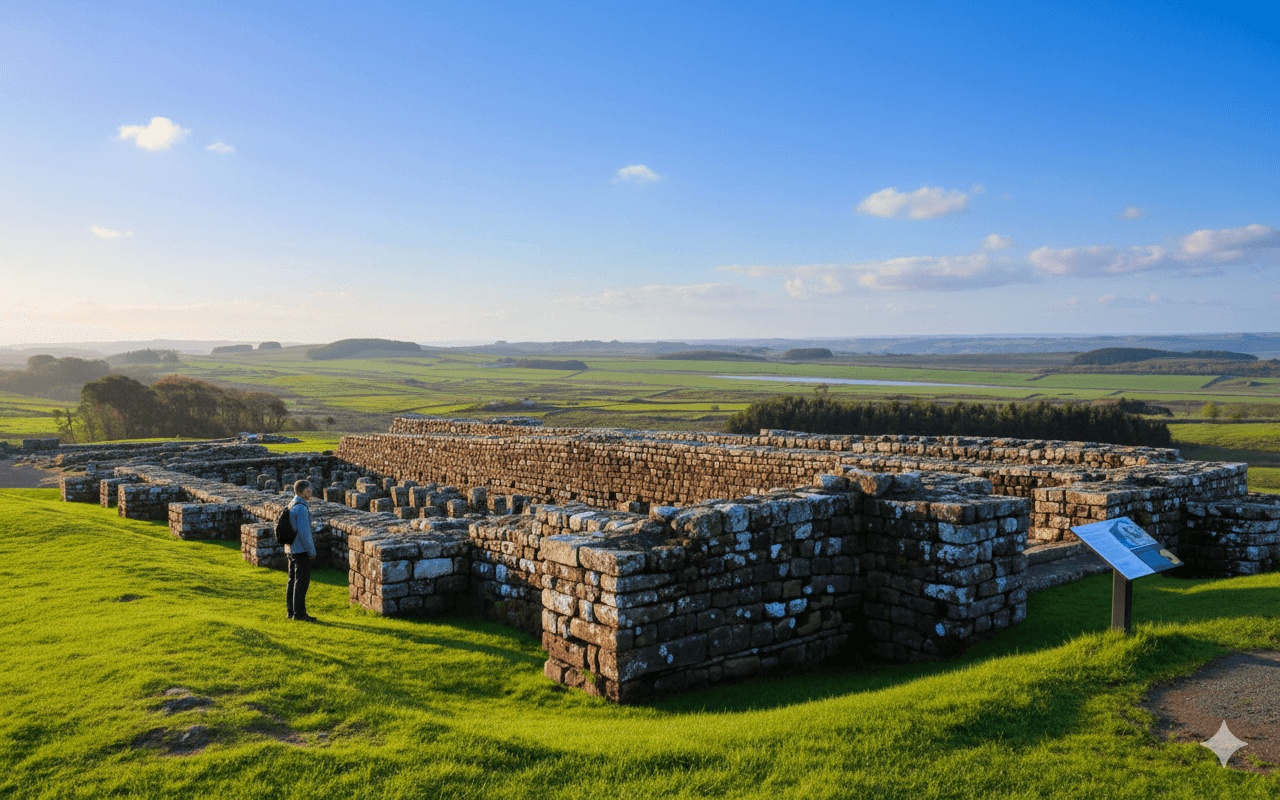
The walk culminates at Housesteads (Vercovicium), the most complete Roman auxiliary fort visible anywhere on Hadrian's Wall. After miles of walking along the Wall itself, arriving at this substantial installation provides both physical rest and historical reward. The fort covers five acres and housed around 800 soldiers at its peak.
Highlights at Housesteads include the famous communal latrinesÔÇöcomplete with running water channels that made this the most sophisticated sanitation system of its ageÔÇöand the commanding views from the north gate across what was once hostile territory. The on-site museum explains the fort's history and displays finds from excavations.
The Housesteads car park lies below the fort, connected by a steep path. A National Trust caf├® offers refreshments (though opening hours vary seasonally), and toilet facilities are available. If you've walked from Steel Rigg, you'll have earned whatever sustenance is on offer.
Practical Considerations
Distance and timing: The Steel Rigg to Housesteads section covers approximately 4 miles. Allow 2-3 hours for the walk itself, longer if you want to explore milecastles in detail or linger at viewpoints. Add at least an hour for Housesteads if you plan to visit the fort and museum.
Difficulty: This is the most challenging terrain on Hadrian's Wall Path. The constant climbing and descending, combined with sometimes rough surfaces, requires reasonable fitness and appropriate footwear. The hardest sections of the Wall are here. If you struggle with steep climbs or uneven ground, consider one of our longer itineraries that break this section into more manageable portions.
Weather: The crags are fully exposed to weather from all directions. Wind can be fierce even on days that seem calm at lower elevations. Rain, when it comes, has nowhere to hide from. Carry waterproofs regardless of the forecast, and in cooler months bring layers including hat and gloves. On hot days, sun protection and adequate water are essentialÔÇöthere are no refreshment points between Steel Rigg and Housesteads.
Transport: If walking a linear route, the AD122 bus connects Steel Rigg and Housesteads during the operating season (typically Easter to October). Buses run in both directions, allowing flexibility in planning. Check current timetables as services can change.
As Part of Your Walking Holiday
On our 6-day and 7-day itineraries, the Steel Rigg to Housesteads section typically forms part of a longer day's walkingÔÇöeither the approach from Chollerford or the continuation towards Gilsland. The terrain is challenging but rewards with the best the Wall has to offer.
For those on more relaxed 8-day or 9-day itineraries, this section can be savoured at a gentler pace. Shorter daily distances allow time to explore every milecastle, photograph every viewpoint, and arrive at Housesteads with energy remaining to properly explore the fort.
Whatever your itinerary, this section represents the absolute heart of the Hadrian's Wall experience. It's why people come from around the world to walk this trail. The combination of history, landscape, and physical challenge creates something uniqueÔÇöa journey that lingers in memory long after blistered feet have healed.
Ready to experience the best of Hadrian's Wall? Explore our range of itineraries or contact us to discuss how to make this spectacular section the highlight of your walking holiday.