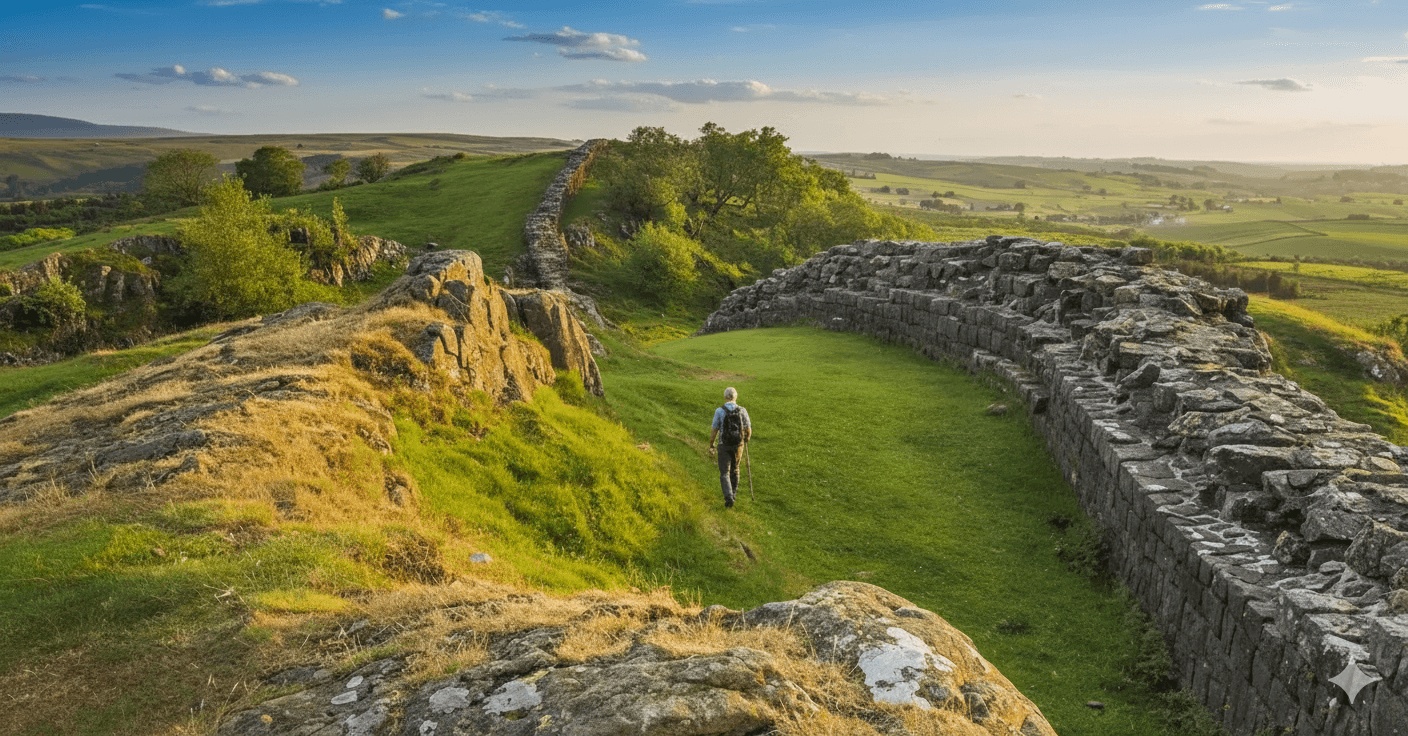
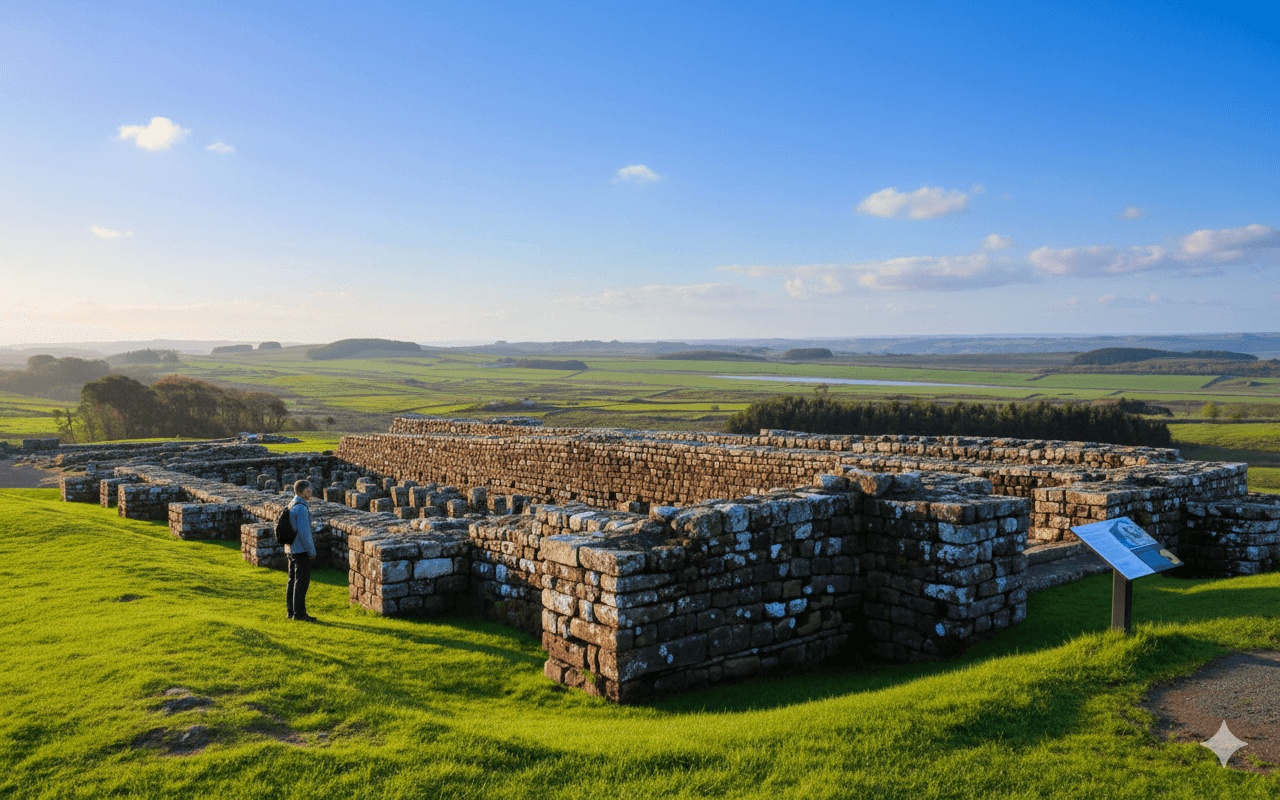
The eastern section of Hadrian's Wall Path - from Wallsend to Chollerford - is where every through-walker begins their journey. This 30-mile stretch takes you from the industrial banks of the Tyne through metropolitan Newcastle, out through suburbs, and finally into the rolling farmland of Northumberland. It's a journey of transition, from urban to rural, from 21st century to ancient frontier.
Many walkers are surprised by the eastern section. The first day is predominantly urban, and the wall remains are sparse until you pass Heddon-on-the-Wall. But this section has its own rewards: the complete Roman fort at Segedunum, Newcastle's famous bridges, and the gradual unfolding of the countryside that culminates at the banks of the North Tyne.
Eastern Section Overview
The eastern section divides naturally into two parts:
- Day 1: Wallsend (Segedunum) to Heddon-on-the-Wall (15 miles) - Predominantly urban
- Day 2: Heddon to Chollerford (15 miles) - Transition to countryside
Together, these form the eastern third of the full walk. The terrain is the easiest on the entire path - flat or gently rolling throughout - but the distances are substantial.
Starting Point: Segedunum Roman Fort
Segedunum ("strong fort") is where Hadrian's Wall once met the River Tyne. Today it's a fully excavated fort with reconstructed bathhouse, viewing tower, and excellent museum. This is the official starting point for eastbound walkers.
Key features at Segedunum:
- Viewing tower: Bird's-eye view of the entire fort layout
- Reconstructed bathhouse: Full-size recreation of Roman baths
- Museum: Excellent displays on Roman military life
- Original wall section: Visible at the site
Allow 45 minutes to an hour before setting off. Understanding the fort layout here helps you interpret what you'll see at other forts along the wall. The museum provides context for the soldiers' daily lives - knowledge that enriches every mile of your walk.
Day 1: Segedunum to Heddon-on-the-Wall
The first day is unlike any other on Hadrian's Wall Path. You'll walk through:
- Industrial Wallsend: Former shipbuilding area, now regenerating
- Newcastle Quayside: Famous bridges, historic riverfront
- Newcastle city centre: Beneath the seven bridges
- Western suburbs: Following the wall line through residential areas
- Denton: First significant wall remains (Denton Hall Turret)
- Heddon-on-the-Wall: Village with wall section, first night's rest
Despite being urban, Day 1 has hidden treasures. Denton Hall Turret is remarkably well-preserved - standing to roof height - and offers your first encounter with the physical wall. The turret is a short detour from the main path but shouldn't be missed.
The Quayside section passes beneath Newcastle's famous bridges, including the Tyne Bridge. Near here stood Pons Aelius, the Roman bridge that carried Hadrian's Wall across the river. Nothing visible remains, but you're walking where legionaries walked.
Day 2: Heddon to Chollerford
The second day transforms from suburban fringe to genuine countryside. You'll experience:
- Final suburbs: Leaving Newcastle behind
- Robin Hood Inn: Essential refreshment stop at East Wallhouses
- Military Road: The B6318, built along the wall line in the 1750s
- Planetrees: Excellent wall section with broad foundations visible
- North Tyne Valley: Descent to the river and Chollerford
The Robin Hood Inn is crucial - there's nowhere else to buy food or drink for miles. Plan your timing to arrive ready for lunch. The pub has served travellers for centuries and is a genuine highlight of Day 2.
By afternoon, you're in real countryside. The path follows field edges and lanes, with the wall's ditch (Vallum) occasionally visible. Chollerford, at the North Tyne crossing, marks the eastern section's end and the gateway to the dramatic central section.
What You'll See on the Eastern Section
Roman Sites
- Segedunum: Complete excavated fort, museum, reconstructed bathhouse
- Pons Aelius site: Location of Roman bridge (nothing visible)
- Benwell Temple: Small shrine to local god Antenociticus
- Denton Hall Turret: Best-preserved turret on the wall
- Heddon wall section: Substantial broad wall beside village church
- Planetrees: Excellent wall foundations
- Chesters approach: Wall sections approaching the fort (seen on Day 3)
Modern Landmarks
- Newcastle Quayside: Historic riverfront with restaurants and bars
- Tyne bridges: Seven famous bridges including the iconic Tyne Bridge
- Baltic Centre: Contemporary art gallery in converted mill
- Sage Gateshead: Modern concert venue across the river
Terrain and Difficulty
The eastern section is the easiest on the entire path:
- Surface: Paved paths, cycle ways, field paths, some road
- Elevation: Minimal - the flattest section of the wall
- Navigation: Requires attention in urban areas
- Facilities: Abundant on Day 1, limited on Day 2
The challenge isn't terrain but distance - 15 miles on each of two days. Urban walking can be surprisingly tiring, and the novelty of walking through a city wears thin by afternoon. Proper footwear and comfortable pacing matter even on flat surfaces.
Accommodation on the Eastern Section
Options include:
- Newcastle city centre (night before): Full range of hotels, easy Metro access to Wallsend
- Heddon-on-the-Wall (end of Day 1): The Three Tuns pub, various B&Bs
- Chollerford (end of Day 2): The George Hotel, local B&Bs
Many walkers stay in Newcastle the night before starting, enjoy the city's restaurants, and take the Metro to Wallsend in the morning. This allows an early start at Segedunum with time to explore the museum.
Navigation Tips
The eastern section requires more navigational attention than rural sections:
- Urban waymarking: Can be obscured or vandalised - carry backup navigation
- Hadrian's Way signs: The shared-use path has its own signage
- Denton Turret detour: Watch for the signed turning
- Field crossings: Stiles and gates can be muddy after rain
Download the GPX route to a smartphone app as backup. The official National Trail website provides downloadable route guides.
Weather Considerations
Urban walking has some advantages in poor weather:
- Shelter available: You're never far from cafes and shops
- Less exposed: Buildings provide wind protection
- Easy escape: Public transport available if conditions deteriorate
That said, waterproofs are still essential. Newcastle weather is famously changeable, and afternoon rain is common. The Day 2 countryside section is more exposed.
Why Walk the Eastern Section?
Some walkers question whether the urban section is worth walking. Here's why it is:
- Completeness: Walking from Segedunum to Bowness is the full trail experience
- Historical connection: Roman soldiers walked this exact route
- Segedunum: One of the best-preserved forts on the wall
- Transition story: Experiencing how the wall adapts from city to crags
- Achievement: Starting from the official beginning matters
The eastern section isn't the most scenic, but it's part of the story. The wall didn't start at the pretty bits - it ran 84 miles from coast to coast, and walking its full length connects you to that complete frontier.
Combining with the Central Section
After completing the eastern section at Chollerford, Day 3 takes you into the spectacular central section. Chesters Roman Fort is immediately at hand, and the terrain transforms as you climb towards the famous crags.
For walkers doing a partial route, a popular option is to walk the eastern section (2 days) plus the central section (2-3 days), skipping the flatter western section. This gives you the complete contrast of urban, rural, and dramatic walking in 4-5 days.
Plan Your Eastern Section Walk
Whether you're walking the full 84 miles or focusing on specific sections, proper planning makes all the difference. Our walking holiday itineraries include pre-booked accommodation, baggage transfer, and route information for the entire trail.
The eastern section may be urban, but it's where your Hadrian's Wall adventure begins. Get in touch to start planning your journey from Wallsend to wherever your feet take you.