May is when Hadrian's Wall Path truly comes into its own. Ask experienced walkers which month they'd choose, and May consistently ranks at or near the top. The combination of long days, warm but not hot temperatures, a landscape lush with spring colour, and manageable visitor numbers creates conditions that are as close to ideal as British walking gets. If you have flexibility in your timing, May deserves serious consideration.
The weather in May has usually settled into a more reliable pattern after April's variability. The days are genuinely long - 15-16 hours of daylight by month's end - giving you ample time for walking, photography, and exploration without feeling rushed. The landscape is at its freshest, with every shade of green represented and wildflowers at their peak along the trail margins. And crucially, the summer crowds haven't yet arrived. You'll share the path with other walkers, but nothing like the busy conditions of July and August.
This guide covers everything you need to know about walking Hadrian's Wall in May: what weather to expect, what to pack, how the trail conditions compare to other months, and why so many walkers consider May the finest time to experience this ancient frontier.
May Weather: As Good As It Gets
May weather on Hadrian's Wall represents a genuine step up from the variable spring conditions of March and April. The worst of the unpredictable spring weather has usually passed, summer heat hasn't yet arrived, and conditions for walking are often excellent. Of course, this is Britain, and no month offers guaranteed sunshine, but May's statistics are encouraging.
Average daytime temperatures in May range from 14-16°C - comfortable for walking, warm enough to be pleasant, cool enough that you won't overheat on the climbs. These are temperatures that let you walk at a good pace without the exhaustion that hot July days can bring. Early mornings might still feel cool, especially on exposed sections of the crags, but by mid-morning you're typically walking in shirtsleeves.
Rainfall in May is typically lower than April, with longer dry spells between any wet weather. When rain does occur, it's often the brief shower type rather than prolonged frontal rain. You might walk for days without touching your waterproofs, something that would be unusual in earlier months. That said, a wet week is always possible, so preparation remains important even if you hope not to need it.
The defining feature of May is the daylight. At the start of May, you have roughly 15 hours between sunrise and sunset. By month's end, that's stretched to over 16 hours, with useful light extending further in the morning and evening. This abundance of daylight transforms your walking day. You can start at a civilised hour, take extended breaks for lunch and sightseeing, and still finish with hours of evening light remaining. There's no rushing, no anxiety about fading light - just comfortable walking at whatever pace suits you.
The late May bank holiday often brings a spell of settled weather, though it's not guaranteed. If you can time your walk to coincide with a settled period, May can deliver day after day of perfect walking conditions. Checking extended forecasts on the Met Office website and maintaining some flexibility in your start date maximises your chances of hitting the best weather.
The May Walking Experience
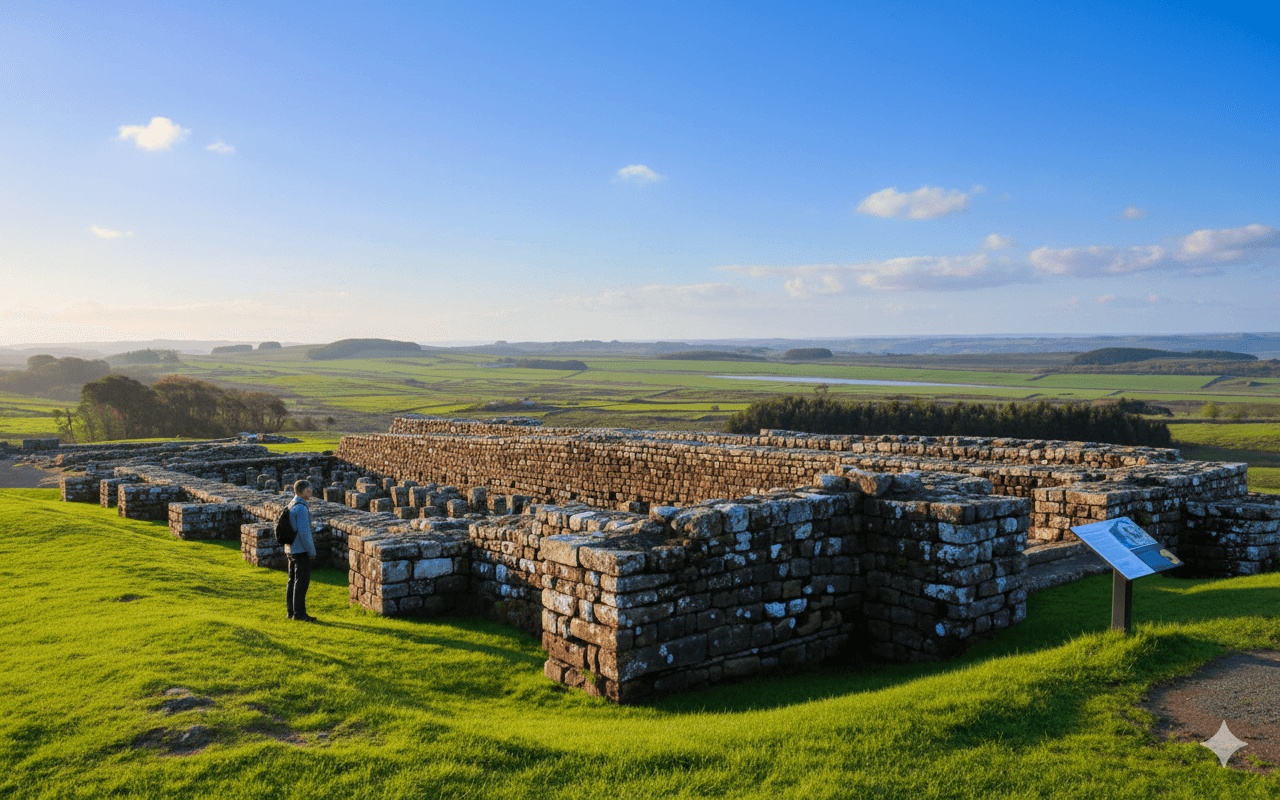
Picture yourself walking the crags section on a clear May morning. The sun is warm but not hot, the sky a deep blue with scattered fair-weather clouds. The wall stretches ahead along the ridge, rising and falling with the dramatic topography of the Whin Sill escarpment. To the north, the land drops away to the Scottish borders; to the south, the rolling Northumberland hills extend to the horizon.
You've been walking for two hours and you're in shirtsleeves, your fleece tied around your waist. The path is dry and firm beneath your boots. Other walkers are visible in the distance - you're not alone - but there's space between groups, room to find your own rhythm without queuing at stiles or competing for viewpoints. The dramatic section between Steel Rigg and Housesteads stretches before you.
The landscape is stunning in its spring green. Every hedge, every tree, every grass field is that fresh, vivid green that only appears in late spring before the colour deepens and matures into summer shades. Wildflowers line the path margins: red campion, cow parsley, the last bluebells in sheltered spots. Swallows have arrived, swooping low over the fields catching insects. Skylarks are everywhere, their song the constant soundtrack to your walk - our wildlife guide describes more of what you might spot.
You stop for lunch at a viewpoint with the wall visible in both directions, find a comfortable spot on sun-warmed stone, and take your time. There's no rush - hours of daylight remain, and your accommodation is only five miles further. You photograph the view, eat your lunch, watch the play of cloud shadow across the distant hills. This is walking at its best: challenging enough to be satisfying, comfortable enough to be enjoyable, beautiful enough to remember for years.
This is the May experience. Not every day will be perfect, but the combination of conditions that make moments like this possible is more likely in May than almost any other month.
Trail Conditions in May
By May, the trails along Hadrian's Wall have dried out from winter and spring moisture. The muddy sections that made March and early April challenging are now firm underfoot. You can walk at a good pace without constantly watching for bogs and waterlogged patches. The transformation from April to May is often dramatic - paths that were challenging become straightforward.
The field sections through the eastern and western portions of the path are dry by May. The grass is growing strongly, but paths are clearly defined and easy to follow. Stiles and gates are dry and secure, no longer slippery with winter moisture. These sections, which can feel like a trudge in wet conditions, become pleasant walking in May's dry warmth.
The central crags section is at its best in May. The rocky terrain that never got truly muddy is now completely dry, offering excellent grip even on steep sections. The exposed nature of the crags, which makes them challenging in bad weather, becomes an advantage in May's conditions - the breezes are pleasant rather than punishing, and the exposure means views in all directions.
Vegetation is lush but not yet at its summer peak. The path is clearly visible through growing grass and wildflowers, and while you'll brush against some vegetation on narrower sections, it's not the enclosed tunnel effect that some paths develop by late summer. Everything feels open, accessible, and welcoming.
Stream crossings are at easy levels by May. Any that were challenging earlier in the year are straightforward now, with stepping stones accessible and water levels low enough to cause no concern. Unless there's been unusually heavy recent rain, water crossings are a non-issue in May.
What to Pack for May
May packing is lighter than earlier months. The heavy winter layers that March demanded and the extensive waterproofs that April required can largely stay home. You're packing for warm, pleasant conditions with the ability to handle occasional cooler or wetter weather rather than expecting challenging conditions as the norm. Our packing guide covers everything you need.
Your waterproof jacket should still come, but can be a lighter weight than earlier in the year. A packable waterproof that compresses small and lives at the bottom of your day pack is often sufficient. Waterproof trousers are optional in May - some walkers carry them for security, others accept that a brief shower on their legs will dry quickly in the warm air.
Layering becomes simpler in May. A moisture-wicking base layer and a light fleece or shirt for cool mornings is typically enough. You'll probably shed layers by mid-morning and rebuild them only if you stop for extended breaks or if evening walking is planned. The fleece might stay in your pack most days, but it's worth having for flexibility.
Sun protection becomes genuinely important in May. The sun is strong enough to burn, particularly with the clear air and long days of exposure. Sunscreen should be applied before setting out and reapplied during the day. A sun hat is no longer optional - the midday sun is powerful. Good sunglasses protect your eyes and reduce fatigue from squinting.
Footwear can be lighter than earlier months for many walkers. While waterproof boots remain a solid choice, trail shoes become viable in May's dry conditions if your ankles are strong and you prefer lighter footwear. The choice is personal, but May conditions don't demand the heavy waterproof boots that March requires.
Hydration becomes more important as temperatures rise. Carry more water than you would in cooler months - 2 litres minimum, more if it's a warm day with limited refill opportunities. The combination of warmth and exertion increases fluid needs significantly.
Accommodation in May
May accommodation represents a transition period. You're past the easier availability of the true off-season but not yet in the pressured booking environment of peak summer. With reasonable advance planning, you should secure good options, though the most popular establishments do start to fill.
Book 2-3 months ahead for May walking to ensure your preferred accommodation. This is particularly important for the central section around Once Brewed and Twice Brewed, where options are more limited and demand is highest. The eastern section near Newcastle and western section near Carlisle have more accommodation and typically more availability.
Prices in May are moving toward summer rates but haven't fully arrived there. You'll pay more than April but typically less than July. The balance of conditions and cost makes May excellent value - you're getting close to the best conditions of the year without the highest prices.
The late May bank holiday creates a spike in demand. If your dates include this holiday weekend, book well ahead - ideally 4-6 months. The combination of good weather expectations and a long weekend brings many visitors to the wall.
All facilities along the route are fully operational in May. The AD122 bus runs its full summer schedule, pubs and cafes operate normal hours, and Roman sites like Housesteads, Vindolanda, and Chesters maintain standard opening times. You can plan confidently knowing that everything will be available.
Visitor Numbers in May
May visitor numbers represent a pleasant middle ground. You'll certainly share the path with other walkers - this isn't the solitude of March - but you won't experience the crowded conditions that develop in school holidays. The balance is comfortable for most walkers.
Weekday walking in May is noticeably quieter than weekends. If you can structure your walk to tackle the most popular sections (the central crags around Sycamore Gap and Housesteads) on weekdays, you'll have a better experience than hitting them on a sunny Saturday. The difference isn't dramatic, but it's noticeable.
The late May bank holiday is the busiest period of the month. Expect more day visitors around the most famous sites and busier paths generally. If possible, plan your crags walking for either before the bank holiday weekend or for the quieter days early the following week.
Even on busier days, the path absorbs visitors well. Hadrian's Wall Path is 84 miles long, and people spread out along its length. You might queue briefly at a narrow stile or wait your turn at a viewpoint, but genuine crowding is rare in May. The experience remains one of walking in beautiful landscape with fellow enthusiasts rather than fighting through tourist masses.
Why May is Often Considered Best
May's reputation as one of the finest months for Hadrian's Wall walking rests on the combination of factors we've discussed, working together to create an exceptional experience:
The weather offers the best balance of the year. Warm enough to be comfortable, not so hot as to be exhausting. Typically drier than spring months, without the potential for heat waves that July can bring. The conditions suit sustained walking in a way that extremes at either end don't.
The daylight is generous without being excessive. You have ample time for walking, exploration, and enjoying the landscape without the very long days of June that some find too much. The evenings are pleasantly long without darkness feeling impossibly distant.
The landscape is at its spring peak. The fresh greens, the wildflowers, the sense of life and growth - May captures this better than any other month. By June, the colours have deepened and matured; in May, everything still has that vibrant new quality.
The visitor numbers are manageable. You'll walk with others, but not fight through crowds. The path feels sociable rather than busy, and you can still find quiet moments and empty viewpoints.
The value proposition is strong. Conditions approach the year's best while prices remain below peak summer levels. You're getting excellent quality without paying the maximum price.
For walkers with flexibility in their timing, this combination is compelling. May doesn't guarantee perfect conditions - nothing does - but it offers the best probability of an excellent experience.
Who Should Walk in May?
May suits almost everyone, which is part of its appeal. The conditions are forgiving enough for first-time long-distance walkers while rewarding enough for experienced hikers. The weather is typically kind without being boring. The path is accessible without being crowded.
First-time long-distance walkers find May ideal. The conditions are gentle enough to build confidence without harsh weather undermining your experience. You can focus on the walking, the landscape, and the achievement rather than battling the elements. May is often recommended as the month to try your first multi-day walk - our fitness preparation guide will help you get ready.
Experienced walkers appreciate May for its quality. If you've walked many paths and know what makes a good experience, May delivers. The conditions enable you to walk at your best, covering good distances comfortably while having energy to appreciate the history and landscape.
Photographers find May exceptional. The quality of light, the fresh spring colours, the wildlife activity, and the manageable visitor numbers create opportunities for strong images. The long golden hours of morning and evening light are particularly valuable.
Groups and couples enjoy May's sociable atmosphere. The weather supports comfortable walking together, the evenings are long enough for dinner and drinks without rushing, and the conditions contribute to good group morale.
The only walkers who might prefer other months are those who actively seek solitude (March or September offer more) or those who specifically want summer heat (July or August). Solo walkers can also thrive in May. For everyone else, May is an excellent choice. Explore Northumberland while you're here.
Itinerary Options in May
May's long days and good conditions support the full range of itineraries. Your choice depends on your fitness, walking speed, and how much time you have to spend at Roman sites and viewpoints. Hadrian's Wall Country offers endless discoveries.
Challenging 4-5 day itineraries are viable for fit, experienced walkers who move efficiently. The long daylight hours provide enough time for 17-20 mile days without starting in darkness or finishing in fading light. These itineraries suit walkers who enjoy covering ground and don't want to linger extensively. Check our difficulty assessment to know what to expect.
Standard 6-7 day itineraries remain the most popular choice and work beautifully in May. Daily distances of 12-15 miles are comfortable, leaving time for photography, site visits, and simply enjoying the landscape. Most walkers find this pace ideal - challenging enough to feel like an achievement, relaxed enough to appreciate the experience. Our baggage transfer service makes walking lighter.
Leisurely 8-10 day itineraries allow full exploration of everything the wall offers. With shorter daily distances, you have time for extended visits to Roman sites like Vindolanda, photography expeditions, and leisurely lunches. If the walking is as much about the journey as the destination, these itineraries deliver. Learn more about getting to Hadrian's Wall.
Our walking packages cover all these options. We can recommend the itinerary that best matches your fitness, interests, and available time. May conditions support whatever pace you prefer.
Plan Your May Walk
May on Hadrian's Wall represents walking at its finest - conditions that approach ideal, a landscape at its spring peak, and an experience that stays with you long after you've returned home. If you have flexibility in your timing, May deserves to be top of your list.
Our self-guided walking packages make the most of May's excellent conditions. We handle accommodation at the best walker-friendly establishments, arrange baggage transfer so you walk light, and provide detailed route information to help you appreciate everything along the way. Our local knowledge helps you time your walk for optimal conditions.
Ready to experience Hadrian's Wall in the finest month of the year? Get in touch to discuss your May walking plans. We'll help you design the perfect itinerary for an unforgettable experience on Britain's greatest Roman frontier.