Key Points
- Hadrian’s Wall Path is one of Britain’s safest long-distance trails, with excellent waymarking and regular accommodation
- Solo walkers frequently meet others on the trail, creating a sociable yet independent experience
- The route passes through populated areas with mobile signal for most sections, ensuring you’re never truly isolated
- Self-guided walking holidays offer flexibility and freedom whilst providing logistical support through baggage transfer services
- Spring through autumn offers the best conditions, with May to September being the most popular months for solo walkers
Why Solo Walking Works Brilliantly on Hadrian’s Wall
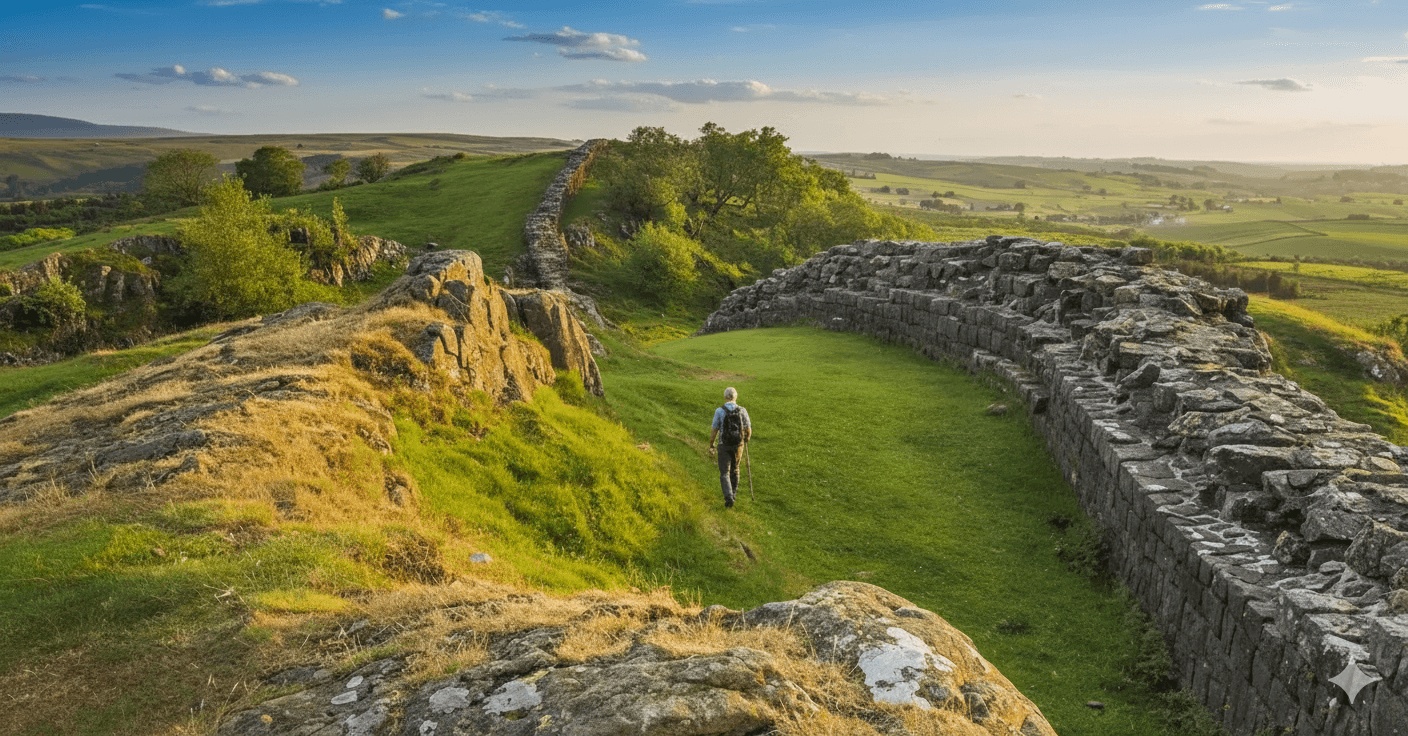
Walking Hadrian’s Wall alone might sound daunting at first, but this National Trail is genuinely one of the most solo-friendly long-distance paths in Britain.
The Hadrian’s Wall Path attracts a particular type of walker—people who appreciate history, enjoy their own company, but also value the occasional chat over a pub lunch. You’ll find yourself naturally falling into step with other solo walkers, sharing tips about blisters or accommodation, then happily parting ways to walk at your own pace.
Safety Considerations for Independent Walkers
Trail Conditions and Navigation
The Hadrian’s Wall Path is exceptionally well-maintained and signposted throughout its length from Wallsend to Bowness-on-Solway. The distinctive acorn waymarkers appear every few hundred metres, making navigation straightforward even for less experienced walkers. The trail predominantly follows clear paths, farm tracks, and minor roads, with only occasional stretches across open moorland.
Mobile phone signal is available for roughly 80% of the route, particularly through the more populated sections between Newcastle and Carlisle. The central section through Northumberland National Park has some signal gaps, but you’re never more than a few hours from civilisation.
Personal Safety
Crime along the Hadrian’s Wall Path is virtually non-existent. The villages and towns en route are friendly, welcoming communities accustomed to walkers. Local people are generally helpful and happy to provide directions or recommendations.
The main safety considerations are environmental rather than social:
- Weather can change quickly, particularly on exposed sections near Housesteads and Vindolanda
- Some steep ascents and descents require reasonable fitness levels
- Spring and autumn can bring muddy conditions requiring proper walking boots
- Summer midges can be bothersome in still, humid conditions
Pack appropriate clothing layers, carry a basic first aid kit, and inform your accommodation provider of your expected arrival time each day.
The Social Side of Solo Walking
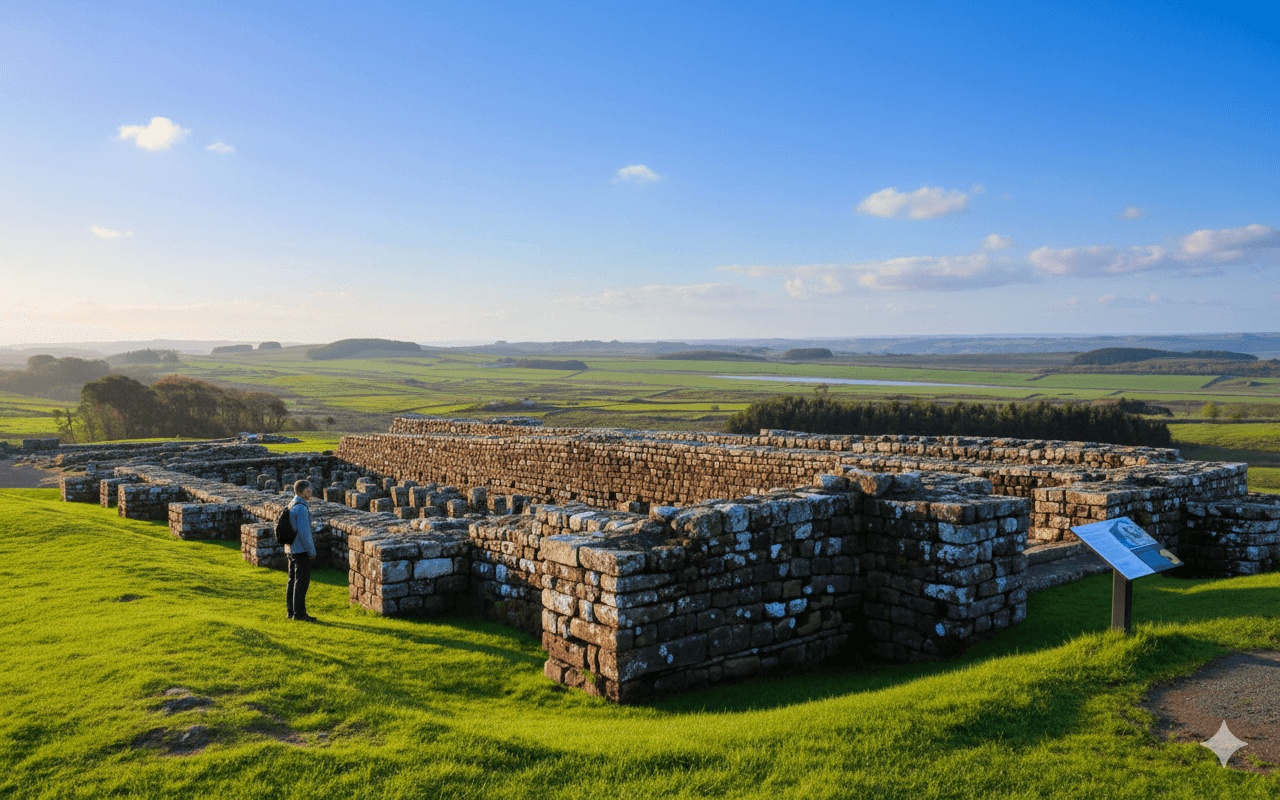
Here’s something wonderful that surprises many first-time solo walkers: you’re rarely alone unless you want to be. The Hadrian’s Wall Path has become increasingly popular, meaning you’ll encounter other walkers daily, particularly between Chollerford and Birdoswald where the best-preserved Roman remains attract the highest footfall.
Most walkers follow the traditional west-to-east or east-to-west routes over 6-8 days, so you’ll likely see familiar faces at accommodations and refreshment stops. These brief encounters create a lovely sense of camaraderie without any obligation to walk together.
Many solo walkers report that the experience gives them exactly what they need—solitude during walking hours for reflection and appreciation of the stunning Northumberland landscape, balanced with pleasant company over evening meals and breakfast.
Planning Your Self-Guided Walking Holiday
Choosing Your Direction and Duration
Most walkers tackle the trail from east to west (Newcastle to Bowness-on-Solway), keeping the prevailing wind at their backs and building up fitness before the challenging central section. However, west-to-east walkers enjoy the advantage of reaching the most dramatic Roman forts—Housesteads, Vindolanda, and Chesters—when they’re feeling strongest.
A typical self-guided walking holiday spans 6-8 days, covering 12-15 miles daily. This pace allows time to explore the fascinating Roman sites properly without feeling rushed.
Accommodation Along the Route
The Hadrian’s Wall Path offers excellent accommodation variety, from comfortable B&Bs to country inns and small hotels. During peak season (May-September), booking 3-4 months ahead is advisable. We advise booking our packages way ahead of time to avoid disappointment.
Villages like Corbridge, Once Brewed, Gilsland, and Brampton provide the best concentration of facilities including shops, pubs, and restaurants.
Baggage Transfer Services
Baggage transfer is the secret weapon for solo walkers and is included in our packages. Rather than carrying a heavy rucksack for 12+ miles daily, you pack your main luggage each morning, and it magically appears at your next accommodation. And, yes, it is included in all our packages as standard.
Best Times for Solo Walking
May through September offers the most reliable weather and longest daylight hours. July and August are busiest but guarantee open facilities and fellow walkers for company. May, June, and September provide a perfect balance—quieter trails, pleasant temperatures (12-18°C), and sufficient daylight for 7-8 hour walking days.
April and October are viable for experienced walkers comfortable with changeable weather and limited facility opening hours. Some accommodation closes outside the main season.
What Makes Solo Walking Hadrian’s Wall Special
Walking this extraordinary trail independently allows you to engage deeply with the landscape and history at your own pace. Stand alone at Sycamore Gap (though sadly the famous tree has now gone, the location remains hauntingly beautiful) or spend an extra hour exploring the Roman Army Museum without worrying about keeping pace with a group.
The trail’s moderate difficulty means you can focus on the experience rather than survival. Unlike more challenging routes such as the Pennine Way or Coast to Coast, Hadrian’s Wall Path delivers historical and scenic rewards without excessive physical demands.
Self-guided walking holidays provide structure and security—knowing your accommodation is booked, your bags will arrive, and detailed route notes are in your pocket—whilst preserving the freedom and achievement of independent travel.
Frequently Asked Questions
Is Hadrian’s Wall Path suitable for first-time solo walkers?
Absolutely. Hadrian’s Wall Path is ideal for first-time solo walkers due to excellent waymarking, regular accommodation, and well-spaced facilities. The trail’s popularity means you’ll encounter other walkers daily, and the moderate difficulty level builds confidence without overwhelming inexperienced hikers. Self-guided packages provide reassuring infrastructure whilst maintaining independence.
How fit do I need to be to walk Hadrian’s Wall alone?
You need a reasonable baseline fitness level—comfortable walking 12-15 miles daily over varied terrain. The central section includes significant climbs and descents, particularly around Housesteads and Winshields Crags. If you regularly walk 5-6 miles, you can build to Hadrian’s Wall fitness with a few longer training walks beforehand.
Will I meet other walkers on the trail?
Yes, especially between April and October. The Hadrian’s Wall Path attracts steady walker traffic, with the central section (Chollerford to Birdoswald) being busiest. You’ll naturally encounter solo walkers, couples, and small groups at similar fitness levels, creating opportunities for company without obligation. Many solo walkers form temporary “trail friends” during their journey.
What happens if I need help while walking alone?
The trail passes through villages and farmland with regular access to help. Mobile signal covers approximately 80% of the route, allowing emergency calls if needed. Accommodation providers expect daily arrivals and will investigate if you don’t appear. Mountain Rescue operates in Northumberland, though callouts on Hadrian’s Wall Path are rare compared to higher mountain routes.
Can I walk Hadrian’s Wall Path alone as a woman?
Yes, women walk Hadrian’s Wall alone regularly and safely. The trail’s popularity, excellent infrastructure, and friendly local communities create a secure environment. Standard precautions apply—inform accommodation of expected arrival times, carry a charged phone, and trust your instincts. Many women report feeling perfectly comfortable throughout their journey.