Hadrian's Wall offers extraordinary photography opportunities. The combination of dramatic landscapes, atmospheric Roman ruins, and ever-changing British weather creates subjects that reward both casual smartphone snapshots and serious photographic effort. Whether you're documenting your journey with phone photos or carrying a full camera system, understanding the Wall's photographic potential helps you capture memories that last.
What Makes the Wall Photogenic
The Wall corridor provides several photography advantages that make it particularly rewarding.
Dramatic Landscapes
The central section of the Wall runs along the Whin SillÔÇöa distinctive geological formation of dark rock creating dramatic crags across the landscape. The Wall itself follows these crags, rising and falling with the terrain in a way that produces iconic views. Steel Rigg, Highshield Crags, Cuddy's CragsÔÇöthese locations have been photographed countless times, yet still reward new attempts.
The views extend beyond the immediate Wall corridor. On clear days, you can see across great distancesÔÇönorth toward Scotland, south across the Tyne Valley, east and west along the Wall's course. This sense of expansive landscape is difficult to capture but worth attempting.
Ancient Ruins in Landscape
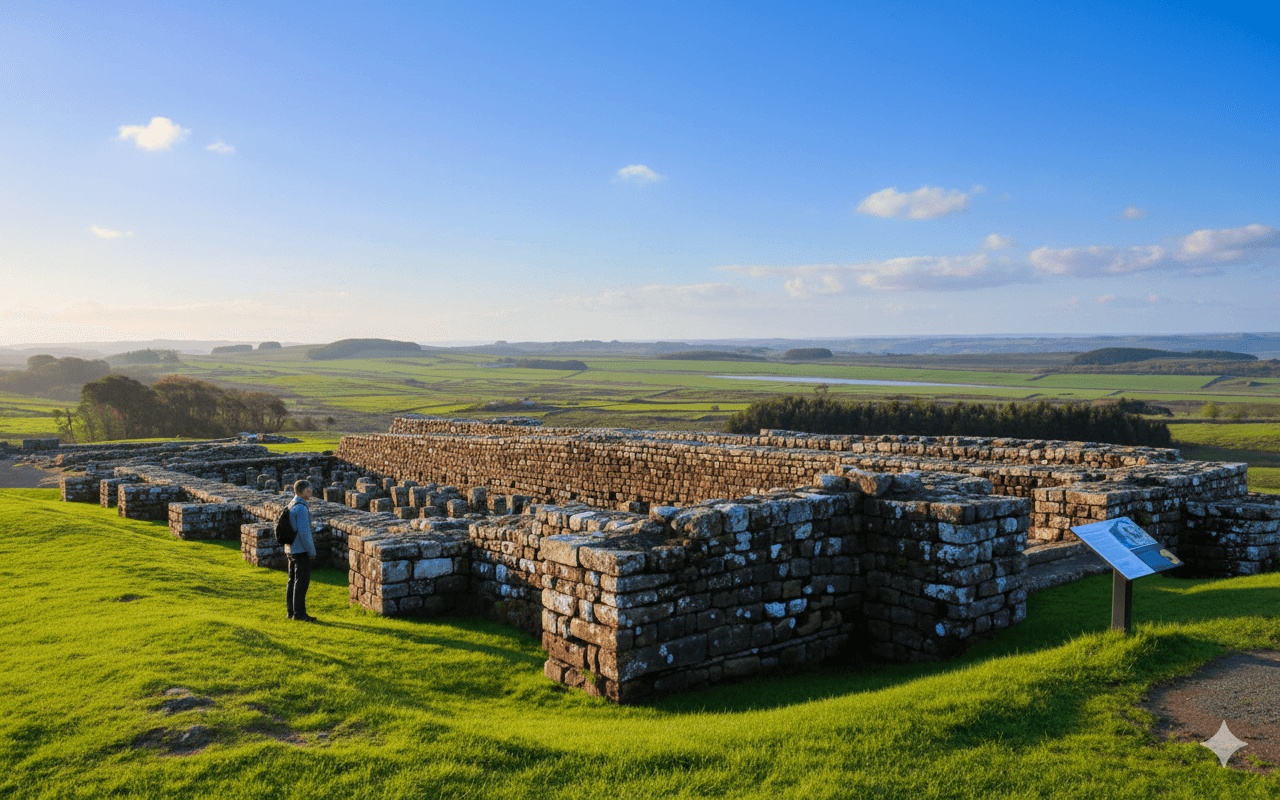
The juxtaposition of Roman remains with the landscape they've occupied for nearly two millennia creates evocative compositions. A milecastle doorway framing distant hills; the Wall snaking across a crag; the ruins of Housesteads commanding their ridgeÔÇöthese scenes connect past and present in visually compelling ways.
The ruins have sufficient scale to be meaningful but aren't so complete that they overwhelm. They're integrated into the landscape rather than isolated from it, which makes for more interesting compositions than many archaeological sites.
Changing Light
British weatherÔÇöoften cursed by walkersÔÇöis a photographer's asset. The constantly changing conditions produce varied light that transforms scenes hour by hour. Storm clouds building over the crags; shafts of sunlight breaking through overcast sky; mist softening the hills; golden evening light warming the stoneÔÇöthe variety exceeds what more climatically stable regions offer.
This means the same location rewards multiple visits. Sycamore Gap in morning mist differs completely from Sycamore Gap under clear blue sky. Vindolanda at dawn differs from Vindolanda at midday. The changing light keeps the Wall photographically interesting regardless of how many times you walk it.
Prime Photography Locations
While the entire Wall offers photographic opportunity, certain locations are particularly rewarding.
Steel Rigg and Highshield Crags
This section of the central crags provides the classic Wall viewÔÇöthe Wall curving across the dramatic landscape in a way that encapsulates its frontier character. The viewpoint at Steel Rigg car park is accessible, but the best shots often come from walking the trail itself, finding angles that show the Wall's relationship to the terrain.
Cuddy's Crags
A short walk from Housesteads, Cuddy's Crags offers elevated views back along the Wall corridor. The combination of foreground Wall remains and distant landscape works well for compositions that convey scale.
Housesteads Fort
The best-preserved fort on the Wall, Housesteads provides both landscape views and detailed architectural subjects. The granaries with their ventilation pillars, the latrines with their communal seating, the walls outlining barracks and headquartersÔÇöall photograph well. Dawn or late evening, when the site is closed to visitors and you're passing on the trail, allows atmospheric shots without crowds.
Vindolanda
Slightly off the main trail, Vindolanda's extensive excavations provide archaeological detail that Housesteads can't match. The scale of the site, the ongoing excavation activity, and the museum make it photographically rich. The reconstructed sectionsÔÇötemple, bathhouse elementsÔÇöadd context.
Chesters Bathhouse
The best-preserved military bathhouse in Britain, Chesters provides architectural detailÔÇöarches, vaulted ceilings, hypocaust pillarsÔÇöthat creates intimate images different from the landscape shots elsewhere.
Cawfields Quarry and Milecastle 42
The quarry (now disused and flooded) with the Wall running alongside provides unusual juxtapositionÔÇöindustrial heritage meeting ancient remains. The nearby milecastle is one of the better-preserved examples and photographs well against the landscape.
Lighting Conditions
Understanding how light affects your subjects helps you plan for the best photography.
Golden Hour
The hour after sunrise and before sunset produces warm, directional light that brings out texture in the Wall's stonework and adds depth to landscapes. During your walk, you'll often be in accommodation during these prime times, but early starts or late finishes can capture golden hour on the trail.
Overcast Days
Overcast conditionsÔÇöcommon on the WallÔÇöprovide soft, even light that works well for detail shots and portraits. The lack of harsh shadows makes stonework easier to photograph. Don't dismiss cloudy days; they offer different but valid opportunities.
Dramatic Weather
Storm clouds building, rain approaching, mist rolling inÔÇöthese conditions produce the most atmospheric images. They're also the most challenging to work in (protect your equipment), but the results can be stunning. The Wall was built to face this weather; capturing it in difficult conditions adds authenticity.
Night Photography
The Northumberland Dark Sky Park offers astrophotography opportunities rare in England. The Wall's crags against a star-filled sky or the Milky Way arching overheadÔÇöthese require tripod and technique but reward the effort. Even smartphone night modes can capture surprisingly good starry sky images now.
Equipment Considerations
What camera equipment to bring depends on your priorities and what you're willing to carry.
Smartphones
Modern smartphones produce excellent images in good light and increasingly capable results in challenging conditions. For most walkers, a phone is sufficient and adds no weight. The convenience of a camera always in your pocket means you capture moments you'd miss while retrieving a separate camera.
Smartphone tips: use HDR mode for high-contrast scenes; clean your lens regularly (walking gets it dusty and smeared); consider a waterproof case for rain protection; explore manual mode apps for more control.
Compact Cameras
Quality compact cameras offer better image quality than phones with modest additional weight. They provide more optical zoom than phones and better low-light performance. If photography matters to you but you don't want full camera system weight, a good compact is sensible.
Mirrorless and DSLR Systems
Serious photographers may want interchangeable lens systems. Consider weight carefullyÔÇöyou're carrying this for miles daily. A single versatile lens (24-70mm or 24-105mm equivalent) covers most situations; carrying multiple lenses increases capability but also weight and complexity.
Weather sealing matters on the Wall. Conditions can change rapidly; moisture-resistant bodies and lenses provide peace of mind.
Tripod
A tripod enables long exposures, low-light work, and precision compositionÔÇöbut adds significant weight. Lightweight travel tripods sacrifice stability. Consider whether you'll actually use it enough to justify carrying it. For most walking photography, hand-held shots are practical; tripods are more for dedicated photography stops than walking-and-shooting.
Practical Tips
Some practical suggestions for photography during your walk.
Protect Your Equipment
Waterproof bags or camera covers for rain protectionÔÇöit will rain at some point. Microfibre cloths for lens cleaning. Consider insurance if you're carrying expensive equipment.
Battery Management
Cold weather drains batteries faster; carry spares. Charge everything fully each night. Consider a small power bank for phone backup during long days.
Storage and Backup
Carry adequate memory card capacity. Back up images to cloud storage when you have wifiÔÇölosing a week's photos to a corrupted card is heartbreaking.
Don't Let Photography Dominate
The most common photography mistake on long walks: spending so much time photographing that you don't experience the walk itself. Take pictures, but also put the camera away and simply look. Some moments are better remembered than captured.
Capturing Your Journey
Photography on the Wall isn't just about iconic landscape shots. Document your experience: accommodation, meals, fellow walkers, the details that make your walk unique. These personal images often matter more years later than perfect landscape compositions.
Our walking itineraries take you through the Wall's most photogenic sections. Contact us to discuss itineraries that maximise photography opportunitiesÔÇöwe can advise on timing for best light and locations that reward camera time.
Hadrian's Wall has been photographed for over a century, yet every walker captures it anew. Your photographs will document a unique experienceÔÇöyour walk, your weather, your eyes on ancient stones that others have photographed but never quite the way you will.