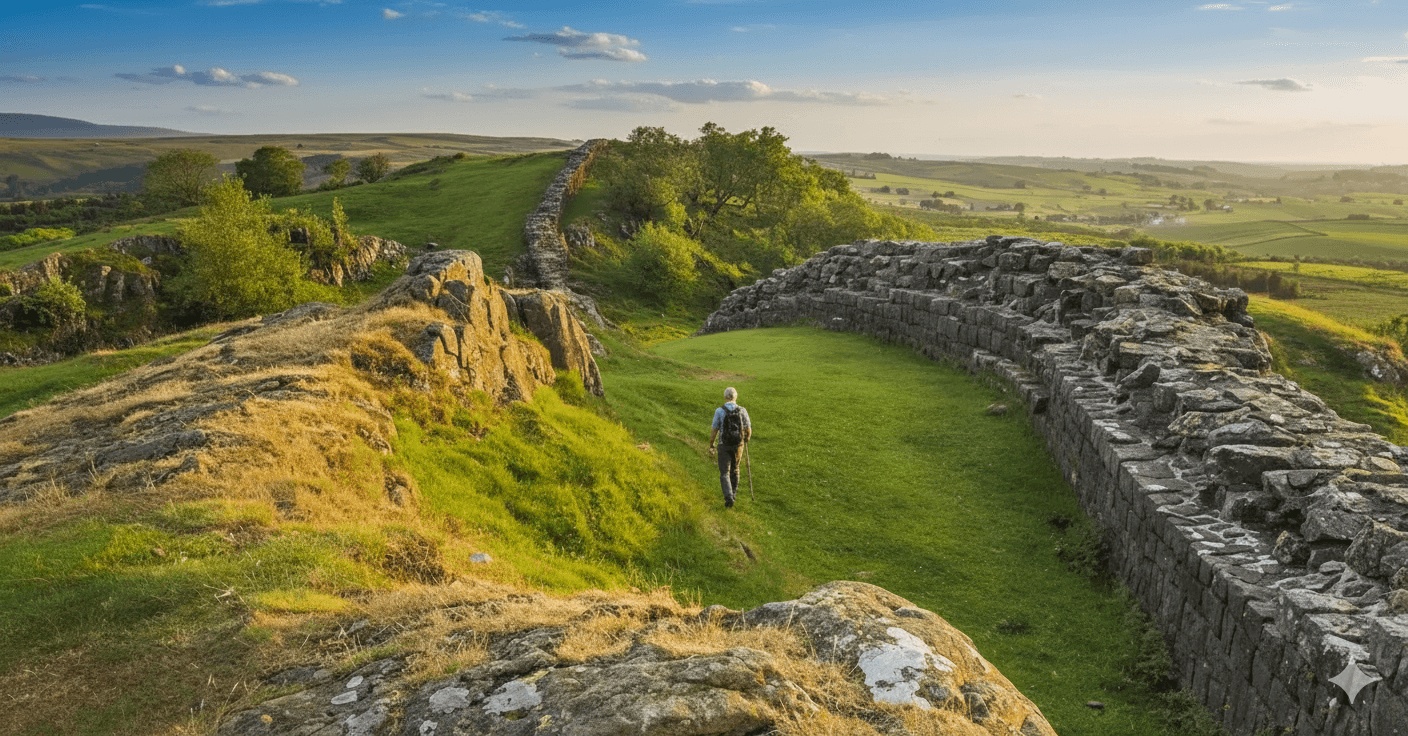
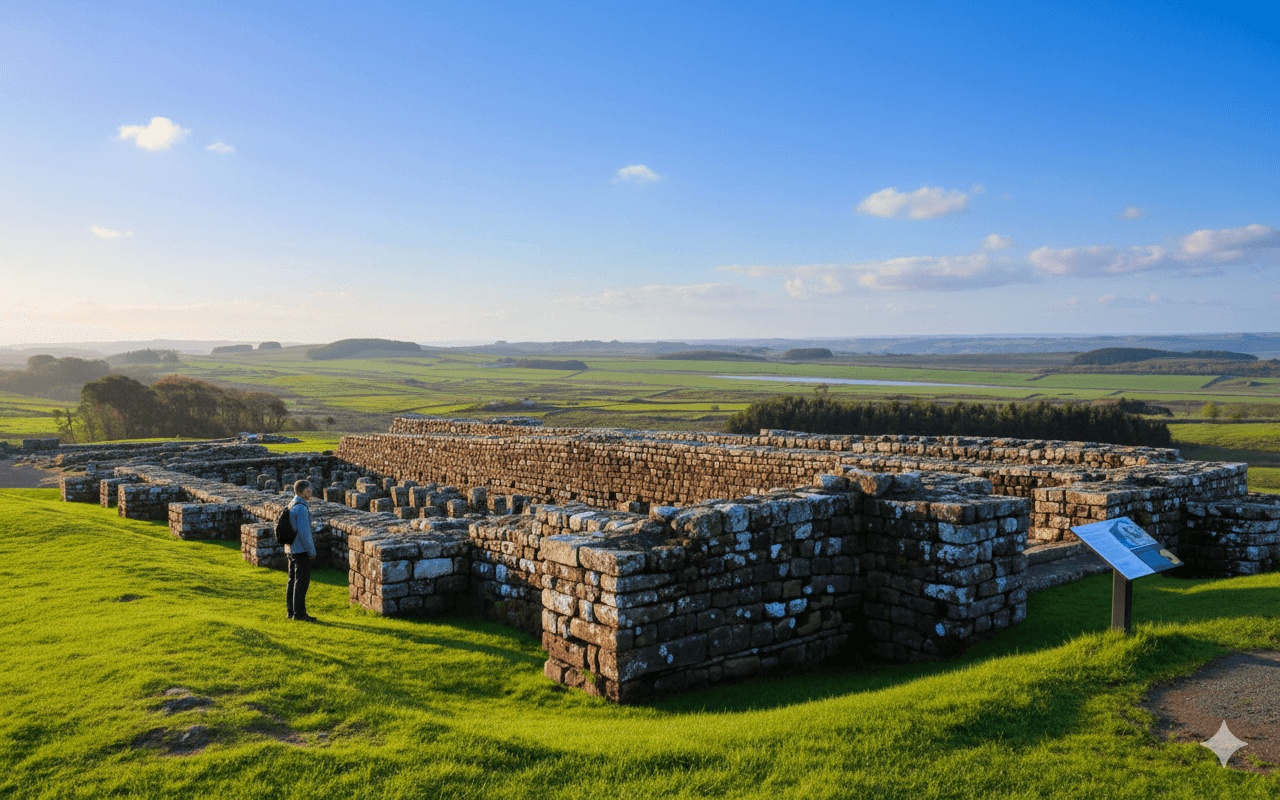
Every great journey needs a starting point, and for Hadrian's Wall, that place is Wallsend—quite literally where the Wall ended (or began, depending on your perspective). Here, at the eastern terminus of the Roman frontier, the modern journey begins. The fort of Segedunum once guarded this crucial location where the Wall met the River Tyne; today, its reconstructed remains and excellent museum welcome walkers setting out on the 84-mile trail to the Solway coast.
But Wallsend exists within the greater Newcastle conurbation, and for most walkers, Newcastle itself serves as the practical gateway—with transport links, accommodation, and amenities that make it the natural place to prepare for your walk or to recover after completing it eastbound. This guide covers both: the historical significance of Wallsend and the Roman fort that makes it meaningful, and the practical aspects of Newcastle that make your journey possible.
Wallsend and Segedunum: Where the Wall Begins
The name tells the story: Wallsend is where Hadrian's Wall ended. The Romans built their frontier from the Solway Firth eastward, terminating at the River Tyne with a substantial fort called Segedunum—meaning "strong fort" in the British language that predated Latin in this region. From here, the Wall's defensive line continued as a series of forts down the Tyne's southern bank to the coast at South Shields, protecting the river mouth and the supply lines it provided.
Segedunum Roman Fort
Segedunum is the most extensively excavated fort on Hadrian's Wall, and uniquely, it's the only one where the complete ground plan is visible and marked out. When archaeologists excavated here in the 1970s-1990s, they found remarkably complete remains—helped by the fact that Victorian development, while extensive, hadn't penetrated as deeply as modern construction might have.
The site today offers several experiences. The reconstructed Roman bath house stands outside the main fort area, built using Roman techniques and materials where possible. It shows how these elaborate bathing complexes actually functioned—the heating systems, the sequence of rooms from cold to hot, the social aspects of Roman bathing culture.
The 35-metre viewing tower provides perspective impossible to gain at ground level. From the top, the complete fort plan spreads below you: headquarters building, commanding officer's house, granaries, barracks blocks, hospital. The scale becomes apparent—this was a significant military installation, housing around 480 soldiers at full strength.
The museum contains finds from the fort and from excavations along the eastern Wall section. Everyday objects—boots, tools, gaming pieces, writing tablets—bring the garrison's life into focus. The Romans who served here weren't abstract historical figures but people who played games, wrote letters, complained about the weather, and dreamed of home.
Starting Your Walk at Segedunum
The Hadrian's Wall Path officially begins (or ends) at Segedunum. A metal sculpture marks the spot, and the path westward sets off from here through the urban and suburban landscape of Tyneside before reaching open country. It's traditional to take a photograph at the starting point, marking the moment before 84 miles of walking.
The first few miles aren't the walk's most scenic—you're passing through residential and industrial areas, following the river before eventually climbing toward more dramatic country. But starting here provides the satisfaction of doing the complete trail, coast to coast. For some walkers, that completeness matters.
If you're walking west to east, Segedunum becomes your finishing point—and arriving here after days of walking brings its own satisfaction. The museum makes a fitting place to reflect on what you've accomplished before returning to Newcastle for your onward journey.
Newcastle upon Tyne: The Practical Gateway
Newcastle is a proper city—vibrant, historic, and well-connected. For walkers, it offers everything needed before or after the trail: excellent transport links, diverse accommodation, cultural attractions worth a day or two of exploration, and the amenities that smaller Wall settlements can't provide.
Transport Connections
Newcastle Central Station is one of the major rail hubs of northern England. Direct trains run to London (about three hours), Edinburgh (ninety minutes), York (one hour), and across the north to Carlisle and beyond. For walkers arriving from elsewhere in Britain, Newcastle is usually the easiest access point to the Wall.
The local Metro system connects the city centre to Wallsend (Wallsend Metro station is a short walk from Segedunum), making it easy to stay in Newcastle and travel to your starting point. Trains along the Tyne Valley line also provide access to stations near the Wall, including Hexham and Corbridge.
Newcastle International Airport, just north of the city, offers domestic and European connections for those flying in.
Accommodation
The full range of accommodation exists in Newcastle: international hotels, boutique properties, budget chains, guest houses, hostels. The city centre provides the most options and easiest access to transport, restaurants, and attractions. Quayside properties offer river views; the Jesmond area provides quieter residential character.
For walkers, Newcastle accommodation works well for the night before starting your walk (allowing early Metro to Wallsend) or the night after finishing (celebrating completion with city amenities). Some of our itineraries include Newcastle options.
The Great North Museum: Hancock
If you have time in Newcastle before or after your walk, the Great North Museum deserves priority. Its Roman collection ranks among the best in Britain, with finds from across Hadrian's Wall and the broader Roman north.
The museum's scale model of the complete Wall—showing every fort, milecastle, and turret—provides context for your walk. Interactive displays explore Roman military life, religion, trade, and civilian settlement. The Mithras temple from Carrawburgh is recreated here, giving a sense of the mystery cults that Roman soldiers followed.
Beyond the Roman material, the museum covers natural history and world cultures, making it worthwhile even without Wall-related interest. Allow two to three hours for a proper visit.
Castle Keep and City Walls
Newcastle's castle, which gave the city its name ("new castle" in 1080, replacing an earlier Roman fort), stands in the city centre. The Norman keep survives remarkably complete and is open to visitors. Views from the rooftop extend across the city and the Tyne bridges.
Fragments of the medieval city walls survive in various locations, including the stretch along the appropriately named Wall Knoll. These aren't Roman walls but medieval defences, built partly using Roman stone—a common practice throughout the Wall region.
The Quayside and Bridges
Newcastle's Quayside, redeveloped over recent decades, provides pleasant walking along the Tyne. The sequence of bridges—particularly the Tyne Bridge (opened 1928) and the newer Gateshead Millennium Bridge (the tilting bridge, opened 2001)—create an iconic cityscape.
The BALTIC Centre for Contemporary Art, housed in a converted flour mill on the Gateshead side, offers free admission and changing exhibitions. The Sage Gateshead concert hall, with its distinctive curved glass roof, adds to the regenerated riverside's architectural interest.
Food, Drink, and Entertainment
Newcastle's dining scene has developed significantly in recent years, with options ranging from traditional pubs to fine dining, from local cuisine to international variety. The Quayside and Jesmond areas are particularly strong for restaurants.
The city's nightlife reputation is well-established—weekend evenings in the centre are lively, to put it mildly. For walkers wanting early starts or recovery sleep, accommodation slightly away from the main party areas might be wise.
Planning Your Eastern Gateway Experience
For Westbound Walkers (Wallsend to Bowness)
If you're starting your walk at Wallsend and walking westward toward Bowness, consider arriving in Newcastle the day before your walk starts. This allows visiting the Great North Museum for Wall context, exploring the city if time permits, getting settled in accommodation without rushing, and catching the Metro to Wallsend fresh the next morning.
Your first day's walk from Wallsend heads through urban Tyneside before reaching more open country. Starting early is wise—the urban section is interesting but not where you want to spend excessive time.
For Eastbound Walkers (Bowness to Wallsend)
If you're walking east, Newcastle and Wallsend become your finishing point. The final approach through Tyneside isn't the most spectacular walking, but there's satisfaction in completing the full distance coast to coast. Arriving at Segedunum, taking your finishing photograph, visiting the museum, then catching the Metro back to Newcastle for a celebration dinner—that's a fitting end to the journey.
Consider booking an extra night in Newcastle after finishing. You'll be tired; the city offers comfortable recovery. A day exploring Newcastle without a pack on your back provides pleasant contrast to the walking days.
For Partial Walkers
Many walkers don't complete the full trail—and that's entirely valid. The 4-day highlights package covers the spectacular central section without the urban walking at either end. The Tyne Valley line provides easy access to starting points like Hexham, bypassing the Wallsend-to-open-country section entirely.
Even if you're not walking from Wallsend, visiting Segedunum during your Newcastle stay adds valuable context. Understanding where the Wall began—and why it mattered—enriches appreciation of whatever section you actually walk.
Getting to Wallsend from Newcastle
The Tyne and Wear Metro provides easy connection from Newcastle city centre to Wallsend. Trains run every few minutes during the day; the journey takes about fifteen minutes. From Wallsend Metro station, Segedunum is about a ten-minute walk—signs direct you from the station.
Alternatively, taxis can take you directly to Segedunum if you have luggage or prefer door-to-door transport. The cost is modest; the convenience on an early-morning start can be worth it.
Where to Next?
From Wallsend, the path heads west along the Tyne, through Newburn, and gradually into more open country. The first significant Roman remains come at Heddon-on-the-Wall, where a length of broad wall survives. Beyond that, the landscape opens and the adventure properly begins.
Our self-guided packages handle all the logistics—accommodation, baggage transfer, route notes—so you can focus on the walking itself. Browse our itinerary options to find the right pace and duration for your abilities and interests. Or contact us to discuss your plans.
The Wall awaits. From Segedunum's starting point to the Solway shores, 84 miles of history, landscape, and walking achievement stretch before you. Newcastle provides the gateway; Wallsend marks the beginning. Your Roman frontier adventure starts here.