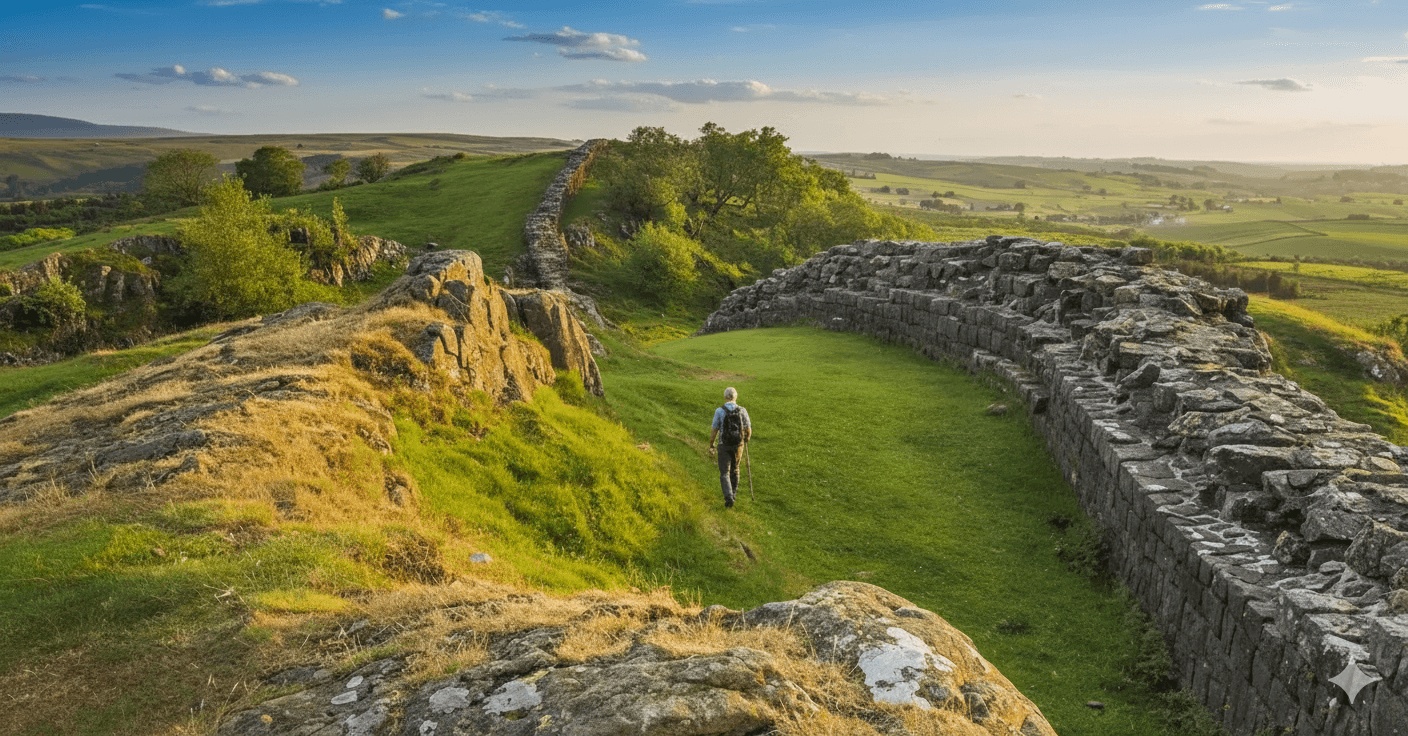
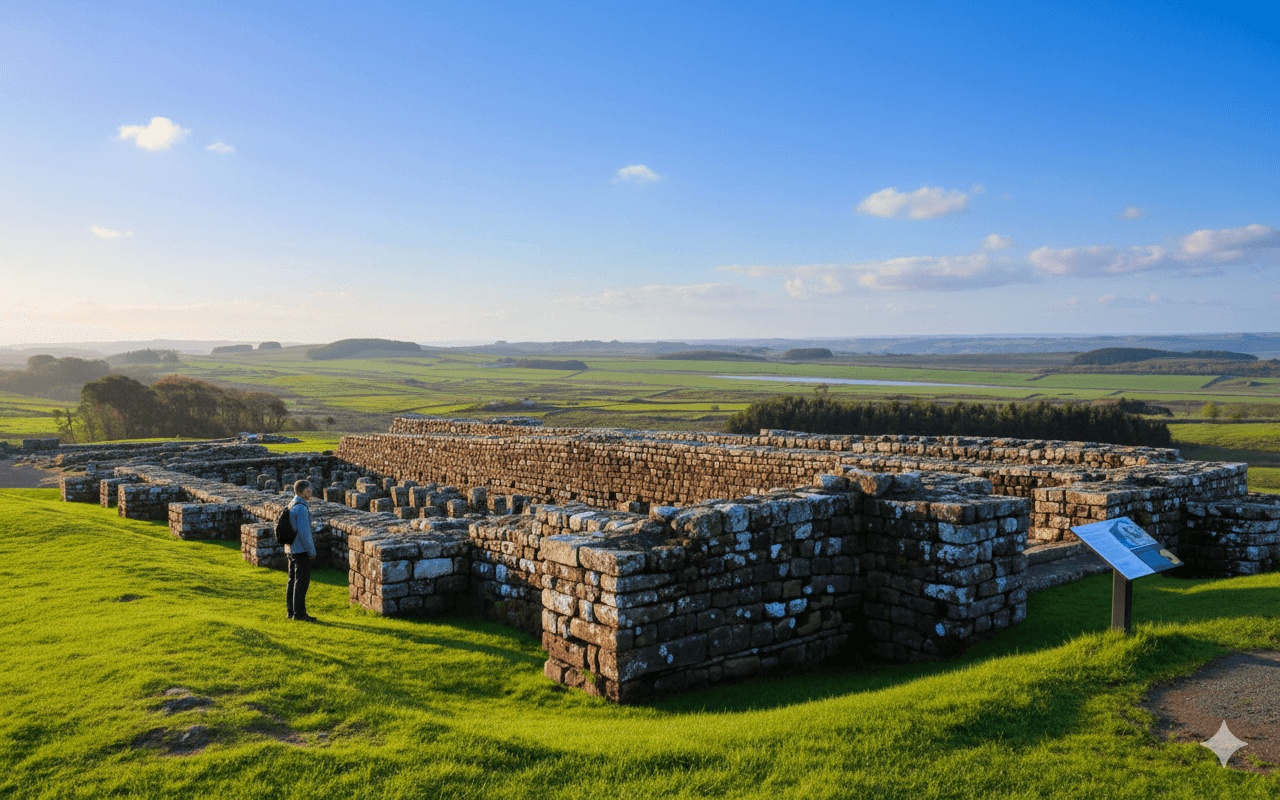
While Hadrian's Wall runs across the dramatic uplands to the north, two historic market towns lie just to the south in the Tyne Valley: Hexham and Corbridge. Both have served travellers for centuries, and both offer something valuable to walkers on the Wall—accommodation, food and drink, historical interest, and the particular atmosphere that only old English market towns possess. Whether you're using these towns as bases for exploring the Wall or passing through on your walking holiday, understanding what they offer helps you make the most of your time here.
Hexham: The Larger Market Town
Hexham is the larger and busier of the two towns, with a population of around 12,000 and a market square that has functioned as the commercial heart of the community for a millennium. The town sits on a ridge above the River Tyne, its streets rising steeply from the water through layers of history. Romans were here—Hexham's abbey incorporates stone taken from the nearby fort at Corbridge—but the town's character comes primarily from its medieval and later development as an important ecclesiastical and market centre.
Hexham Abbey
The abbey dominates Hexham, both physically and historically. Founded in 674 AD by Saint Wilfrid, it ranks among the earliest and most important churches in northern England. The Saxon crypt—one of few surviving examples—remains intact beneath the present building, accessible to visitors and genuinely atmospheric in its ancient simplicity.
Above ground, the abbey evolved through centuries: Norman rebuilding, medieval additions, Victorian restoration. The result is an accumulation of architectural styles that somehow coheres into a harmonious whole. The interior rewards careful exploration: medieval choir stalls, a remarkably complete Roman memorial stone (the tombstone of a standard-bearer named Flavinus), and the Acca Cross, an eighth-century masterpiece of Northumbrian sculpture.
For walkers, the abbey offers both historical interest and practical value. Services continue daily, and the building is open for visitors throughout the year. After days on the exposed trail, the abbey's ancient quiet provides welcome contrast.
The Market Square and Town Centre
Hexham's market square, known as the Shambles, has hosted trading for over eight hundred years. Tuesday remains market day, as it has been since 1239 when Henry III granted the market charter. The square's medieval origins show in its irregular shape and the buildings clustered around it—a mixture of periods and styles, from medieval fragments to Georgian facades to Victorian shopfronts.
The town centre offers practical amenities for walkers: outdoor equipment shops if you've forgotten something essential, banks, pharmacies, and a reasonable range of cafes and restaurants. Nothing is particularly large or chain-dominated; Hexham retains independent character in its retail, which adds to its appeal.
Accommodation Options
Hexham provides good accommodation for walkers, from comfortable guest houses and B&Bs to hotels of various standards. The town works well as a base for exploring the Wall—Housesteads and Vindolanda are accessible by car or the seasonal AD122 bus service—though it's slightly south of the main trail route. Some of our itineraries include Hexham accommodation for certain nights.
Dining and Drinking
Food options in Hexham range from pub classics to more ambitious restaurants. The town supports several genuine dining establishments rather than just tourist-oriented places, reflecting its role as a regional centre. Evening dining after a day's walking finds good options here.
Pubs include both historic inns with centuries of serving travellers and more modern bars. The drinking culture leans toward real ale and local brewing—the region has strong traditions in both.
Transport Connections
Hexham station sits on the Newcastle-Carlisle railway line, providing excellent connections to both cities and to intermediate stations near the Wall. This makes the town accessible for those arriving by train and useful for transport logistics during your walk.
Corbridge: The Smaller, Older Settlement
Corbridge is smaller than Hexham—essentially a large village rather than a town—but in some ways more historically significant. The Romans established a major supply base here (Coria, now known as Corbridge Roman Town), and the settlement that grew after their departure has been continuously occupied ever since. Corbridge claims to be the oldest continuously inhabited town in Northumberland, and while such claims are always contested, the depth of history is undeniable.
Roman Corbridge (Coria)
The Roman site lies just outside the modern village and makes an excellent visit for anyone interested in the Wall's history. Unlike the military forts along the Wall itself, Corbridge was primarily a supply depot and later a thriving town—more civilian than military in character. The remains reveal granaries (whose foundations show the sophisticated ventilation systems used to preserve grain), temples, workshops, and the only visible example of a Roman fountain in Britain.
The on-site museum holds the Corbridge Hoard, an extraordinary collection of armour and military equipment buried in a chest around 122 AD—roughly when Hadrian's Wall was being built. The coincidence of dates suggests this was emergency burial during some crisis, though we don't know what. The quality and completeness of the armour provides insights into Roman military equipment unavailable anywhere else in Britain.
Managed by English Heritage, the site is well-interpreted and accessible. Allow at least ninety minutes for a proper visit—more if you're particularly interested in Roman history.
The Village Itself
Modern Corbridge centres on its medieval bridge over the Tyne (one of few surviving medieval bridges in the region) and the compact village centre. Low Stone and High Street contain the main businesses—several good pubs, restaurants, tea rooms, and shops. The atmosphere is distinctly affluent and genteel; this is a popular residential area for Newcastle commuters, and property values reflect that desirability.
The parish church of St Andrew's contains Roman stonework reused by Saxon builders—a common practice in this area where worked stone was valuable and the Roman ruins provided convenient quarries. The distinctive tower dates from the Saxon period and is one of the oldest church towers in England still in use.
Accommodation and Dining
Corbridge offers fewer accommodation options than Hexham—its smaller size limits capacity—but what exists tends toward the higher end. Several excellent B&Bs and a good hotel serve visitors, and the village's pubs and restaurants have developed reputations that draw people from across the region. The Valley Indian Restaurant, surprisingly, is considered among the best in Northumberland; pub food at venues like The Angel is consistently good.
Using These Towns on Your Walk
How Hexham and Corbridge fit into your Wall walk depends on your itinerary and preferences. Neither sits directly on the Hadrian's Wall Path, but both are close enough to be useful.
As Accommodation Bases
Both towns work as overnight stops on certain itineraries, particularly longer walks where daily distances are shorter. From Hexham, the Wall's central section is accessible by car or bus; from Corbridge, similarly. Some walkers prefer the amenities and options these towns offer compared to the smaller settlements directly on the route.
As Day Visit Destinations
Alternatively, if your route passes nearby, a detour into either town provides access to shops, restaurants, and historical sites. Corbridge Roman Town in particular merits a visit for anyone interested in understanding the broader context of the Wall—what it was defending, how it was supplied, how the military and civilian populations interacted.
Transport Considerations
The railway line through both towns connects directly to Newcastle and Carlisle, making them useful for transport logistics at the start or end of your walk. Trains run approximately hourly throughout the day.
The Tyne Valley Context
Both Hexham and Corbridge sit in the Tyne Valley, the river corridor that runs parallel to and south of Hadrian's Wall. This valley has always been the main communication route through the region—the Romans used it, as did medieval travellers, and the modern road (A69) and railway follow the same general line.
The valley's agricultural land contrasts with the uplands along the Wall. This is richer, more productive country, explaining why the Romans established their supply base at Corbridge rather than on the exposed Wall itself. Granaries and warehouses made more sense in the sheltered valley than on the windswept crags.
For walkers, the valley represents warmth and civilisation compared to the austere beauty of the Wall ridge. Descending from Housesteads or the central crags into Hexham or Corbridge feels like returning to a gentler world—which, in landscape terms, it is.
Seasonal Considerations
Both towns operate year-round, but some differences emerge between seasons. Summer brings more visitors—the tourist season is real here, though neither town becomes overwhelmingly crowded. Markets are busiest; attractions are fully staffed; evening dining options are most available.
Winter is quieter. Some businesses reduce hours; Roman Corbridge has limited winter opening. But the towns retain their character, and the sense of being a proper working community rather than a tourist destination becomes clearer. Off-season visits have their own appeal.
Practical Information
For those planning to incorporate these towns into their Wall experience, key practical points include understanding that both towns have good parking if you're driving. Shops and services are more comprehensive in Hexham. The tourist information centre in Hexham provides local information and can help with accommodation booking.
Roman Corbridge typically opens daily in summer, with reduced hours in winter—check the English Heritage website for current times. The Hexham Abbey is open daily for visitors, with services at various times.
Both towns host various events through the year—markets, festivals, concerts at the abbey. If your dates coincide with something special, it can enhance the experience; equally, major events can strain accommodation availability.
Including Hexham and Corbridge in Your Walk
Our standard itineraries are designed around the best overnight stops along the actual Wall route, but we can customise walks to include Hexham or Corbridge if that suits your interests or accommodation preferences. Contact us to discuss options.
Whether you spend a night in these historic towns, visit Roman Corbridge as part of your Wall exploration, or simply pass through on your journey, Hexham and Corbridge add depth to the Hadrian's Wall experience. They remind us that the Wall existed not in isolation but as part of a living landscape—defended territory that people actually inhabited, farmed, traded in, and called home. Nearly two thousand years later, that human habitation continues, connecting past and present in ways the crags alone cannot.
Useful resources: National Trail.