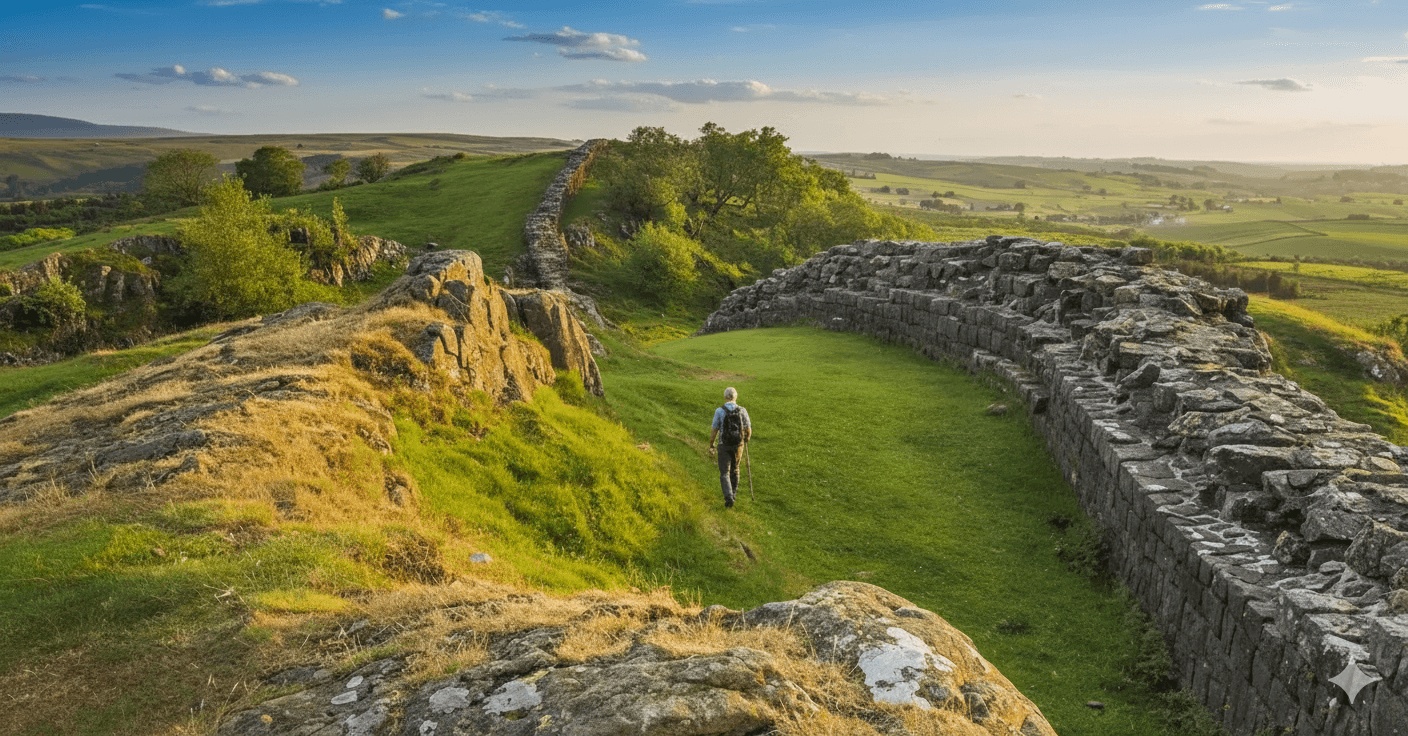
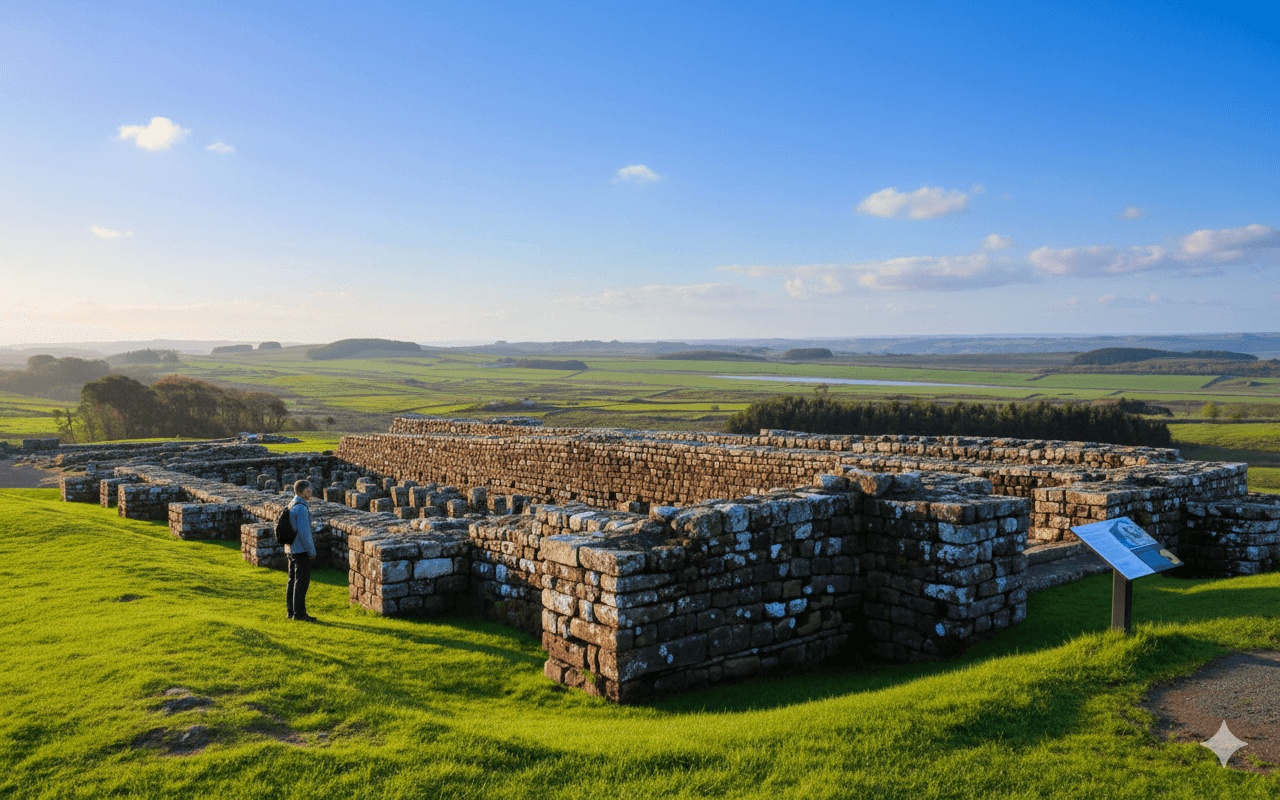
Carlisle marks the western end of Hadrian's Wall territory. While the actual terminus at Bowness-on-Solway lies fifteen miles further west along the Solway coast, Carlisle has always been the major settlement in this area—the administrative, commercial, and transport hub that the Wall's western garrison depended upon. For walkers on the Hadrian's Wall Path, the city offers either a starting point for eastbound walks or a natural conclusion before the final push to Bowness. Either way, Carlisle deserves more than a cursory transit—its history, its castle, its cathedral, and its continuing vitality as northern England's principal border city make it worth exploring.
Roman Carlisle: Luguvalium
The Romans called it Luguvalium, and it served as an important garrison town supporting the western section of the Wall. Little visible Roman fabric survives in modern Carlisle—the city has been continuously occupied and rebuilt for two millennia, covering most traces—but the Roman presence established the location's strategic importance. The town controlled the main route from the Wall into Scotland, guarded the Eden river crossing, and supported the forts stretching east along the frontier.
The Tullie House Museum in the city centre holds the best collection of Roman artefacts from the western Wall sector. Archaeological finds from excavations across the city and nearby sites reveal civilian and military life in this frontier region. The museum provides essential context for understanding what the western end of the Wall represented—not just military installations but a whole community living on the empire's edge.
Carlisle Castle
The castle dominates Carlisle's northern quarter, and for good reason—this is one of the most besieged fortifications in Britain, its strategic position on the Scottish border ensuring centuries of conflict. The present stone castle dates from Norman times, though the site has been fortified since Roman days. William Rufus built the first stone castle in 1092; subsequent monarchs and garrison commanders strengthened and rebuilt through the medieval period and beyond.
History of Conflict
The castle's history reads like a catalogue of border warfare. Mary Queen of Scots was imprisoned here in 1568. The castle withstood siege during the English Civil War, holding out for King Charles until starvation forced surrender in 1645—one of the last Royalist strongholds to fall. The Jacobite rising of 1745 saw Bonnie Prince Charlie capture the castle on his march south, then lose it again on his desperate retreat northward.
The marks of this violent history remain visible. The licking stones in the dungeon, worn smooth by prisoners desperate for moisture, provide grim testimony to conditions during sieges. Carved graffiti from prisoners across the centuries covers the walls of some chambers.
Visiting Today
Managed by English Heritage, the castle is open to visitors and offers excellent views over the city and surrounding countryside from its walls. The keep, inner and outer baileys, and various towers can be explored. Allow at least ninety minutes; more if you're interested in military history.
The castle also houses the Cumbria's Museum of Military Life, documenting the history of the region's regiments from the 17th century to the present. The King's Own Royal Border Regiment and its predecessor units feature prominently.
Carlisle Cathedral
The cathedral, founded in 1122, provides counterpoint to the castle's military austerity. It's England's second smallest cathedral, but its compact size concentrates rather than diminishes its impact. The east window is one of the largest and finest medieval windows in England, its flowing tracery filled with 14th-century glass depicting the Last Judgement.
The cathedral's interior contains treasures accumulated over nine centuries: carved medieval misericords, a painted ceiling in the choir, the baroque Brougham Triptych. The tranquil atmosphere after the exposed trail or busy streets offers welcome respite for walkers.
The adjacent cathedral precinct, including the medieval Fratry (now a café and meeting space) and the prior's tower, creates an enclosed peaceful quarter in the city centre.
The Historic City Centre
Beyond the castle and cathedral, Carlisle's city centre repays exploration. The pedestrianised core centres on the marketplace, where a market has operated since at least medieval times. The Old Town Hall, now housing the Tourist Information Centre, dates from 1717 and provides Georgian elegance among the predominantly Victorian commercial buildings surrounding it.
The Lanes
The medieval street pattern survives in the lanes between main thoroughfares—narrow passages that once led to workshops, stables, and yards. Some have been incorporated into modern shopping developments; others retain their original character. Exploring these lanes reveals layers of history invisible from the main streets.
The Citadel
At the southern end of English Street, the twin Citadel towers mark the site of the medieval city walls' main gate. The current towers date from 1807, designed by Thomas Telford to house courts and prison. They've served various functions since; today one houses law courts while the other is vacant. The towers are not open to the public but provide distinctive architectural landmarks.
Practical Considerations for Walkers
Carlisle offers everything walkers might need for starting, ending, or breaking their journey.
Transport Links
The railway station provides excellent connections. Trains run frequently to London (approximately three and a half hours), Edinburgh (around ninety minutes), Glasgow (ninety minutes), and along the scenic Settle-Carlisle line to Yorkshire. The Newcastle line runs hourly, connecting to stations near the Wall including Haltwhistle, Hexham, and Corbridge.
For those arriving by car, the M6 motorway passes just south of the city, connecting to the national motorway network. Parking in the city centre is available in several multi-storey car parks.
Bus services connect Carlisle to Bowness-on-Solway and other points along the western Wall section—useful for transport logistics on your walk.
Accommodation
Carlisle has a full range of accommodation, from budget chains to characterful independents, from historic hotels to modern guest houses. The range far exceeds what's available in smaller settlements along the route. For walkers wanting comfortable pre- or post-walk accommodation with evening dining options and morning amenities, Carlisle delivers.
We include Carlisle accommodation in several of our itinerary options, particularly for walkers wanting a city-centre start or finish.
Dining and Drinking
The city centre offers diverse dining—Indian restaurants, Italian trattorias, Chinese, Thai, pub food, gastropubs, bistros. After days of pub meals in small villages (excellent though they may be), the variety can be welcome. Local specialities include Cumberland sausage, though you'll have encountered that elsewhere on your walk too.
The pub scene includes genuinely historic inns alongside more modern bars. Carlisle claims to be where the state managed pubs during World War One—a unique experiment in government-controlled drinking intended to reduce drunkenness among munitions workers—but normal private ownership returned long ago.
Shopping and Services
As a regional centre, Carlisle provides services unavailable in smaller Wall settlements. Outdoor equipment shops can replace or supplement walking gear. A proper shopping centre offers whatever you might need. Medical facilities, including a major hospital, are available if required.
Starting or Ending Your Walk in Carlisle
For those walking west to east, Carlisle makes a sensible starting point. The first day's walk to the Wall proper is relatively gentle, following the Solway coast before turning inland. This allows warming up before tackling more demanding terrain.
For east-to-west walkers—the more common direction—Carlisle represents near-completion, with just the final push to Bowness remaining. Some walkers split this final section, staying in Carlisle and doing the Bowness stretch as a day walk returning by bus.
Alternatively, Carlisle provides a natural stopping point after completing the walk at Bowness. Rather than rushing home immediately after finishing, an evening in Carlisle allows celebration, recovery, and a more relaxed departure the following day.
The Border City Context
Carlisle's character cannot be understood without appreciating its border location. For centuries, this was frontier territory—not the Roman frontier this time, but the medieval and early modern boundary between England and Scotland. The Border Reivers—raiding families from both sides who terrorised the region from the 13th to 17th centuries—feature prominently in local history. The constant threat of Scottish invasion shaped the city's defences and its population's mindset.
Even today, Carlisle retains something of this frontier character. It's emphatically English, but Scotland is visible across the Solway on clear days, and Scottish influence permeates the culture—from accent patterns to shopping preferences (many Scots cross the border to buy here). The city looks both ways, serving both nations as the natural regional centre for a wide cross-border catchment.
Beyond the Centre
Time permitting, areas beyond the immediate centre offer additional interest. The Settle-Carlisle Railway runs one of England's most scenic routes southward through the Yorkshire Dales. Even if you don't ride the full line, a short trip to stations like Appleby or Kirkby Stephen provides dramatic engineering and wonderful views.
Hadrian's Wall continues east from Carlisle, of course—the trail follows the Wall proper from the Eden crossing. But west toward Bowness, the landscape shifts to the flat marshlands of the Solway coast. This final stretch lacks the dramatic crags of the central section but has its own wild beauty, especially when winter light catches the tidal flats.
Planning Your Carlisle Time
For walkers passing through, Carlisle warrants at least a few hours: castle, cathedral, and museum can be managed in a half-day. For those staying overnight before or after their walk, a full day allows deeper exploration of the city's layers.
Contact us to discuss how Carlisle can be incorporated into your walking itinerary. Whether as starting point, celebration stop, or transport hub, the western gateway to Hadrian's Wall offers both practical value and genuine interest. The Romans built their frontier to protect places like this—two thousand years later, Carlisle continues to reward visitors who take time to explore.