For decades, the lone sycamore tree standing in the dramatic dip between two crags became the defining image of Hadrian's Wall—a symbol recognised around the world and photographed by countless visitors. The tree appeared in films, on postcards, in countless social media posts, and served as shorthand for the entire Hadrian's Wall experience. Then, in the early hours of September 28th, 2023, someone deliberately felled it, committing an act of vandalism that shocked the nation and left a gap in the landscape that mirrors the gap in hearts of all who loved this iconic site.
But Sycamore Gap remains unmissable for anyone walking Hadrian's Wall. The dramatic landscape that made the tree famous endures, the Roman remains continue to captivate, and the views from this natural amphitheatre of crags and valleys still take the breath away. This guide explores what happened, why the tree mattered, and why you should still make Sycamore Gap a highlight of your walk.
The Tree That Became a Symbol
The sycamore that gave the gap its modern name was around 150-200 years old when it was felled—a mature tree but not ancient. How it came to grow in this particular spot remains uncertain. It may have been planted deliberately, perhaps as a waymarker or boundary indicator, or it may have simply sprouted where a seed fell and found favourable conditions in the sheltered gap between the crags.
The tree's fame grew gradually. Its photogenic position—framed between dramatic rock faces with Hadrian's Wall visible on either side—made it irresistible to photographers. As camera technology improved and travel became easier, images of the tree spread ever wider. The 1991 film Robin Hood: Prince of Thieves, starring Kevin Costner, featured the location prominently, introducing it to global audiences and cementing its status as an iconic British landmark.
By the 21st century, the tree had become perhaps the most photographed in Britain. It won the Woodland Trust's England Tree of the Year competition in 2016. Visitors came from around the world specifically to see it. Couples posed for engagement photos beside it. Artists painted it repeatedly. The tree had transcended its botanical reality to become a cultural symbol—representing Hadrian's Wall, northern England, and a certain romantic vision of the British landscape.
The Night It Fell
In the early hours of September 28th, 2023, someone used a chainsaw to cut through the trunk. The tree fell into the gap below, its branches shattered across the Roman stones that had stood here for nearly two millennia. By dawn, the news was spreading: the Sycamore Gap tree was gone.
The reaction was immediate and emotional. People spoke of their personal connections to the tree—proposals made beneath its branches, ashes scattered nearby, photographs taken over generations. The National Trust, which manages the site, described the act as "vandalism that has damaged a nationally and internationally-loved landmark." Politicians expressed outrage. Media coverage was extensive and sustained.
A teenager was arrested in connection with the incident, later charged with criminal damage. A second man was also charged. As of this writing, legal proceedings continue. Whatever the outcome, the act itself has prompted national reflection on our relationship with landscape, heritage, and the vulnerability of places we love.
Milecastle 39: The Roman Remains
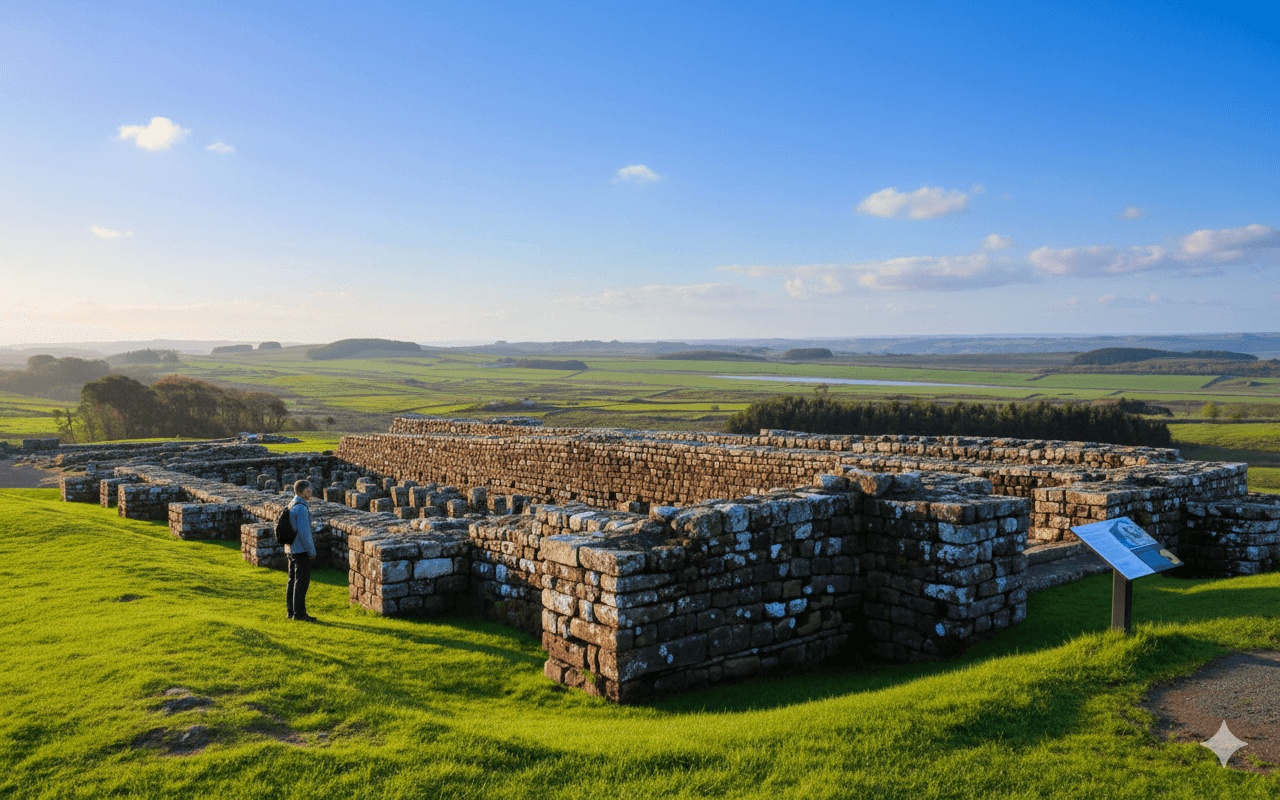
Long before any sycamore grew here, the Romans recognised this gap's significance. Milecastle 39, also known as Castle Nick Milecastle, was constructed at this natural crossing point through the crags. The remains are substantial—some of the best-preserved milecastle foundations anywhere on the Wall—and the dramatic setting makes them among the most evocative Roman structures you'll encounter.
Milecastles were placed at intervals of one Roman mile (slightly shorter than a modern mile) along the entire length of Hadrian's Wall. Each housed a small garrison—perhaps 8-32 soldiers—and contained gates allowing controlled passage through the Wall. They served as customs posts, checkpoints, and watchtowers, part of the comprehensive system that made the Wall more than just a physical barrier.
The foundations at Castle Nick show the standard milecastle layout: north and south gates, internal buildings where soldiers lived and worked, and connecting walls that joined the milecastle to the main curtain of Hadrian's Wall. The setting on the cliff edge makes these remains particularly dramatic—standing in the milecastle, you can look north across the valley below and understand exactly why the Romans chose to fortify this spot.
The Landscape Endures
The loss of the tree has been profound, but the landscape that made this location special predates that tree by millions of years and will outlast any individual feature. The Whin Sill—the volcanic dolerite intrusion that creates these dramatic crags—formed around 295 million years ago. The Romans built their Wall here 1,900 years ago. The tree's 150-200 years represent a brief moment in this deeper story.
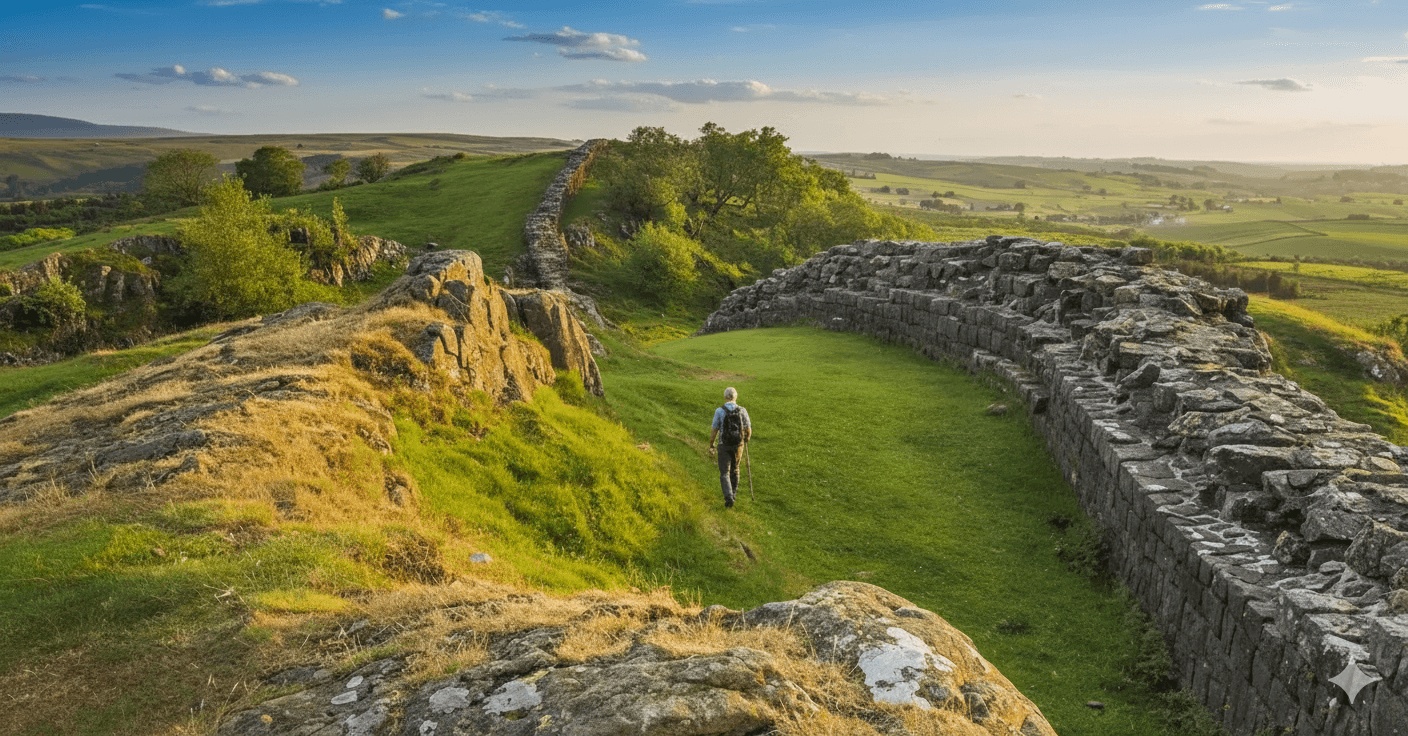
Walking through Sycamore Gap today, you experience the same dramatic terrain that Romans and countless subsequent generations encountered. The crags rise on either side, framing views along the Wall's route in both directions. The descent into the gap and climb out again provides the quintessential Hadrian's Wall experience of rising and falling over the undulating crest of the Whin Sill.
The gap remains spectacular. Photographers find new compositions, focusing on the Wall itself, the rock formations, the play of light across the landscape. Some find that the absence of the tree actually reveals aspects of the landscape previously overlooked—the stratigraphy of the rock faces, the course of the Wall as it climbs each crag, the wider context of this frontier in its ancient landscape.
Visiting Sycamore Gap
Sycamore Gap lies on the main Hadrian's Wall Path between Steel Rigg and Housesteads, meaning you'll pass through it as part of walking the trail. This section represents some of the finest walking on the entire 84 miles—dramatic terrain, well-preserved Roman remains, and views that justify every step of the journey.
From the west, access typically begins at Steel Rigg car park or The Sill at Once Brewed. The gap lies approximately 1.5 miles from Steel Rigg, involving the classic Hadrian's Wall experience of climbing crags and descending into gaps. From the east, Housesteads provides the starting point, with the gap roughly 2.5 miles of dramatic walking westward.
For day visitors, combining Sycamore Gap with either the Steel Rigg to Housesteads walk or a shorter circular route from Steel Rigg offers the most satisfying experience. Parking at Steel Rigg is limited; arrive early during busy periods or consider the larger car park at The Sill.
Practical Considerations
The terrain through Sycamore Gap is challenging. The paths descend and climb steeply on either side, with sections over rock and uneven ground. Good walking boots with ankle support are essential. After rain, paths can be muddy and the rock surfaces slippery.
Weather on the crags can change rapidly. This exposed terrain catches wind from all directions, and rain often arrives faster than forecasts predict. Carry waterproof layers regardless of how the morning looks. In summer, bring sun protection and adequate water—there are no refreshment facilities between Steel Rigg and Housesteads.
The walk through this section typically forms part of a longer day on our Hadrian's Wall itineraries. Whether you're on a 6-day or more relaxed 8-day walk, this central section delivers the Wall's most memorable miles.
A Place of Reflection
Since the tree's felling, Sycamore Gap has become a place of pilgrimage and reflection. Visitors leave flowers and messages. Some come specifically to pay respects to a lost landmark. Others pause longer than they might otherwise have done, contemplating what the tree meant and what its loss says about our relationship with special places.
There is talk of replanting—perhaps the tree's offspring, grown from seeds collected before the felling. Any new tree would take decades to approach the stature of its predecessor, but the gesture of replanting speaks to hope and continuity. The gap may one day again frame a lone sycamore against the Northumbrian sky.
For now, the gap stands open, revealing the landscape in a form not seen for two centuries. The Wall continues its march across the crags as it has for nearly two millennia. The stones laid by Roman hands remain unmoved by human drama. And walkers continue to come, discovering in this contested, complicated, beautiful place something that matters enough to mourn and remember.
Experience Sycamore Gap for yourself on a Hadrian's Wall walking holiday. Contact us to discuss which itinerary best allows you to appreciate this and other remarkable sites along the frontier.