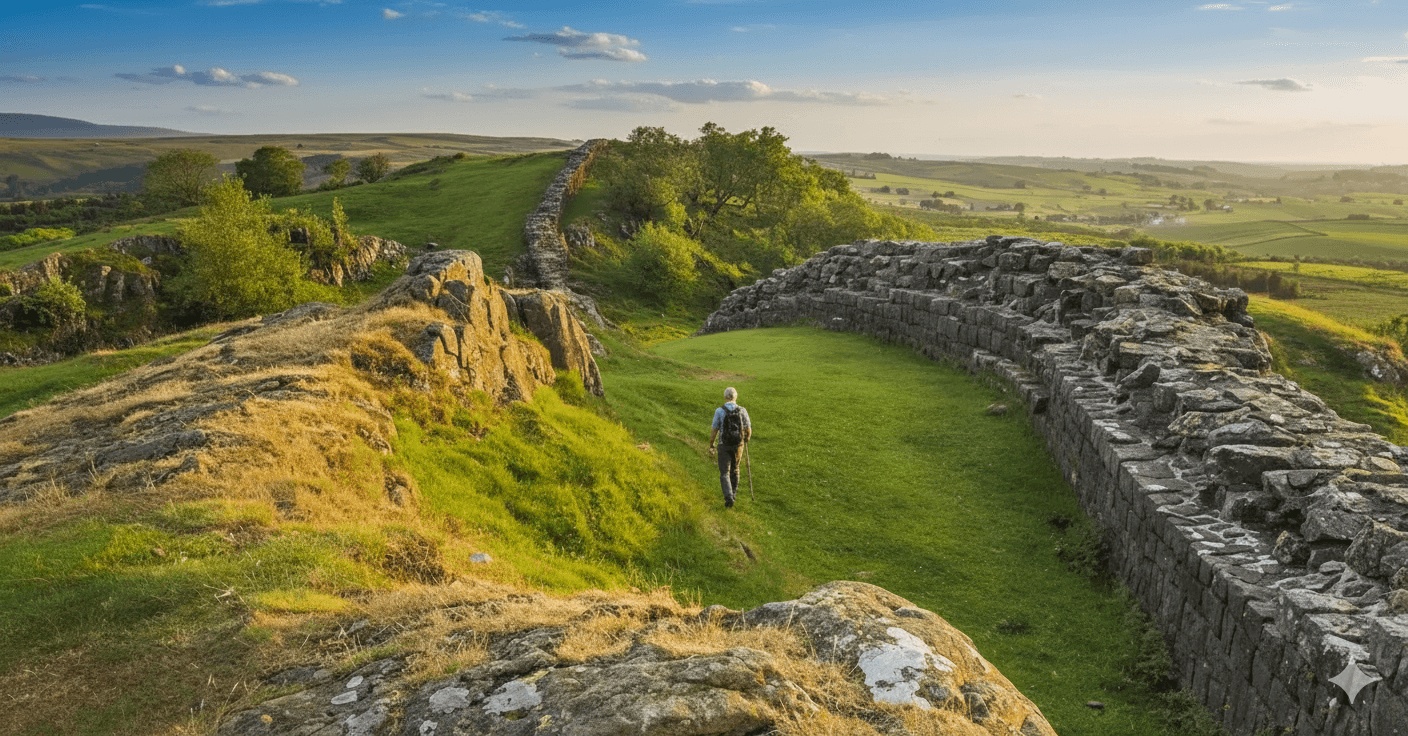
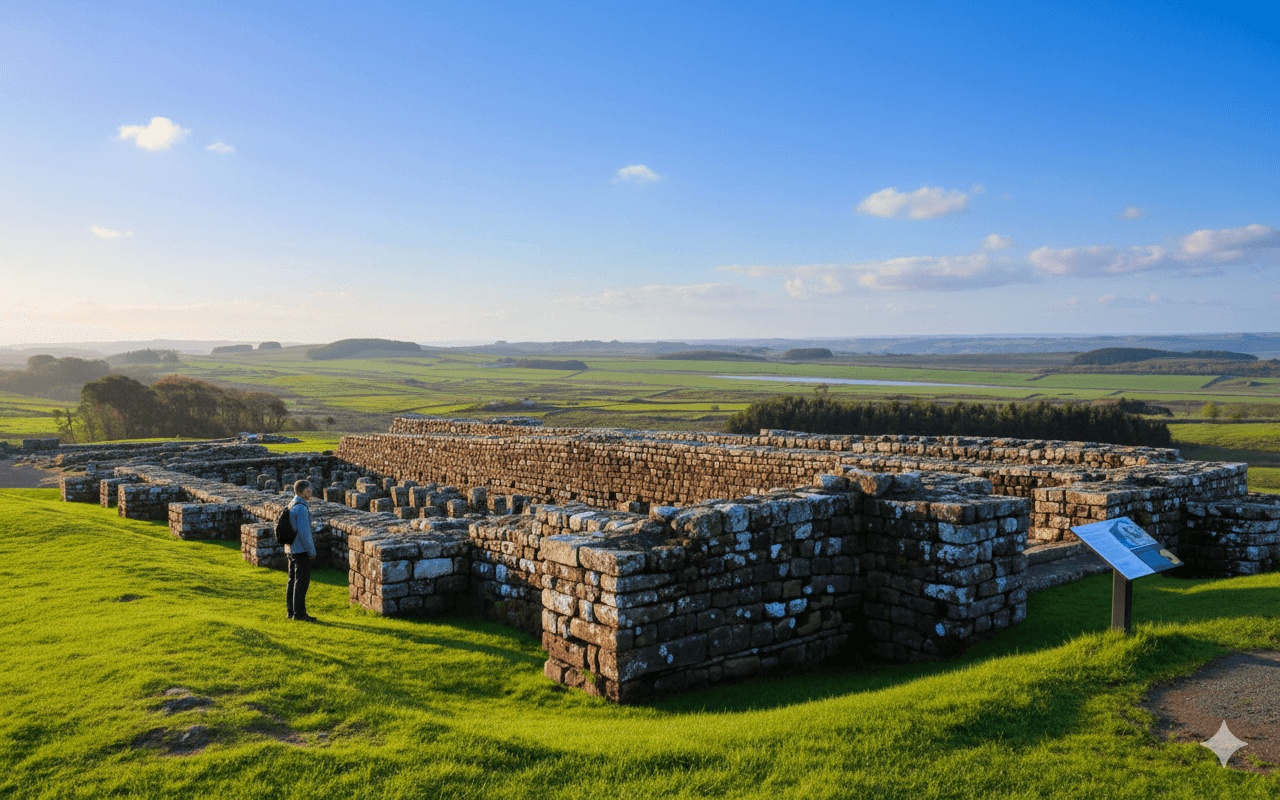
- The Hadrian’s Wall Path runs 84 miles (135km) from Wallsend in the east to Bowness-on-Solway in the west
- Most walkers choose the east-to-west direction to follow the prevailing wind and benefit from increasingly dramatic scenery
- Popular starting points include Newcastle city centre or Heddon-on-the-Wall to avoid urban walking
- The western terminus at Bowness-on-Solway offers better transport connections than more remote alternatives
- Walking west-to-east provides the psychological advantage of heading “home” towards Newcastle’s excellent facilities
- Plan 6-8 days for the full trail, with flexibility for rest days and sightseeing at Roman forts
Which Direction Should You Walk Hadrian’s Wall?
The Hadrian’s Wall Path can be walked in either direction, and there’s genuine debate amongst experienced walkers about which way works best. Both routes follow the same UNESCO World Heritage Site, tracing the magnificent 2nd-century Roman frontier that once marked the northern edge of the Roman Empire.
East to West: The Popular Choice
Roughly 70% of walkers tackle Hadrian’s Wall from east to west, and there are solid practical reasons for this preference. The prevailing south-westerly winds typically blow at your back rather than into your face, particularly welcome on exposed sections across the central crags. The scenery also builds in drama as the trail progresses, starting with gentler urban and suburban landscapes before reaching the iconic central section with its rugged escarpments and spectacular Roman remains.
Walking towards the sunset holds a certain romantic appeal, and there’s something satisfying about finishing at the Irish Sea in Cumbria after starting from the North Sea coast. Transport logistics also favour this direction slightly, as Newcastle offers far more frequent train connections than Carlisle for walkers arriving from across the UK and beyond.
West to East: The Road Less Travelled
Walking from Bowness-on-Solway towards Newcastle has distinct advantages that shouldn’t be dismissed. Many walkers appreciate heading towards a major city with excellent accommodation, dining, and transport connections rather than away from one. The psychological benefit of “walking home” to civilisation can be motivating during tough final days.
The west-to-east route also means tackling the challenging central section — including Steel Rigg, Sycamore Gap, and Housesteads Roman Fort — whilst legs are fresher, typically on days three or four rather than five or six. The prevailing wind becomes a headwind, but this can actually provide welcome cooling on warm summer days. Encountering the majority of walkers heading the opposite direction creates more opportunities for chat and trail camaraderie too.
Official Start and End Points
Wallsend (Eastern Terminus)
The official eastern start of Hadrian’s Wall Path lies at Segedunum Roman Fort in Wallsend, a suburb of Newcastle upon Tyne. This excellent museum and reconstructed bathhouse provides fascinating context before setting off. However, the first 15 miles through urban and industrial areas of Tyneside don’t represent the trail at its finest.
Many self-guided walkers choose to start their walking holiday in Newcastle city centre itself, enjoying the vibrant Quayside area, then taking a short Metro ride to Wallsend for a quick visit to Segedunum before beginning the walk proper. Alternatively, some operators transfer walkers directly to Heddon-on-the-Wall, bypassing the urban section entirely and starting where the countryside truly begins.
Bowness-on-Solway (Western Terminus)
The official western end point sits at the banks of the Solway Firth in the small village of Bowness-on-Solway. This quiet Cumbrian settlement offers a peaceful finale, with walkers traditionally dipping their boots in the sea to mirror the start. The village has a pub and basic facilities, but accommodation options are limited.
Transport connections from Bowness require careful planning. There’s no railway station, so most walkers arrange a taxi transfer to Carlisle (approximately 14 miles) to catch onward trains. Some walking holiday companies include this transfer in their packages alongside daily baggage transfer services.
Alternative Starting Points
Heddon-on-the-Wall
Located 11 miles west of Newcastle, Heddon-on-the-Wall has become an increasingly popular starting point for east-to-west walkers. The village marks the transition from urban to rural walking, with visible Wall remains appearing shortly after. Accommodation options include welcoming guesthouses and pubs, and the village is accessible by bus from Newcastle.
Starting here reduces the full walk to approximately 73 miles whilst eliminating the least scenic sections. For walkers with limited time or those preferring to focus on the most spectacular parts of the Hadrian’s Wall Path, this represents an excellent compromise.
Corbridge or Hexham
Some walkers begin even further west at the attractive market towns of Corbridge (18 miles from Wallsend) or Hexham (22 miles). Both offer excellent accommodation, services, and direct train connections to Newcastle. This approach creates a 62-66 mile walk focusing almost entirely on the rural sections and most impressive Roman sites.
However, starting this far west means missing Chesters Roman Fort near Chollerford, one of the best-preserved cavalry forts on the entire frontier. Consider visiting it as a rest-day excursion if choosing Hexham as a starting point.
What About the Central Section Only?
Walkers short on time often choose to experience just the central and most dramatic section between Chollerford and Carlisle (approximately 40 miles). This can be comfortably completed in 3-4 days and includes virtually all the must-see sites: Housesteads, Vindolanda, Steel Rigg, Sycamore Gap, and Birdoswald.
The market town of Haltwhistle sits roughly at the midpoint and bills itself as the “Centre of Britain.” It provides an excellent base for exploring the Wall, with good accommodation and facilities. Many self-guided walking packages offer this shortened itinerary for those unable to commit to the full week required for the complete coast-to-coast route.
Practical Considerations for Route Planning
Prevailing Weather Patterns
Northumberland and Cumbria can experience challenging weather regardless of season. The exposed central section around Winshields Crags reaches 345 metres elevation and can be windswept even in summer. Walking east to west generally means the prevailing south-westerly winds blow from behind, though wind direction varies. Autumn and winter bring increased rainfall and the possibility of snow on higher sections.
Accommodation Availability
Accommodation booking direction doesn’t typically matter, as most guesthouses, B&Bs, and hotels along the trail happily accommodate walkers travelling either direction. However, booking well in advance (3-6 months for peak summer season) remains essential regardless of chosen route.
The distribution of accommodation isn’t perfectly even along the trail. Some sections require longer daily distances to reach the next available lodging, whilst others offer multiple options within short distances. A reputable self-guided walking operator will have established relationships with quality accommodation providers in both directions.
Transport Connections
Newcastle provides superior public transport connections compared to the western end of the trail. The city has a major railway station with direct services to London, Edinburgh, Manchester, and beyond, plus an international airport. Carlisle offers good rail connections but fewer overall options. For international visitors or those travelling from southern England, starting in Newcastle typically proves more convenient than beginning at the western end.
FAQ Section
Which is easier: walking Hadrian’s Wall east to west or west to east?
Neither direction is significantly easier in terms of terrain, as both cover the same 84-mile route with identical elevation gains and losses. East to west provides the advantage of prevailing winds at your back and gradually building scenery, whilst west to east offers the benefit of finishing in Newcastle with excellent facilities. The central section’s challenging hills and crags must be tackled regardless of direction chosen.
Can you walk Hadrian’s Wall in sections?
Absolutely. Many walkers complete Hadrian’s Wall over multiple trips, tackling sections of 2-4 days at a time. The trail’s excellent public transport links make this practical, with regular bus services and train stations at Hexham, Haltwhistle, and Carlisle. This approach allows flexibility for those with limited holiday time or who prefer shorter walking days. The most popular section is the 40-mile central stretch featuring the most impressive Roman remains and dramatic landscapes.
Where is the best place to start walking Hadrian’s Wall?
For the full 84-mile experience, Wallsend at the eastern end provides the official starting point, though many walkers begin in Newcastle city centre. Those wanting to avoid urban sections often start at Heddon-on-the-Wall (11 miles west of Wallsend). If time is limited, beginning at Chollerford or Hexham allows focus on the spectacular central sections including all major Roman forts. The choice depends on available time, fitness level, and whether completing the full coast-to-coast route matters personally.
How long does it take to walk from one end of Hadrian’s Wall to the other?
Most walkers complete the 84-mile Hadrian’s Wall Path in 6-8 days, averaging 10-14 miles daily. Fitter walkers might finish in 5 days, whilst those preferring shorter days or wanting time to explore Roman sites thoroughly might take 9-10 days. The typical self-guided walking holiday spans 7 nights and 6 walking days, allowing a comfortable pace with energy to visit museums and forts. Daily distances vary based on accommodation locations rather than even mileage splits.
Do I need to book accommodation in advance for Hadrian’s Wall?
Yes, advance booking is essential, particularly from May through September. Accommodation along the trail includes small B&Bs, country inns, and guesthouses with limited rooms. Popular properties fill up months ahead during peak season. Winter walking (November-March) offers more availability but brings challenging weather. Booking a self-guided walking package ensures accommodation is pre-arranged at appropriate intervals, with baggage transfer included, removing the stress of logistics planning.
What is the most scenic part of Hadrian’s Wall?
The central section between Once Brewed and Birdoswald (roughly 15 miles) is widely considered the most spectacular. This includes the dramatic crags near Steel Rigg, the iconic Sycamore Gap tree location, stunning views from Winshields (the highest point), and the superbly preserved Housesteads Roman Fort. The Wall runs along the dramatic Whin Sill escarpment here, providing sweeping views across Northumberland National Park. This section alone makes the entire walking holiday worthwhile and can be completed in 1-2 days as part of a longer itinerary.