- April to October offers the most reliable weather and longest daylight hours for walking Hadrian’s Wall Path
- May and September provide the sweet spot of good weather, fewer crowds, and reasonable accommodation availability
- Summer months (June–August) bring the best weather but also peak visitor numbers and higher prices
- Midges are rarely problematic on exposed sections of the trail but can appear in sheltered woodland areas during July and August
- Winter walking (November–March) is possible for experienced hikers but requires careful planning due to short daylight hours and potential path closures
- Booking accommodation 6–12 months ahead is essential for peak season (May–September)
Understanding Hadrian’s Wall’s Climate
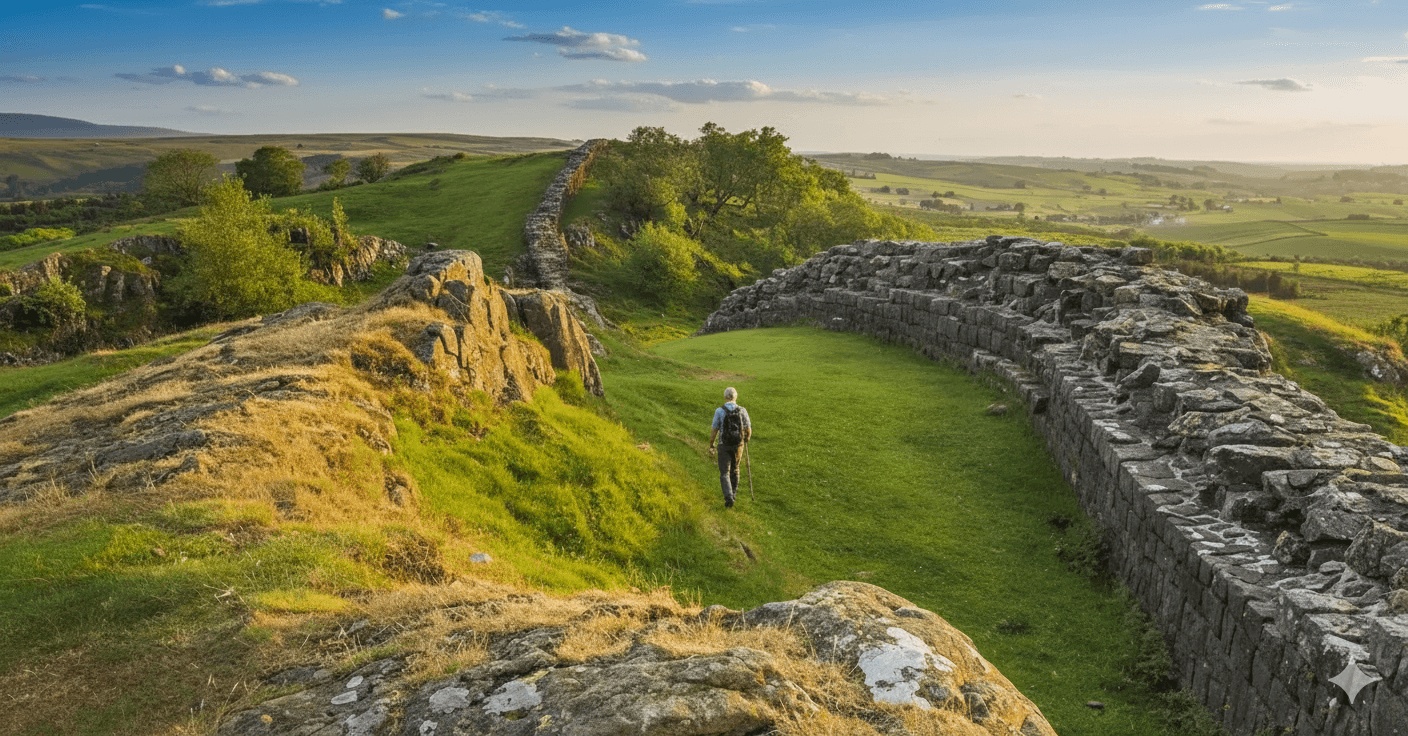
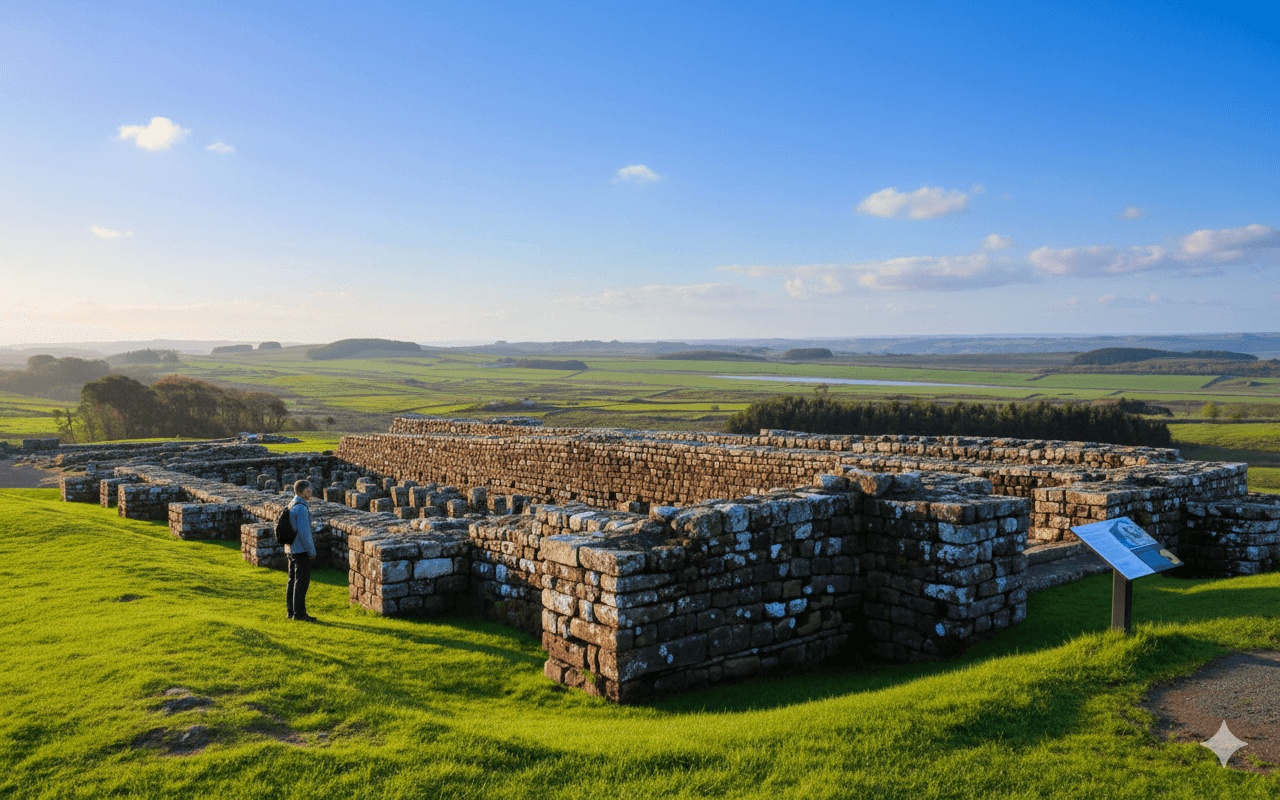
The weather along Hadrian’s Wall Path can be unpredictable at any time of year. This 84-mile trail stretches from coast to coast across northern England, traversing exposed moorland, rolling hills, and sheltered valleys. The central section, particularly around Steel Rigg and Housesteads, sits at relatively high elevation and can be significantly cooler and windier than the eastern and western ends.
Walkers should prepare for changeable conditions regardless of season. The exposed nature of much of the trail means wind and rain can occur even during summer months, whilst the occasional sunny February day can offer surprisingly pleasant walking conditions.
Spring Walking (March–May)
March
March represents the cusp of the walking season along Hadrian’s Wall. Daylight hours are increasing rapidly, with approximately 11–12 hours of daylight by month’s end. However, weather remains highly variable with cold snaps still possible.
Advantages:
- Quiet trails with minimal crowds
- Lower accommodation prices
- Dramatic skies and excellent photography conditions
- Lambing season brings life to the surrounding farmland
Disadvantages:
- Unpredictable weather, including snow showers
- Some B&Bs and guesthouses may still be closed
- Paths can be muddy after winter rainfall
- Limited daylight early in the month (around 10 hours)
April
April marks the true beginning of the walking season. The countryside comes alive with spring flowers, and accommodation providers fully reopen for the season. Daylight extends to approximately 14 hours by month’s end, providing ample time for walking.
Advantages:
- Beautiful spring scenery with wildflowers
- Reasonable accommodation availability without peak-season pressure
- Comfortable walking temperatures (averaging 8–12°C)
- Good value for money
Disadvantages:
- April showers can bring wet walking days
- Paths still potentially muddy in sections
- Cooler temperatures require layered clothing
- Easter holidays can bring busier periods
May
Many experienced walkers consider May one of the finest months for walking Hadrian’s Wall. The countryside is at its freshest, temperatures are pleasant without being hot, and daylight hours extend to around 16 hours.
Advantages:
- Excellent weather conditions with warm, dry days increasingly common
- Long daylight hours ideal for covering distance
- Spring colours at their peak
- Good accommodation availability before peak summer season
- Comfortable temperatures for walking (averaging 10–15°C)
Disadvantages:
- Bank holiday weekends can be busy
- Prices begin to increase towards summer rates
- Occasional cool, wet days still possible
Summer Walking (June–August)
June
June offers the longest days of the year, with up to 17 hours of daylight. This provides maximum flexibility for self-guided walkers tackling longer daily distances or those wanting leisurely starts and finishes.
Advantages:
- Warmest temperatures and most settled weather
- Maximum daylight for walking
- All facilities, attractions, and accommodation fully operational
- Dry paths and excellent underfoot conditions
- Wildflowers abundant along the trail
Disadvantages:
- Peak season crowds, especially at popular Roman forts
- Higher accommodation prices
- Booking well in advance essential
- Occasional hot days can make walking tiring
July and August
These months represent peak walking season along Hadrian’s Wall Path. Schools break up for summer, bringing family groups to the area, and the trail sees its highest visitor numbers.
Advantages:
- Most reliable weather with warmest temperatures (averaging 15–19°C)
- Very long daylight hours (15–16 hours)
- Vibrant atmosphere at popular spots
- Excellent facilities and services
Disadvantages:
- Busiest period with crowded trails and Roman sites
- Accommodation must be booked many months ahead
- Highest prices for accommodation and services
- Occasional midges in sheltered, damp areas (though rarely a major issue on exposed sections)
- Risk of occasional thunderstorms
- Heat can be challenging on exposed sections
Autumn Walking (September–October)
September
September rivals May as the ideal month for walking Hadrian’s Wall. The weather often remains settled, crowds diminish after school holidays, and the changing colours of autumn create stunning scenery.
Advantages:
- Excellent weather conditions with warm days still common
- Fewer walkers after summer crowds depart
- Autumn colours enhance the landscape
- Good accommodation availability
- Comfortable walking temperatures (averaging 12–16°C)
- Around 13 hours of daylight at month’s start
Disadvantages:
- Daylight hours decreasing noticeably
- Weather becoming more unsettled towards month’s end
- Some facilities may reduce opening hours
October
October can be a beautiful month for experienced walkers who don’t mind shorter days and more variable weather. The autumn colours are at their peak, and the trail is peaceful.
Advantages:
- Spectacular autumn scenery
- Quiet trails
- Lower prices
- Crisp, clear days offer excellent visibility
Disadvantages:
- Daylight hours reduced to approximately 10–11 hours
- Weather increasingly unsettled with more frequent rain
- Colder temperatures (averaging 8–12°C)
- Some accommodation may close for winter
- Earlier sunset limits daily walking time
Winter Walking (November–February)
Walking Hadrian’s Wall during winter months is possible but requires experience, flexibility, and careful preparation. Short daylight hours severely limit daily walking distances, and weather conditions can be harsh.
Advantages:
- Complete solitude on the trail
- Dramatic winter landscapes
- Very low prices
- Atmospheric experience at Roman sites
Disadvantages:
- Very short daylight (as little as 7–8 hours in December)
- Cold, wet, and potentially snowy conditions
- Many B&Bs and facilities closed
- Paths can be muddy, icy, or waterlogged
- Limited baggage transfer services
- Risk of path closures due to weather
Weather and Daylight Considerations
Average temperatures by season:
- Spring: 8–15°C
- Summer: 15–19°C
- Autumn: 8–16°C
- Winter: 2–7°C
Rainfall: The western end near Bowness-on-Solway typically receives more rainfall than the eastern end at Wallsend. Annual rainfall averages 800–1,000mm, with wettest months usually October through January.
Wind exposure: The central section of the trail, particularly around Winshields Crags (the highest point on the trail), is notably exposed to westerly winds. This can significantly affect perceived temperature, especially during spring and autumn.
Midge Considerations
Midges are far less problematic along Hadrian’s Wall than in the Scottish Highlands. The exposed, windswept nature of much of the trail provides natural protection. However, midges can occasionally be present in:
- Sheltered woodland sections
- River valleys during calm, damp evenings
- July and August during humid conditions
Walkers sensitive to midges should carry repellent, but most will find them a minor consideration compared to Scottish trails.
Accommodation Availability
Booking accommodation represents one of the most crucial planning considerations for walking Hadrian’s Wall:
Peak season (May–September): Book 6–12 months ahead, especially for popular villages like Once Brewed, Steel Rigg, and Gilsland.
Shoulder season (April, October): Book 3–6 months ahead for best choice.
Off-season (November–March): Many options close entirely; those remaining open should be booked at least 2–3 months ahead.
Self-guided walking holiday companies typically secure accommodation allocations early, providing guaranteed availability even during peak periods.
Planning Your Walking Dates
When choosing dates for walking Hadrian’s Wall Path, consider:
Personal fitness level: Less experienced walkers benefit from longer daylight hours (May–August) allowing leisurely pace without rushing to reach accommodation before dark.
Crowd tolerance: If busy trails diminish enjoyment, target May, early June, or September.
Photography interests: Spring and autumn offer dramatic skies and lighting. Summer provides long golden hour periods.
Budget constraints: April, late October, and willing acceptance of weather uncertainty in March or November offer significant savings.
Flexibility: Building a spare day into itineraries provides buffer for weather delays or rest days, particularly important outside peak season.
Special Events and Considerations
Several events and factors can affect trail conditions and accommodation availability:
Bank holidays: Particularly busy along the trail. Avoid late May and August bank holiday weekends if possible.
School holidays: English school holidays (late July through August, plus half-term breaks) increase family visitors.
Hadrian’s Wall Path events: Occasional organised walks or charity events can increase traffic; check locally before booking.
Lambing season (March–May): Extra care needed around livestock; dogs must be kept under close control.
Frequently Asked Questions
What is the best month to walk Hadrian’s Wall?
May and September are widely considered the optimal months for walking Hadrian’s Wall. Both offer excellent weather conditions with average temperatures of 12–15°C, adequate daylight hours for comfortable daily walking distances, and fewer crowds than peak summer. These months provide the best balance of good weather, trail conditions, and accommodation availability without the premium prices and congestion of July and August.
Can you walk Hadrian’s Wall in winter?
Winter walking along Hadrian’s Wall is possible but challenging and only recommended for experienced walkers. Daylight hours are severely limited (7–8 hours in December), restricting daily distances to approximately 8–10 miles maximum. Many B&Bs close for winter, paths can be muddy or icy, and weather conditions are often harsh. Walkers must be self-sufficient, carry appropriate gear, and build significant flexibility into itineraries for weather delays.
Are midges a problem on Hadrian’s Wall?
Midges are rarely a significant problem along Hadrian’s Wall compared to Scotland. The trail’s exposed, windswept nature provides natural protection. Midges may occasionally appear in sheltered woodland sections and river valleys during July and August, particularly on calm, damp evenings. Most walkers complete the trail without significant midge issues, though carrying repellent provides peace of mind for sensitive individuals.
How far in advance should I book accommodation for Hadrian’s Wall?
For walking between May and September, book accommodation 6–12 months in advance, particularly for popular villages like Once Brewed and Gilsland. Peak summer months (July–August) often sell out a year ahead. April and October require 3–6 months advance booking. Last-minute availability occasionally appears due to cancellations, but relying on this risks disrupting your itinerary or requiring lengthy detours to find accommodation.
What are the daylight hours for walking Hadrian’s Wall?
Daylight hours vary significantly by season. June offers the longest days with approximately 17 hours of daylight, whilst December has the shortest at around 7–8 hours. May and September provide 14–16 hours and 12–13 hours respectively, giving ample time for walking 12–15 miles daily. October drops to 10–11 hours, making earlier starts necessary. Winter months severely limit daily walking distances due to shortened daylight.
Is April too early to walk Hadrian’s Wall?
April is an excellent time to walk Hadrian’s Wall for those prepared for variable weather. The main walking season begins in earnest, with most accommodation reopened and daylight extending to 14 hours by month’s end. Weather remains changeable with possibility of cold snaps and rain, requiring good waterproofs and layered clothing. Paths may still be muddy in sections. However, April offers beautiful spring scenery, quieter trails, and better value than peak summer months.