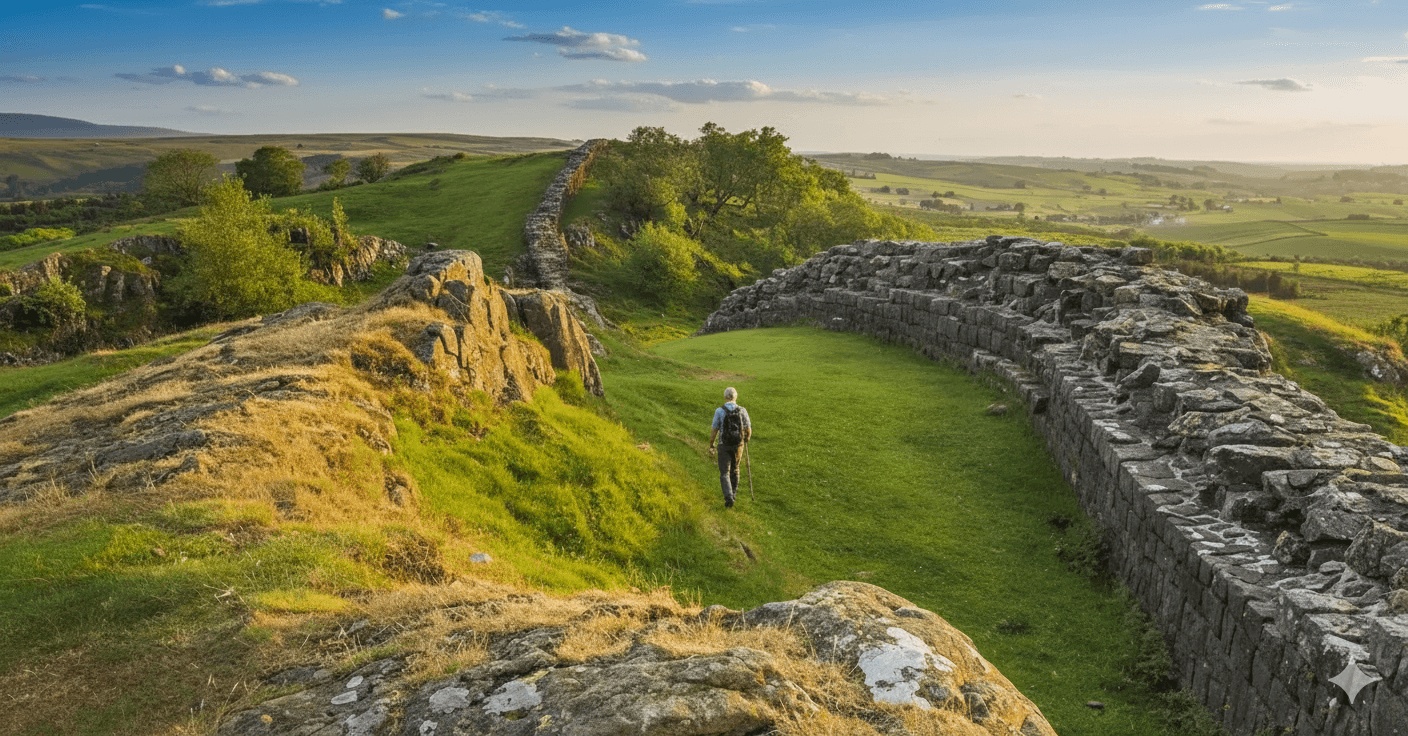
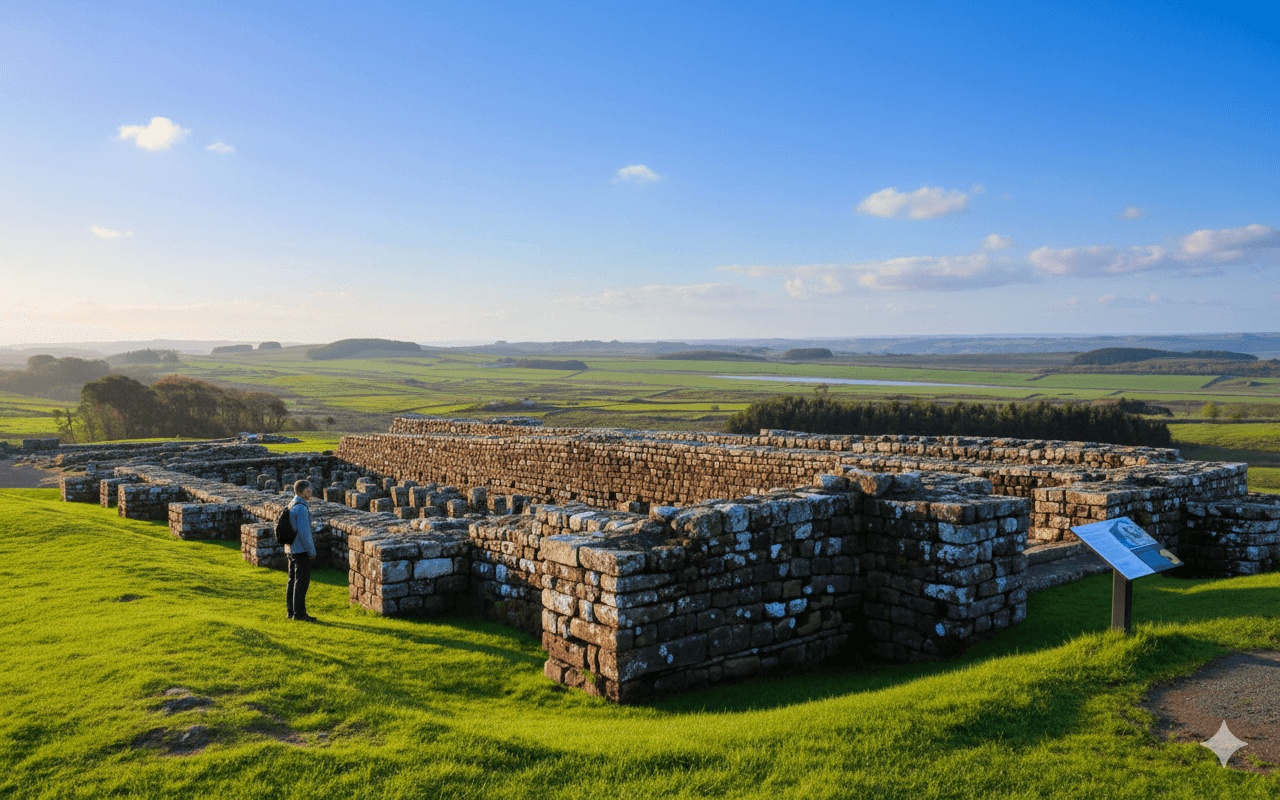
Steel Rigg provides accessible entry to the Hadrian’s Wall Path‘s most dramatic section. The car park here serves day visitors, but walkers traversing the full trail also pass through, making it a crossroads of wall exploration. The immediate area around Steel Rigg offers some of the wall’s finest preserved sections and most photographed views.
The History
The name Steel Rigg likely derives from “stile” (meaning steep) and “rigg” (meaning ridge), describing the dramatic landscape perfectly. The Romans recognized this terrain’s defensive value—the Whin Sill crags created a natural barrier requiring minimal fortification enhancement.
Construction here followed the same pattern as other wall sections. Legionary soldiers provided skilled labor and supervision whilst civilian contractors supplied additional workforce. The difficult terrain meant slower progress but created a formidable defensive line.
Milecastle 39, known as Castle Nick, sits in one of the most dramatic positions along the entire wall. Positioned in a steep dip (the “nick”) along the ridgeline, it demonstrates Roman commitment to regular spacing regardless of terrain challenges. Building a milecastle in this exposed location, requiring every stone to be hauled up steep slopes, shows remarkable determination.
The milecastle housed a patrol group who monitored the wall and operated the gateway. Traffic crossing the frontier—traders, local people, and Roman officials—passed through these gates under military supervision. The soldiers endured harsh conditions, exposed to Northumberland’s unforgiving weather on one of England’s highest and most exposed ridges.
Why Visit Steel Rigg
Steel Rigg serves as an access point to the wall’s finest sections. Whilst it’s not a specific archaeological site like a fort, the area provides exceptional Roman remains and dramatic landscapes.
Milecastle 39 (Castle Nick):
- Sits in a deep dip along the ridge
- Stone foundations show the layout clearly
- North and south gates allowed passage through the wall
- Barrack buildings housed the patrol garrison
- The position is dramatically photogenic
Walking down into Castle Nick, you appreciate the challenges these soldiers faced. The milecastle occupies one of the most exposed positions imaginable. Winter conditions here would have been brutal, with wind funneling through the nick and no shelter except the stone buildings.
The wall sections either side of Steel Rigg:
Heading east toward Housesteads:
- The wall reaches impressive heights
- Multiple courses of original Roman stonework survive
- The undulating ridge line creates classic wall views
- Turret foundations appear at regular intervals
Heading west toward Cawfields:
- The wall continues along dramatic crags
- Cawfield Quarry has created a dramatic gap
- The wall descends toward lower ground
- Views open up across wider landscapes
The landscape:
Steel Rigg sits at the heart of the Northumberland National Park. The surrounding moorland stretches for miles, creating a sense of remoteness despite the nearby car park. Looking north, the view extends across the military training area toward the Scottish borders. South, gentler farmland rolls toward the South Tyne valley.
The geological interest here is significant. The Whin Sill dolerite formed 295 million years ago when molten rock intruded between existing rock layers. Subsequent erosion revealed this harder rock as a dramatic escarpment. Walking along the crags, you’re walking on ancient volcanic rock that predates Hadrian’s Wall by nearly 300 million years.
Wildlife watching:
The moorland habitat supports interesting wildlife:
- Skylarks nest on the moors, their songs filling summer air
- Curlews breed here, their haunting calls characteristic of upland areas
- Wheatears arrive in spring, perching on wall stones
- Buzzards hunt over the moorland
- Kestrels hover hunting for small mammals
Early morning and evening offer the best wildlife observation opportunities when fewer people are present.
Time Required
If using Steel Rigg as a starting point for circular walks, allow 2-3 hours minimum. A popular route goes east to Milecastle 39 and beyond, then returns the same way. This gives time to explore the milecastle and enjoy the views without rushing.
For walkers traversing the full Hadrian’s Wall Path, Steel Rigg is simply a point along the route. However, many people schedule their walking days to include lunch stops at Steel Rigg or nearby, taking advantage of the facilities at the Sill visitor centre.
Location on the Trail
Steel Rigg sits approximately at the midpoint of the Hadrian’s Wall Path, roughly 40 miles from either end. This central position makes it one of the most frequently visited sections, particularly by day walkers and those not attempting the full trail.
From the west, you approach Steel Rigg after passing Cawfields Quarry and the descent from higher ground. The trail climbs back up to the crags, and Steel Rigg car park appears on your right.
From the east, Steel Rigg comes after the dramatic section from Housesteads, including Milecastle 39 and the undulating crag walk. The path leads you past the car park, where the Sill visitor centre provides welcome facilities.
Most multi-day walking itineraries position Steel Rigg within a central walking day, often with overnight accommodation at Once Brewed or nearby. The Twice Brewed Inn and several B&Bs cluster in this area, making it a natural stopping point.
Practical Tips for Walkers
Facilities at the Sill:
The Sill National Landscape Discovery Centre sits immediately adjacent to Steel Rigg car park:
- Modern, well-designed building with excellent facilities
- Café serving hot meals, snacks, and drinks
- Clean toilets including accessible facilities
- Gift shop with local products and walking supplies
- Exhibition space about the landscape and wall
- Youth hostel accommodation (YHA Sill)
The Sill opened in 2017 and provides the best facilities along the central section of the wall. Many walkers plan their days to include lunch or rest stops here. The café’s floor-to-ceiling windows offer wall views whilst you eat.
Weather considerations:
Steel Rigg shares the same exposure as other crag sections. The area is one of the highest points along the wall and experiences severe weather:
- Persistent wind even on calm days
- Rapid weather deterioration possible
- Limited natural shelter
- Temperature significantly lower than in valleys
Check forecasts before setting out, but prepare for worse conditions than predicted. Valleys may be calm whilst the crags experience gale-force winds.
Walking directions from Steel Rigg:
The most popular day walk heads east toward Housesteads and returns the same way. This route includes:
- The descent to Milecastle 39 (15 minutes)
- Continued walking along the crags toward Housesteads
- Turnaround point at Housesteads or partway
- Return journey along the same path
Allow 3-4 hours for a round trip to Housesteads and back (about 8 miles total). Shorter walks to Milecastle 39 and partway toward Housesteads take 2 hours.
Walking west from Steel Rigg toward Cawfields offers different but equally dramatic scenery. This direction is often less busy than the Housesteads route.
Photography:
Steel Rigg provides access to the wall’s most photographed views:
- Classic undulating wall-along-crags shots
- Milecastle 39 in its dramatic nick setting
- Sunrise and sunset lighting is spectacular
- The nearby landscape provides broader context shots
The walk to Sycamore Gap (though note the famous tree sadly fell in 2023) remains popular despite the tree’s loss. The gap itself still creates a dramatic landscape feature.
Accommodation:
The immediate area around Steel Rigg has several accommodation options:
- YHA Sill (youth hostel, all ages welcome)
- Twice Brewed Inn (pub with rooms)
- Various B&Bs and guesthouses in Once Brewed area
- Gibbs Hill Farm campsite (booking required)
Staying locally allows relaxed exploration of the wall sections without walking with a full pack. Many walkers appreciate a two-night stop here, using the middle day for pack-free wall exploration.
Transport links:
The AD122 bus (seasonal service, typically Easter to October) stops at Steel Rigg, connecting to Hexham and Haltwhistle. This service allows day visitors to create linear walks rather than out-and-back routes. For example, walk from Once Brewed to Housesteads, visit the fort, then catch the bus back.
Service frequency is limited (roughly hourly during operating season), so check timetables carefully. Out of season, Steel Rigg is best accessed on foot via the Hadrian’s Wall Path.
Safety considerations:
The crags have significant drops. Whilst the path stays safely back from edges, don’t wander off the marked trail. Particularly in poor visibility, stick to waymarked routes. The volcanic dolerite rock can be slippery when wet, requiring careful footing on descents.
Mobile phone coverage is generally good on the crags, allowing emergency calls if needed. However, don’t rely solely on phones for navigation—carry appropriate mapping.