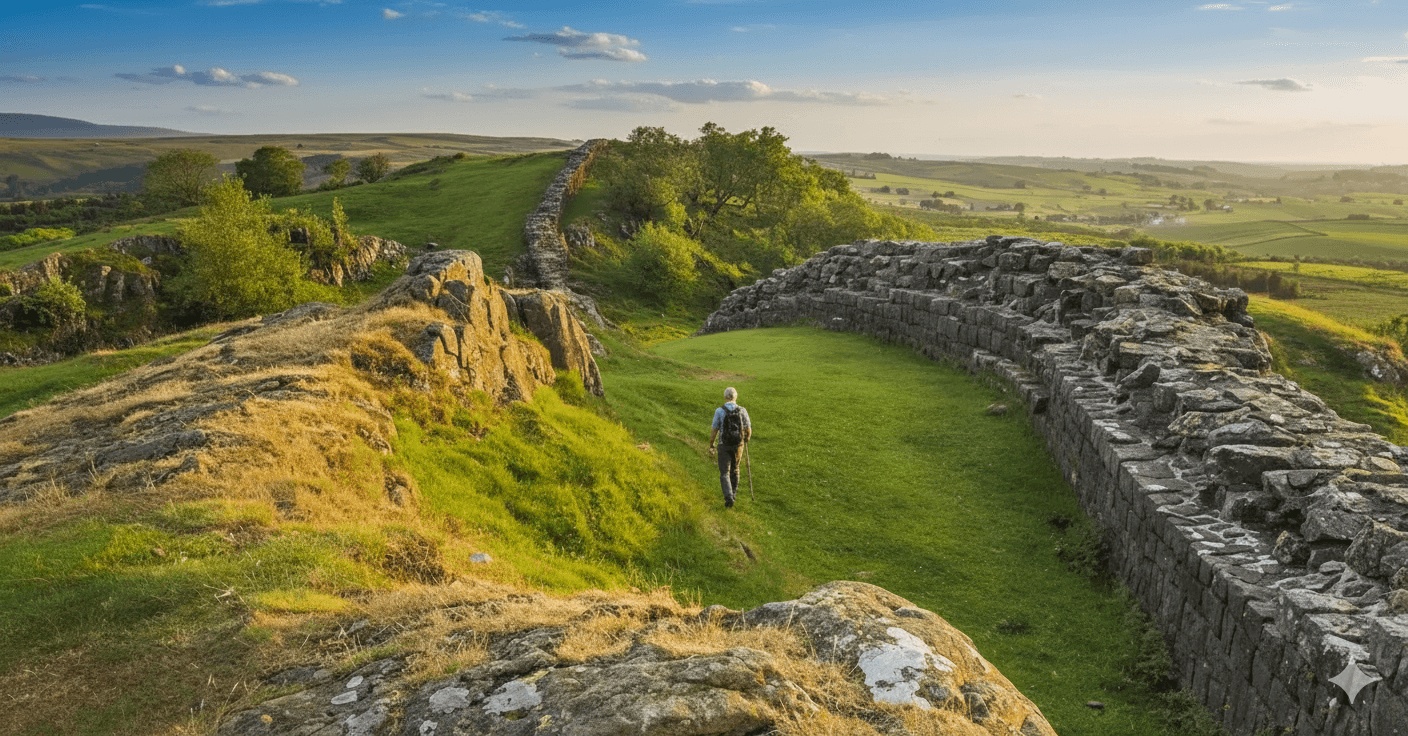
Day 4 of Hadrian's Wall Path is the day you've been waiting for. This is the famous central section, where the wall rides the dramatic crags of the Whin Sill, creating some of the most spectacular walking in Britain. From Steel Rigg to Gilsland, you'll experience Hadrian's Wall at its absolute finest - and face its greatest challenges.
This 9-mile section is shorter than previous days but significantly more demanding. The terrain is rough, the climbs are steep, and the descents require care. But the rewards are extraordinary: Housesteads Fort, Sycamore Gap (site of the famous fallen tree), Crag Lough, and mile after mile of wall perched dramatically on clifftops. This is the day that stays with you forever.
Day 4 Overview: The Numbers
Here's what to expect:
- Distance: 9 miles (14.5 km)
- Terrain: Rough, rocky paths with steep climbs and descents
- Elevation gain: Significant - constant ups and downs over the crags
- Walking time: 6-8 hours including site visits
- Difficulty: Challenging - the hardest day on the trail
- Facilities: Very limited - carry everything you need
Don't be deceived by the shorter distance. The terrain on Day 4 is demanding, and you'll want time to explore Housesteads and absorb the spectacular views. Many walkers find this day takes longer than the 15-mile urban sections.
Starting from Steel Rigg: Into the Crags
The day begins dramatically. From Steel Rigg car park, you immediately climb onto the crags, with views opening up across the Northumberland landscape. On a clear morning, you can see for miles in every direction.
The first section takes you east towards Housesteads, following the wall along Peel Crags. This is a good warm-up for what's ahead - the terrain is rough but not yet at its most demanding. Look for:
- Peel Crags: Excellent wall sections with commanding views
- Milecastle 39: Above the famous Sycamore Gap
- Crag Lough: Beautiful natural lake below the cliffs
- Hotbank Farm: Traditional farmstead beneath the crags
The Sycamore Gap, where the lone sycamore tree stood for over 200 years, remains a poignant location. Though the tree was tragically felled in 2023, the site retains its power - a natural dip in the crags that frames any photographs you take here.
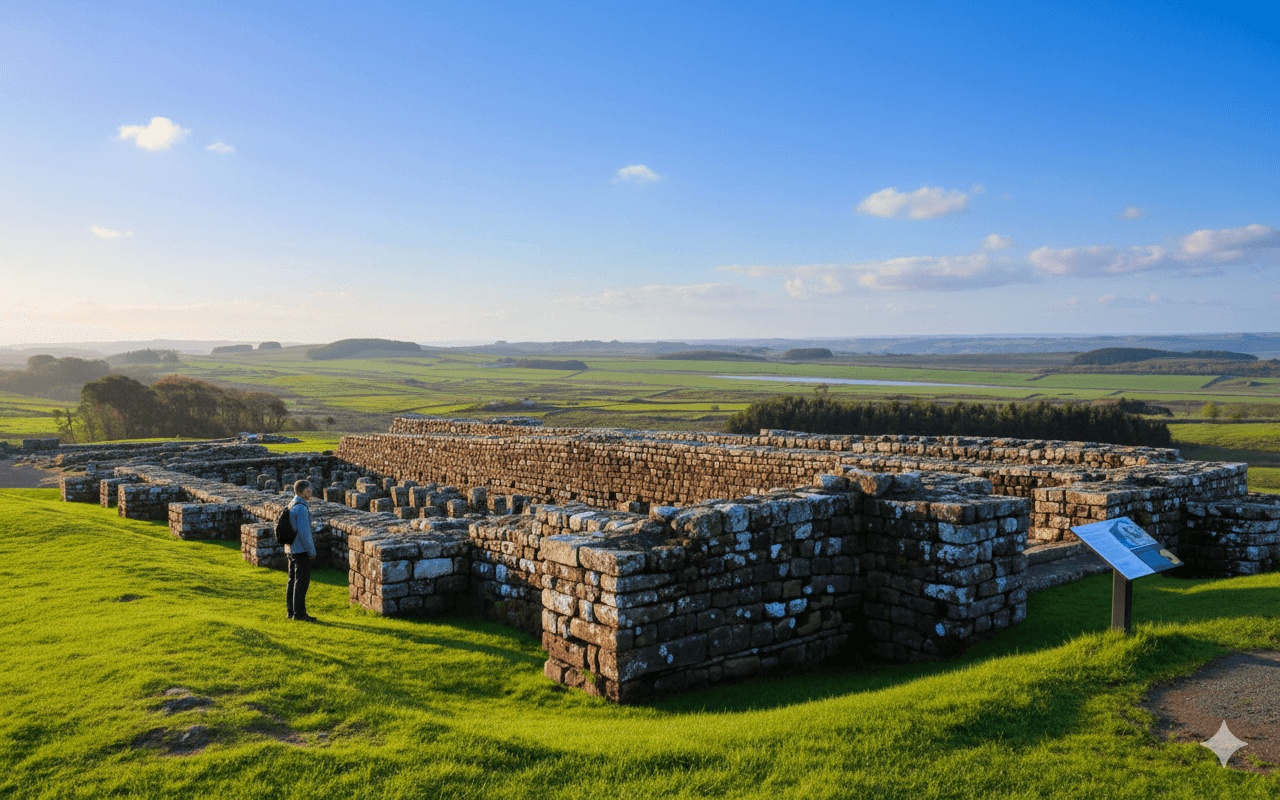
Housesteads Roman Fort
Housesteads (Vercovicium) is the most complete Roman fort in Britain and an essential stop. Plan to spend at least an hour exploring - more if you're fascinated by Roman history. Key features include:
- The latrines: Famous communal toilets with running water
- Granaries: Massive storage buildings with ventilated floors
- Commander's house: The praetorium with its private bath suite
- Hospital: One of the best-preserved military hospitals
- Barracks: Where ordinary soldiers lived and slept
The fort sits at the highest point on the wall's line, commanding views in all directions. Standing here, you understand why the Romans chose this location - any approaching threat would be visible for miles.
The museum at Housesteads (down the hill at the visitor centre) provides context for what you're seeing. If time allows, it's worth the detour. The audio guide is excellent for understanding the site's layout and history.
Housesteads to Cawfields (4 miles)
Leaving Housesteads, you enter the most demanding section of Hadrian's Wall Path. The wall follows the Whin Sill escarpment, climbing and descending repeatedly as the rock formation creates a series of dramatic crags.
Key landmarks on this section:
- Cuddy's Crags: Named after St Cuthbert, with sheer drops to the north
- Rapishaw Gap: A natural pass through the crags
- Hotbank Crags: More dramatic walking with wall sections intact
- Milking Gap: Where cattle were traditionally driven through the wall
- Highshield Crags: Spectacular cliff-edge walking
- Caw Gap: Another natural pass, with refreshment options nearby
The constant climbing and descending is tiring, but the views are extraordinary. Take your time, rest when needed, and stay well back from the cliff edges. The drops to the north are genuine - this is not a place to rush or take risks.
Cawfields to Gilsland (5 miles)
At Cawfields, you reach a natural pause point. The quarry here (now flooded) demonstrates how much of the wall's stone was removed in past centuries for other uses. There's a car park with toilets - your first facilities since Steel Rigg.
West of Cawfields, the terrain becomes slightly gentler, though still demanding. You're leaving the most dramatic crags behind but passing through beautiful open moorland. Features include:
- Great Chesters Fort: The remains of Aesica, another wall fort
- Walltown Crags: Final spectacular section of the Whin Sill
- Thirlwall Castle: Medieval castle built from wall stones
- Gilsland approach: Descending into the Irthing Valley
Walltown Crags are worth a pause - this is some of the most photographed scenery on the entire wall. The combination of rocky outcrops, wall remains, and vast views creates unforgettable images.
Arriving at Gilsland
Gilsland is a small village straddling the border between Northumberland and Cumbria. It has historical associations with Walter Scott, who set part of his novel "Guy Mannering" here. Today it's a quiet village serving walkers on Hadrian's Wall Path.
Accommodation includes:
- The Samson Inn: Traditional pub with rooms
- Hill on the Wall: Popular B&B for walkers
- Gilsland Spa Hotel: Larger hotel with spa facilities
- Various B&Bs: Several options in the village
After Day 4's challenges, a comfortable bed and good meal are well-earned. Most accommodation in Gilsland is geared towards walkers and serves hearty portions - you'll need them.
Navigation on Day 4
The path is generally well waymarked, but Day 4 requires vigilance:
- Cliff edges: Stay on the marked path, especially in poor visibility
- Multiple paths: Some sections have alternative routes - follow waymarks
- Housesteads: The path bypasses the fort - you have to detour to visit
- Cawfields: Easy to miss the quarry car park - good toilet stop
In mist or heavy rain, navigation on the crags requires serious attention. The cliff edges are real hazards, and paths can be slippery on wet rock. If conditions are dangerous, consider waiting for improvement or taking alternative transport.
Weather and Safety
Day 4 demands respect for the weather. The crags are exposed to wind, rain, and rapid temperature changes. Essential preparations:
- Wind: Can be severe on the crags - windproof essential
- Rain: Makes rocky surfaces slippery - take extra care
- Visibility: Poor visibility makes cliff edges dangerous
- Temperature: Significantly cooler on the exposed crags
- Lightning: The crags are exposed - descend if storms threaten
Check the forecast carefully and be prepared to alter your plans. A day of poor weather on the crags is dangerous and unpleasant. If conditions are bad, most accommodation hosts can arrange transport to skip the most exposed sections.
What to Carry
Facilities are virtually non-existent on Day 4 until Cawfields. Carry:
- Water: At least 2 litres, more in hot weather
- Food: Lunch plus emergency snacks
- Full waterproofs: Essential, even in summer
- Warm layers: Fleece, hat, gloves
- Blister kit: The rough terrain is hard on feet
- Camera: With charged battery - this is the day for photos
- Housesteads entry: English Heritage membership or entry fee
Making the Most of Day 4
This is the day you'll remember for the rest of your life. Tips for making it perfect:
- Start early: More time means less rushing on the crags
- Take Housesteads seriously: It's worth at least an hour
- Rest at viewpoints: Don't march past the spectacular bits
- Photograph carefully: Stay well back from cliff edges for safety
- Pace yourself: The constant climbing is tiring - don't burn out early
- Embrace the challenge: This is what you came for
The soldiers who manned Hadrian's Wall nearly 2,000 years ago walked these same crags in all weathers. Some were from the Mediterranean, others from northern Europe. Imagine patrolling this frontier in winter, watching for movement to the north. Your comfortable walk is a holiday; their daily life was a duty.
Common Questions About Day 4
Is Day 4 suitable for all fitness levels? It's the most demanding day on the path. If you have concerns about fitness, consider a longer itinerary that breaks this section into two shorter days.
What if I'm afraid of heights? The cliff edges are genuine but the path is set back from them. If you're comfortable on exposed hillsides, you'll be fine. Those with severe vertigo should research the route carefully.
Can I skip Housesteads? You can, but you'd be missing one of the most significant Roman sites in Britain. It's directly on the route and unmissable.
What time should I finish? Allow until late afternoon/early evening, especially if you want to explore sites thoroughly. Starting early gives you maximum flexibility.
Looking Ahead: Day 5
Day 5 takes you from Gilsland to Walton or Banks, leaving the dramatic crags behind and entering the gentler landscape of the Irthing Valley. You'll visit Birdoswald Fort and walk through pastoral Cumbria. The terrain is easier, allowing tired legs to recover while still enjoying excellent wall remains.
The contrast with Day 4 is marked. You've experienced Hadrian's Wall at its most dramatic - now you'll see a different character of the frontier as it crosses rolling farmland towards its western terminus.
Plan Your Hadrian's Wall Adventure
Day 4 is unforgettable, but it's part of an 84-mile journey that deserves proper planning. Our walking holiday itineraries ensure you have the right accommodation, baggage transfer, and support to enjoy every mile.
Whether you want the challenge of a 4-day crossing or prefer a more relaxed 8-day approach with time to explore, we can arrange everything. Don't let logistics diminish your experience of this remarkable route.
Ready to walk the crags? Get in touch to start planning your Hadrian's Wall adventure.
Useful resources: National Trail.