Key Points / Quick Summary
- Easy 14.5-mile walk following the River Eden and Solway Firth with minimal elevation (Difficulty: 3/10)
- Route passes through attractive riverside scenery, salt marshes, and historic villages with authentic Cumbrian character
- Limited facilities along the way—plan ahead for refreshments and carry sufficient water
- Generally excellent wayfinding with National Trail markers, though some marsh sections require attention
- Multiple exit points for public transport or taxis at Burgh by Sands, Drumburgh, and Port Carlisle
- Represents either the triumphant finish or inspiring start of a Hadrian’s Wall Path walking holiday
Route Overview: The Solway Plain Section
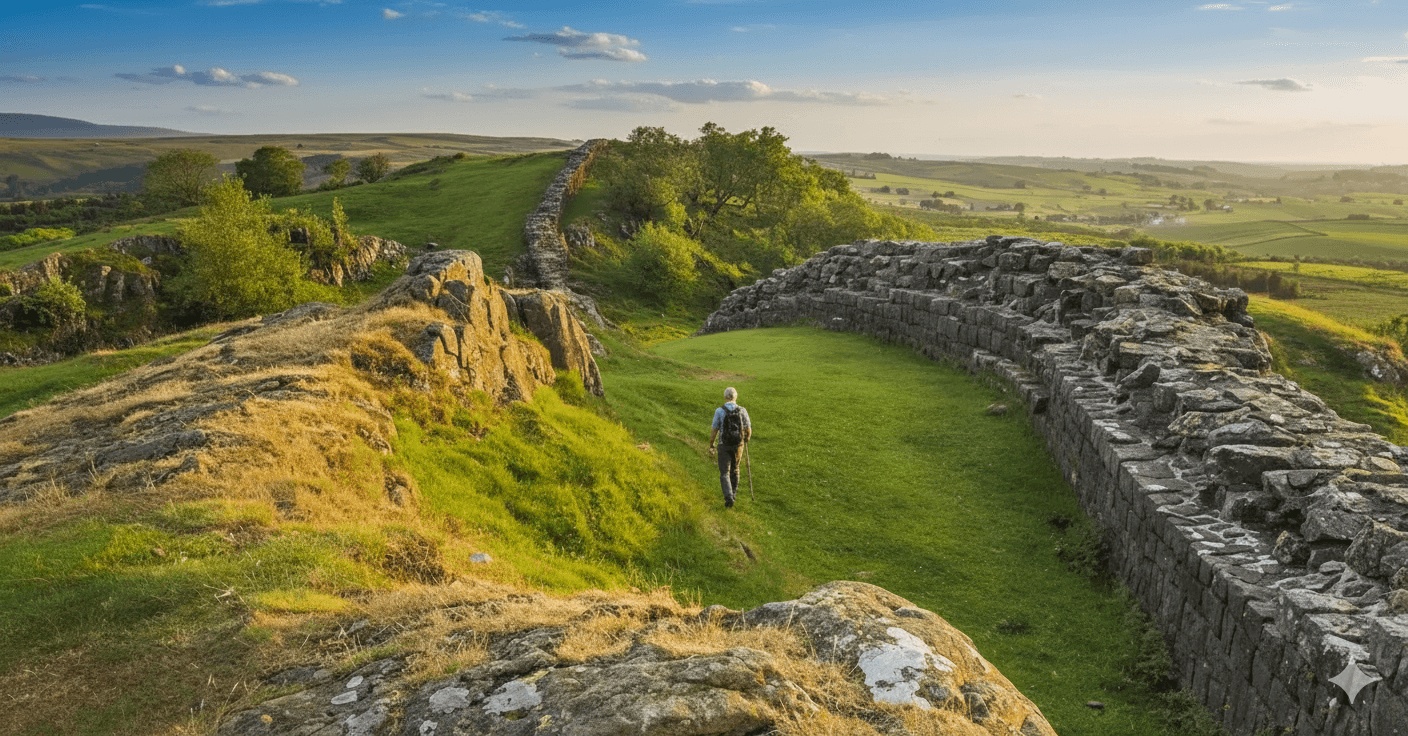
This stage of the Hadrian’s Wall Path marks either the beginning or conclusion of an extraordinary journey across northern England. Unlike the dramatic crags and visible Roman remains found elsewhere along the trail, this section offers a completely different character—wide skies, tidal marshes, and peaceful agricultural landscapes that stretch towards Scotland across the Solway Firth.
The 14.5-mile route between these two settlements follows almost entirely flat terrain, making it one of the least physically demanding stages of the Hadrian’s Wall Path. However, what it lacks in elevation gain, it compensates for with distance and exposure to weather, particularly wind sweeping across the Solway Plain.
Elevation and Terrain Profile
Difficulty Rating: 3 out of 10
This remains one of the gentlest sections along the entire Hadrian’s Wall Path, with total elevation gain barely exceeding 150 metres throughout the entire distance. The route maintains a remarkably flat profile, staying close to sea level as it traces the historic line of the Roman Wall along the estuary.
The terrain consists primarily of:
- Paved paths and quiet country lanes through the initial miles
- Well-maintained footpaths across agricultural land
- Grassy tracks alongside the Solway Firth
- Some sections across salt marsh (firm underfoot but can be muddy after rain)
- Short stretches of single-track roads through villages
Those with mobility concerns or walking with trekking poles will find this stage accessible, though the distance itself shouldn’t be underestimated. The exposed nature of the landscape means weather conditions play a significant role in the walking experience—a blustery day can feel considerably more challenging than the elevation profile suggests.
Wayfinding and Navigation
Navigation along this section proves straightforward for most walkers. The Hadrian’s Wall Path benefits from excellent National Trail signage, with the distinctive acorn waymarkers appearing regularly throughout the route.
Key Navigation Points:
- Clear signposting through both settlements at either end
- Well-marked paths through Burgh by Sands and Drumburgh
- Some marsh sections require attention—follow waymarkers carefully
- OS Explorer Map 315 (Carlisle) recommended as backup
- Mobile phone signal generally available but can be patchy in remote sections
- Downloaded mapping apps provide additional confidence
The route rarely presents route-finding challenges, though mist rolling in from the Solway can reduce visibility. In such conditions, having a backup navigation method proves sensible. Several stiles and kissing gates punctuate the route, all clearly waymarked.
Water Sources and Toilet Facilities
This stage requires careful planning regarding facilities, as options remain limited once leaving either settlement behind.
Water and WC Availability:
Starting from Carlisle, public toilets are available in the city centre before departure. Shops and cafés provide opportunities to purchase water and snacks before setting out.
Along the route itself, facilities prove sparse:
- Burgh by Sands (approximately 5 miles from Carlisle): No public toilets; village shop with basic supplies
- Drumburgh (roughly halfway): Extremely limited facilities; occasional honesty box or farm shop
- Port Carlisle (2.5 miles from Bowness-on-Solway): Former port village with minimal facilities
At Bowness-on-Solway, public toilets are available near the King’s Arms. Banks End Café provides refreshments for those requiring facilities at journey’s end.
Practical Advice: Carry at least 1.5 litres of water per person, particularly during warmer months. The exposed nature of this section means shelter is limited, and facilities are genuinely scarce. Plan toilet stops accordingly before leaving either settlement.
Lunch Stops and Refreshment Options
Food options along this stage require forward planning. Unlike more tourist-oriented sections of the Hadrian’s Wall Path, refreshment stops appear infrequently.
Pubs and Cafés
Greyhound Inn, Burgh by Sands Located approximately 5 miles into the walk, this traditional Cumbrian pub provides a welcome stop. Opening hours vary seasonally, and it’s closed on certain weekdays—checking ahead is advisable. The pub serves lunch and offers real ales alongside a menu featuring local ingredients.
Banks End Café, Bowness-on-Solway Situated at the western terminus, this small café offers hot drinks, light meals, and homemade cakes. Opening hours are limited (typically seasonal and weekends), so availability cannot be guaranteed.
The King’s Arms, Bowness-on-Solway This characterful pub marks the traditional finishing (or starting) point for many Hadrian’s Wall Path walkers. Food service hours vary, but it remains the most reliable refreshment option at this end of the route.
Packed Lunch Recommendations
Given the limited facilities, many walkers opt to carry a packed lunch. Shops in Carlisle provide ample opportunities to purchase provisions. Several bakeries near the cathedral offer excellent options for trail food.
For those walking as part of a self-guided walking holiday package, some operators include packed lunches or can arrange pub stops in advance, removing the uncertainty around opening hours.
Transport Links and Exit Points
Understanding exit options provides peace of mind, particularly on longer walking days when weather deteriorates or unexpected circumstances arise.
Bus Services
Burgh by Sands (5 miles from Carlisle) The 93 bus service connects Burgh by Sands with Carlisle city centre. Services run several times daily, though less frequently on Sundays. Journey time approximately 20 minutes.
Drumburgh (approximately 7 miles from Carlisle) The 93 bus also serves Drumburgh, though with less frequency. Check timetables carefully, as gaps between services can be significant.
Port Carlisle Limited bus service available, connecting to Carlisle. Service frequency is minimal—often only a few buses per day.
Bowness-on-Solway The 93 bus terminates here, providing connections back to Carlisle. End-of-day services may be limited, particularly in winter months.
Taxi Options
For those requiring more flexible transport, local taxi firms service the area:
- Several Carlisle-based taxi companies cover this route
- Advance booking recommended, especially outside peak season
- Mobile phone signal generally adequate for calling taxis from villages
- Expect journey costs of £15-30 depending on pickup location
Many self-guided walking holiday providers include baggage transfer between accommodations, eliminating the need to carry full packs and making exit points less crucial for tired walkers.
Walking Direction Considerations
An interesting aspect of this stage is how direction affects the walking experience. Whether walking west towards Bowness-on-Solway or east towards Carlisle, each direction offers distinct advantages.
Walking West (Carlisle to Bowness-on-Solway)
This direction aligns with the traditional “completing the Wall” narrative, finishing where the Roman fortifications met the Solway. Many walkers appreciate the symbolic significance of reaching the coast. Prevailing westerly winds may be in your face, though this varies. The psychological aspect of “finishing” can provide motivation over the final miles.
Walking East (Bowness-on-Solway to Carlisle)
Starting at the remote western end and walking towards civilisation has its own appeal. Prevailing winds might be behind you, potentially making for easier walking. Finishing in Carlisle provides immediate access to accommodation, restaurants, and onward transport connections. Some walkers prefer building up their fitness over earlier stages before tackling longer distances.
The flat nature of this section means elevation considerations don’t influence direction choice—the profile reads the same regardless of direction.
Historical Context and Points of Interest
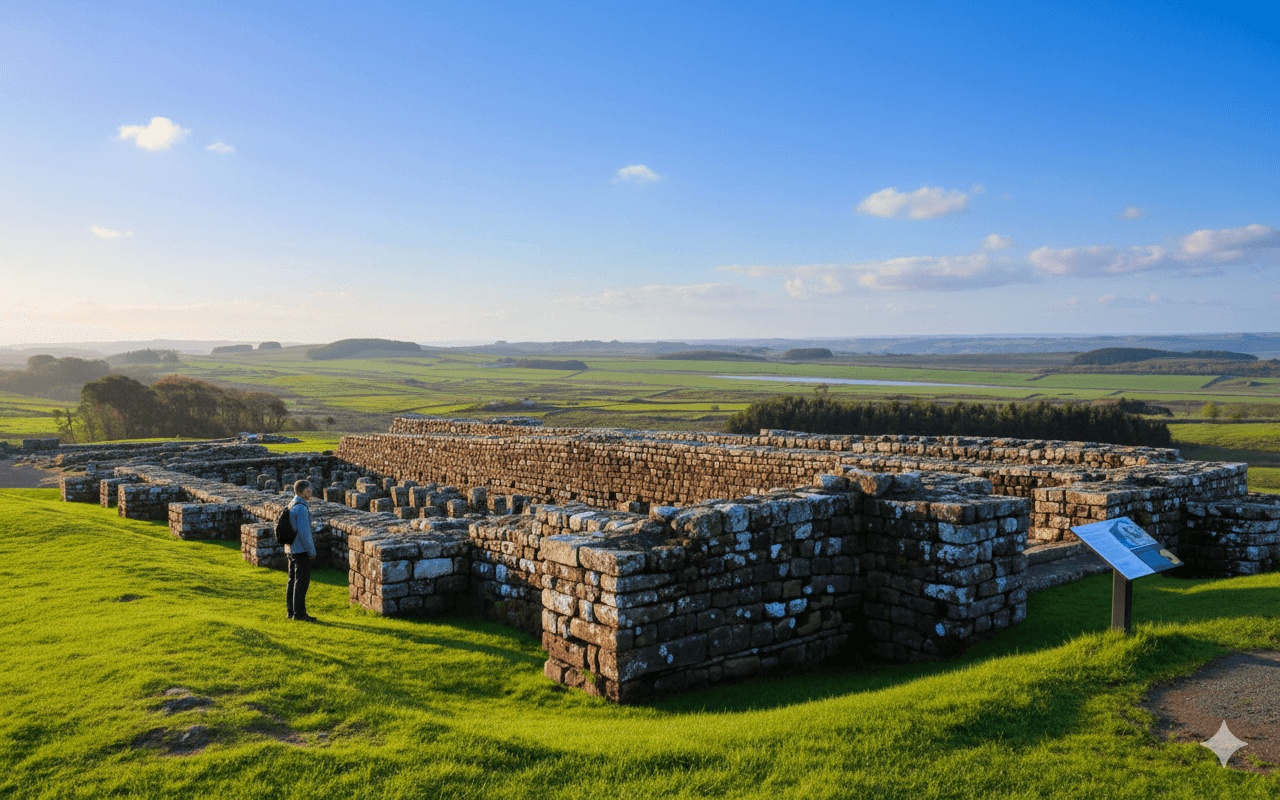
Although visible Roman remains are scarce along this section, the historical significance runs deep. The Roman Wall once stretched the entire length of this route, with the Stanegate Roman road running parallel to the south. Tidal conditions and agricultural activity over centuries have claimed most visible traces, but the modern path follows the Wall’s line closely.
Notable Locations
Burgh by Sands St Michael’s Church, built using stone from the Roman Wall, features a fortified tower and marks the spot where Edward I died in 1307 while campaigning against the Scots. A monument on the marsh commemorates this event.
Drumburgh Castle The remains of this medieval castle, also constructed from Roman materials, sit beside the route. The village itself marks the site of the Roman fort Congavata.
Bowness-on-Solway The westernmost fort on Hadrian’s Wall, Maia, once stood here. A viewpoint explains the Roman frontier system and offers views across the Solway Firth to Scotland. The Banks East Turret excavation site provides tangible connection to Roman occupation.
Practical Walking Tips
Weather Considerations
The Solway Plain’s exposed nature means weather plays a significant role in walking comfort. Wind frequently sweeps across the flat landscape, making waterproof jackets and wind-resistant layers essential. Even summer days can turn blustery.
Rain gear should be packed regardless of forecast, as conditions change rapidly near the coast. Conversely, sun protection is crucial on clear days when shade is virtually non-existent along much of the route.
Footwear and Gear
Walking boots with ankle support remain recommended, though the flat terrain means trail shoes are viable for experienced walkers with strong ankles. Paths can be muddy, particularly after rain or across marsh sections, so waterproof footwear proves valuable.
Trekking poles assist with maintaining rhythm over the distance, even on flat terrain. Many walkers find them helpful for the longer stages of the Hadrian’s Wall Path.
Timing Your Walk
Allow 5-7 hours for this stage, depending on pace and stop frequency. Starting early provides maximum daylight hours and flexibility if the day proves more challenging than anticipated. This also ensures arrival while facilities remain open.
Spring and autumn offer excellent walking conditions with fewer midges and moderate temperatures. Summer brings longer days but also peak visitor numbers to the pubs, potentially affecting lunch stop availability. Winter walking is feasible given the low elevation, though shorter days and potentially fierce weather require consideration.
Planning a Self-Guided Walking Holiday
This section forms part of a multi-day walking holiday experience along Hadrian’s Wall Path. Self-guided packages typically include pre-booked accommodation, detailed route notes, maps, and baggage transfer services—allowing walkers to enjoy each day carrying only a light daypack.
The beauty of self-guided walking holidays lies in the flexibility. Walkers proceed at their own pace, stop where they choose, and can adjust plans if weather or energy levels dictate. Support is typically available via phone should questions or issues arise.
When planning, consider whether to include rest days or shorter stages either side of this longer section. Some walking holiday itineraries combine this stage with shorter days to balance physical demands across the week.
Accommodation Considerations
Both settlements offer accommodation options, though Carlisle provides significantly more choice as a city. Bowness-on-Solway has limited but characterful bed and breakfast options and a small inn. Those booking independently should secure Bowness-on-Solway accommodation well in advance, particularly during peak walking season (May-September).
Self-guided walking holiday packages typically include carefully selected accommodation, removing the booking burden and ensuring places are available along the route.
Wildlife and Natural Environment
The Solway Firth holds international importance for wildlife, particularly wading birds and wildfowl. Depending on season and tide, walkers may observe species including oystercatchers, curlews, redshanks, and various duck species. The marshes support diverse plant communities adapted to saltwater conditions.
Scotland’s hills are visible across the estuary throughout much of the walk, providing a constant reminder of the Wall’s purpose as a frontier. On clear days, Criffel and other Dumfriesshire peaks create a dramatic backdrop.
FAQs
How difficult is the walk between Carlisle and Bowness-on-Solway?
This section rates 3 out of 10 for difficulty, making it one of the easiest stages along Hadrian’s Wall Path in terms of elevation. The route is almost entirely flat with minimal climbing. However, the 14.5-mile distance shouldn’t be underestimated, particularly in windy conditions which are common across the exposed Solway Plain. Walkers with reasonable fitness who regularly walk 5-6 miles should manage this stage comfortably.
Are there shops or cafés along the route?
Facilities are extremely limited between the two settlements. Burgh by Sands has a small village shop and the Greyhound Inn (check opening hours). Drumburgh and Port Carlisle have minimal facilities. Bowness-on-Solway offers Banks End Café (seasonal opening) and The King’s Arms pub. Carrying sufficient water and snacks is essential—at least 1.5 litres of water per person and a packed lunch is recommended.
Can I catch a bus partway along this section?
Yes, the 93 bus service connects Carlisle with Burgh by Sands, Drumburgh, Port Carlisle, and Bowness-on-Solway. Services run several times daily, though less frequently on Sundays and in winter months. This provides flexibility to shorten the walk if needed. Taxis are also available from Carlisle-based firms, though advance booking is advisable, particularly from more remote villages along the route.
Is the route well signposted?
The Hadrian’s Wall Path benefits from excellent National Trail waymarking throughout this section. Distinctive acorn markers appear regularly, and signposting through villages is clear. Some sections across salt marsh require more attention, particularly in misty conditions. Carrying OS Explorer Map 315 or a downloaded mapping app provides backup navigation. Mobile phone signal is generally adequate but can be patchy in exposed areas.
How long does it take to walk from Carlisle to Bowness-on-Solway?
Most walkers complete this 14.5-mile section in 5-7 hours, depending on pace, fitness level, and stop frequency. Starting early provides maximum flexibility and ensures arrival while facilities remain open. The flat terrain allows for steady progress, though the distance means this is a full day’s walking. Building in time for lunch stops, photographs, and brief rests provides a more enjoyable experience.
What’s the best time of year to walk this section?
Spring (April-May) and autumn (September-October) offer excellent conditions with moderate temperatures, fewer midges, and generally stable weather. Summer provides longest daylight hours but busier pubs and accommodation. Winter walking is feasible given the low elevation, though fierce winds and shorter days require consideration. Avoid periods of heavy rain when marsh sections become particularly muddy. The exposed nature means checking weather forecasts before departure is always advisable.