As walkers approach the western stretches of Hadrian's Wall, the market town of Brampton emerges as a welcome hub of civilization after the remote terrain of the central section. This pleasant Cumbrian town offers the practical amenities that long-distance walkers appreciateÔÇöproper shops, choice of accommodation, and varied eating optionsÔÇöwhile providing easy access to some of the Wall's most significant but least-visited sites. For those on the final stages of their journey to Bowness-on-Solway, Brampton represents the last substantial settlement before the trail's conclusion.
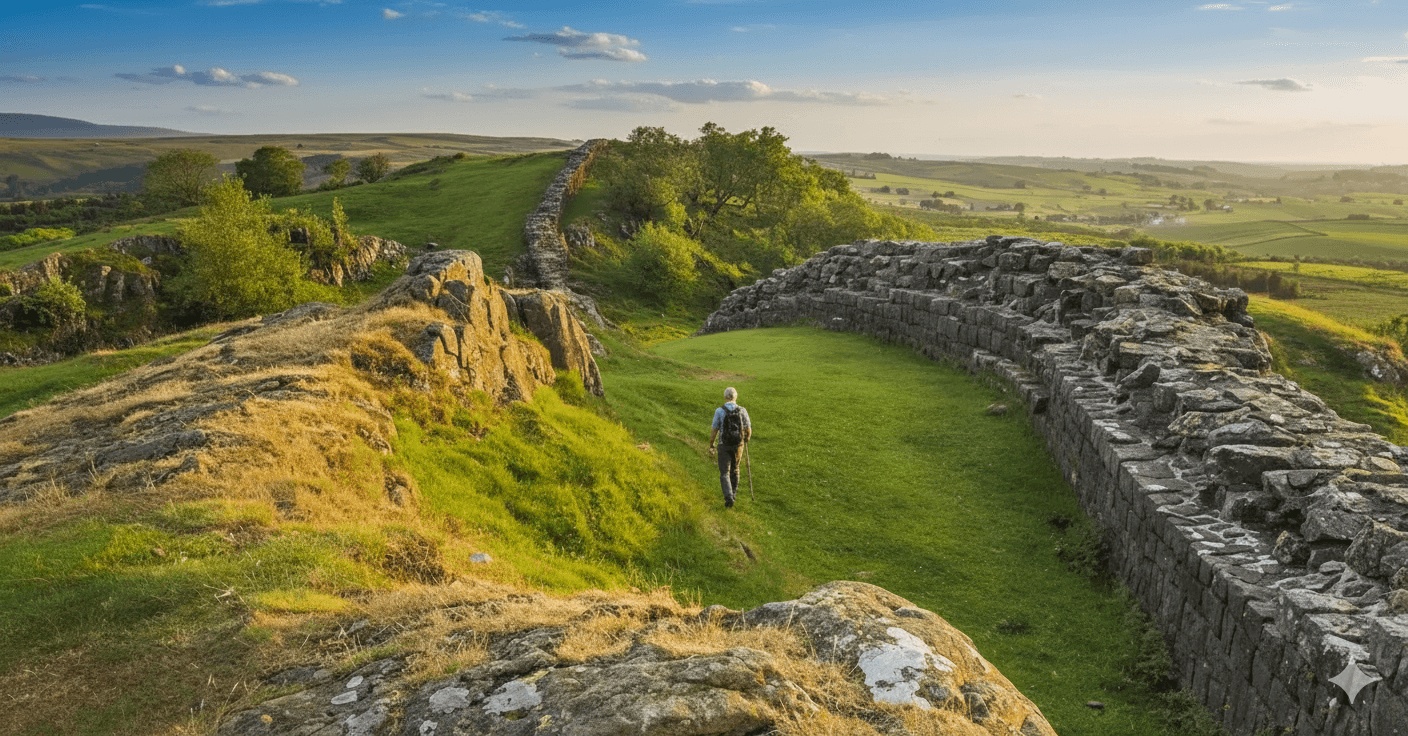
The western section of Hadrian's Wall has a different character from the famous central crags. Here the Wall runs across gentler terrain, through farmland and along ridges that offer wide views across the Solway plain and into Scotland. The Roman remains are perhaps less dramatic but no less historically significant, and the reduced visitor numbers mean you'll often have ancient sites to yourself. Brampton serves as the ideal base for exploring this rewarding but overlooked portion of the frontier.
The Town Itself
Brampton grew up around its market, granted by charter in 1252, and the town retains much of its traditional character. The central octagonal Moot Hall, built in 1817, dominates the market place and continues to host a weekly market. Around it, independent shops, traditional pubs, and local businesses create an atmosphere that feels authentically northern English rather than tourist-oriented.
For walkers, this authenticity translates into practical benefits. You'll find a well-stocked outdoor shop for forgotten gear, a pharmacy for blister treatments, proper supermarkets for stocking up on supplies, and a range of accommodation from B&Bs to small hotels. The town has banks with ATMs (useful as card acceptance along the Wall is variable) and good mobile phone coverage for catching up with the outside world.
The town's history extends beyond its medieval market. Brampton played a role in the Jacobite risingsÔÇöBonnie Prince Charlie's army passed through in 1745, and six supporters were executed here after the uprising's failure. The Gothic church of St Martin's, designed by the celebrated architect Philip Webb with windows by Edward Burne-Jones and William Morris, offers an unexpected Pre-Raphaelite treasure in this northern town.
Accessing the Wall from Brampton
The Hadrian's Wall Path doesn't pass directly through Brampton but runs approximately 2-3 miles to the north. However, good connections make the town a practical accommodation base for Wall walkers. Local taxi services can transport you to and from the trail. Some accommodation providers offer drop-off and pick-up services for guests.
For those using our baggage transfer service, staying in Brampton is seamlessly integrated into your walking holiday. Your bags arrive at your accommodation while you complete the day's walking, and we help coordinate transport to trail access points as needed.
The key Wall sites accessible from Brampton include Birdoswald (approximately 5 miles), Banks East Turret (about 3 miles), and the Willowford Bridge area (4-5 miles). Each of these can be reached on foot via connecting paths, or more quickly by vehicle for those short on time.
Birdoswald and the Eastern Approaches
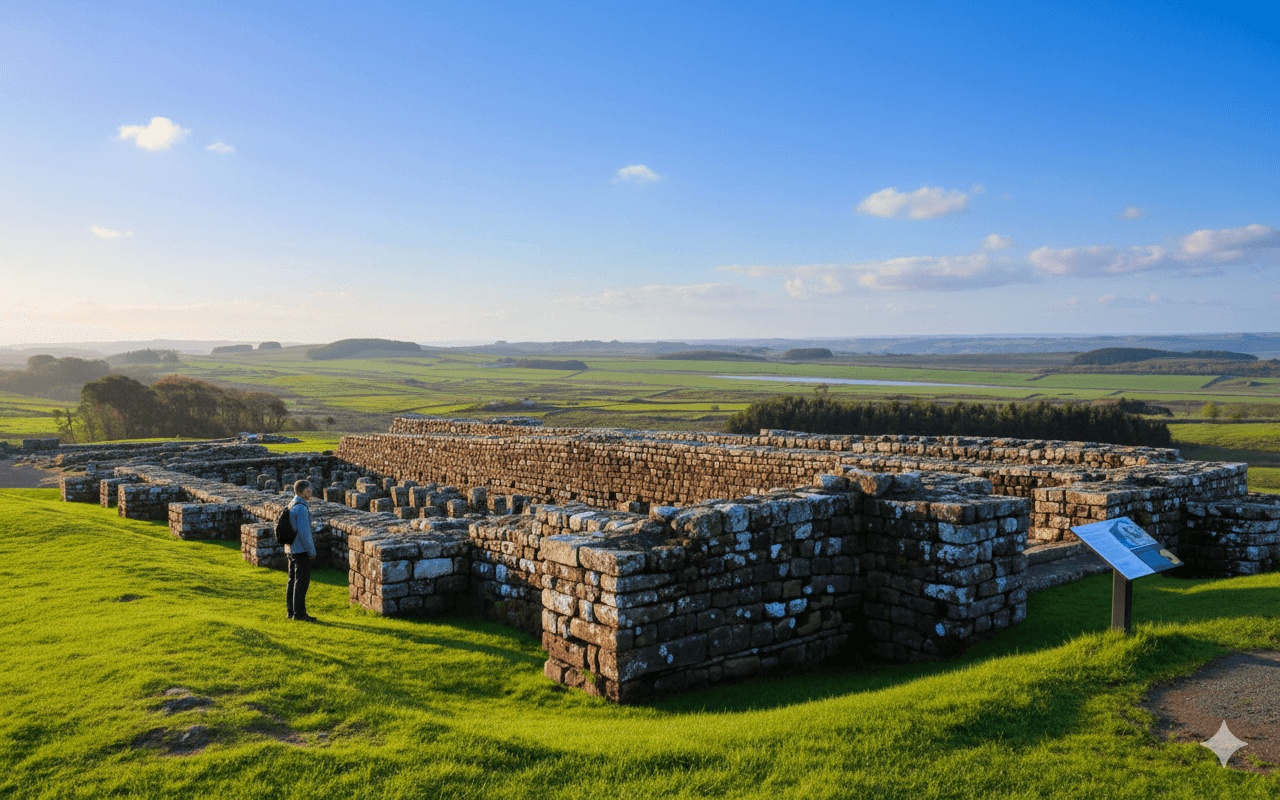
Birdoswald Roman Fort represents the major Roman site in this area and is easily reached from Brampton. This excellently preserved fort, managed by English Heritage, offers substantial remains including long stretches of the Wall itself extending eastward. The visitor facilities make it an ideal half-day destination, combining Roman exploration with comfortable refreshments.
East of Birdoswald, the Wall crosses dramatic terrain above the River Irthing. The Willowford Bridge area preserves the abutment of the Roman bridge that carried the Wall across the riverÔÇöremarkable engineering that speaks to Roman determination to maintain their barrier across every obstacle. The walk along the Wall here passes through atmospheric countryside with excellent views and good path conditions.
Further east, the crags continue towards Steel Rigg and the famous central section. If you're walking westward on the trail, this stretch provides a gradual transition from the dramatic scenery of the crags to the gentler western terrain. Walking eastward, it builds anticipation for the spectacular miles ahead.
The Western Section
West of Brampton, the Wall continues toward Carlisle and ultimately the Solway coast. This section lacks the dramatic crags of the central portion but offers its own rewards: open views, quiet trails, and Roman remains that receive far fewer visitors than their famous counterparts.
The Wall here was constructed differently from the stone sections to the east. Lack of suitable stone led the Romans to build in turf for parts of this western stretch, later replaced with stone. The terrain differences also affected the defensive strategyÔÇöwith no natural crags to exploit, the Wall relied more heavily on its artificial height and the ditch system to create an effective barrier.
Lanercost Priory, located between Brampton and the Wall, is worth a visit if time permits. This Augustinian priory, founded in 1169, was built partly using stone taken from Hadrian's WallÔÇöa vivid demonstration of how later generations repurposed Roman materials. The surviving church continues in use today, while the ruined nave and other monastic buildings evoke medieval devotional life.
Accommodation and Eating
Brampton offers a good range of accommodation for walkers. Several B&Bs cater specifically to Wall walkers, understanding the needs of tired guests who've spent the day on the trail. Small hotels and inns provide more facilities for those wanting them. The Youth Hostel at Greenhead, a few miles east, offers budget accommodation for those who prefer hostelling.
For evening meals, the town's pubs serve substantial food alongside local alesÔÇöexactly what hungry walkers need. The White Lion, the Sands Hotel, and others offer traditional fare in welcoming surroundings. For those wanting something lighter, several caf├®s and takeaways provide alternatives.
Breakfast is typically included with B&B accommodation; for those self-catering or wanting additional food, the supermarkets stock all essentials. Several bakeries and caf├®s can provide packed lunches for the trail if your accommodation doesn't offer this service.
Transport Links
Brampton has its own railway station on the Newcastle-Carlisle line, making arrival and departure by train straightforward. Trains run regularly in both directions, connecting with main line services at Newcastle and Carlisle. For walkers returning to their starting point, this rail link provides a convenient means of completing the journey.
The town also has good bus connections. Services to Carlisle run frequently, while more limited services connect to the Wall and surrounding villages. For current timetables, check local transport websitesÔÇöservices can change seasonally.
For those arriving by car, parking in Brampton is generally straightforward. Some accommodation offers dedicated parking; otherwise, public car parks in the town centre are convenient. If you need to leave a car while walking the Wall, Brampton provides a more secure option than isolated rural car parks.
Planning Your Stay
Most walkers pass through the Brampton area as part of their journey along the Wall rather than making extended stops. On a typical itinerary, the town provides an overnight base before completing the final stretch to Bowness-on-Solway. However, those with more time can profitably spend an extra night here to explore the western sites more thoroughly.
Our 7-day and longer itineraries typically include accommodation in or near Brampton. Shorter itineraries may pass through this section more quickly, though still allowing time to appreciate its particular character. Whatever your schedule, the Brampton area marks the transition to the Wall's final chaptersÔÇöthe approach to Carlisle and the ultimate finish at the Solway shore.
To discuss accommodation options in Brampton and the western section, contact us. We know this area well and can help ensure your walking holiday includes comfortable bases at every stage of your journey along Hadrian's Wall.
Useful resources: National Trail.