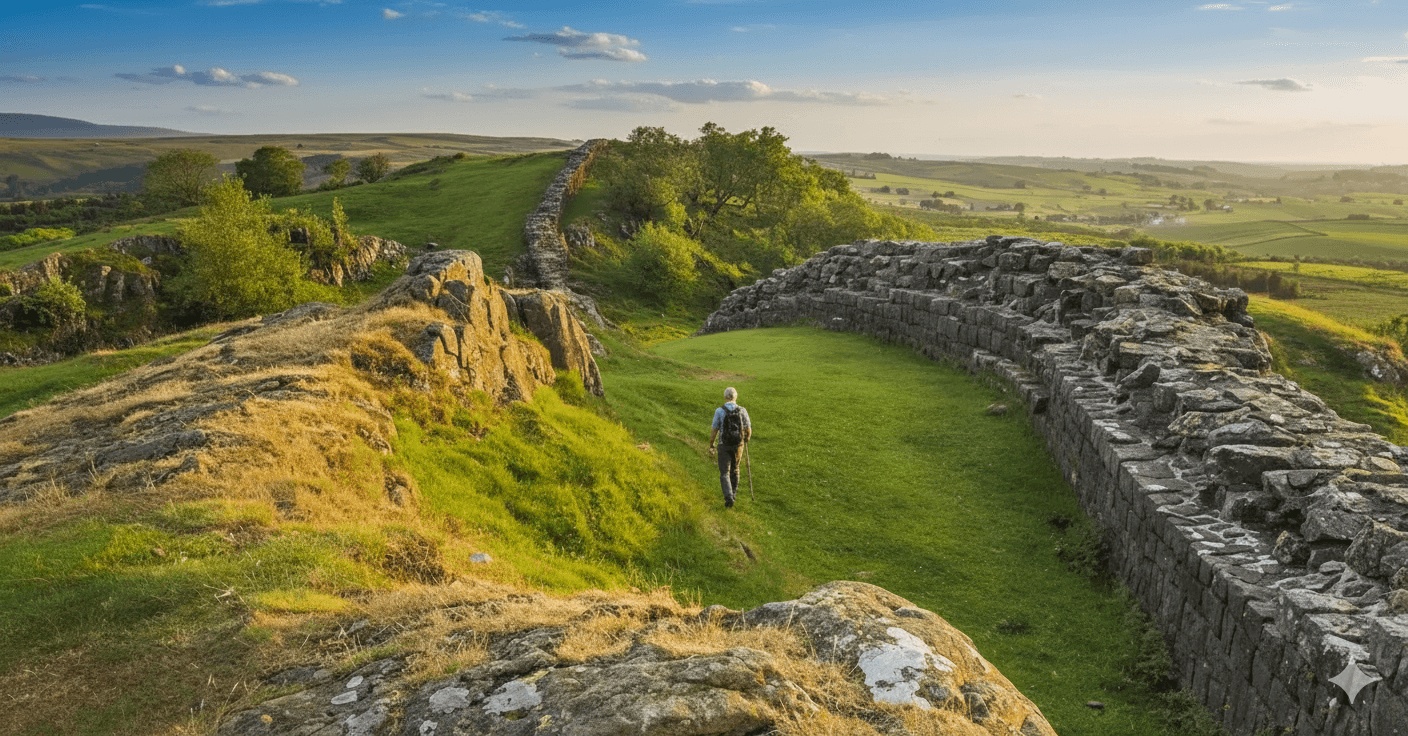
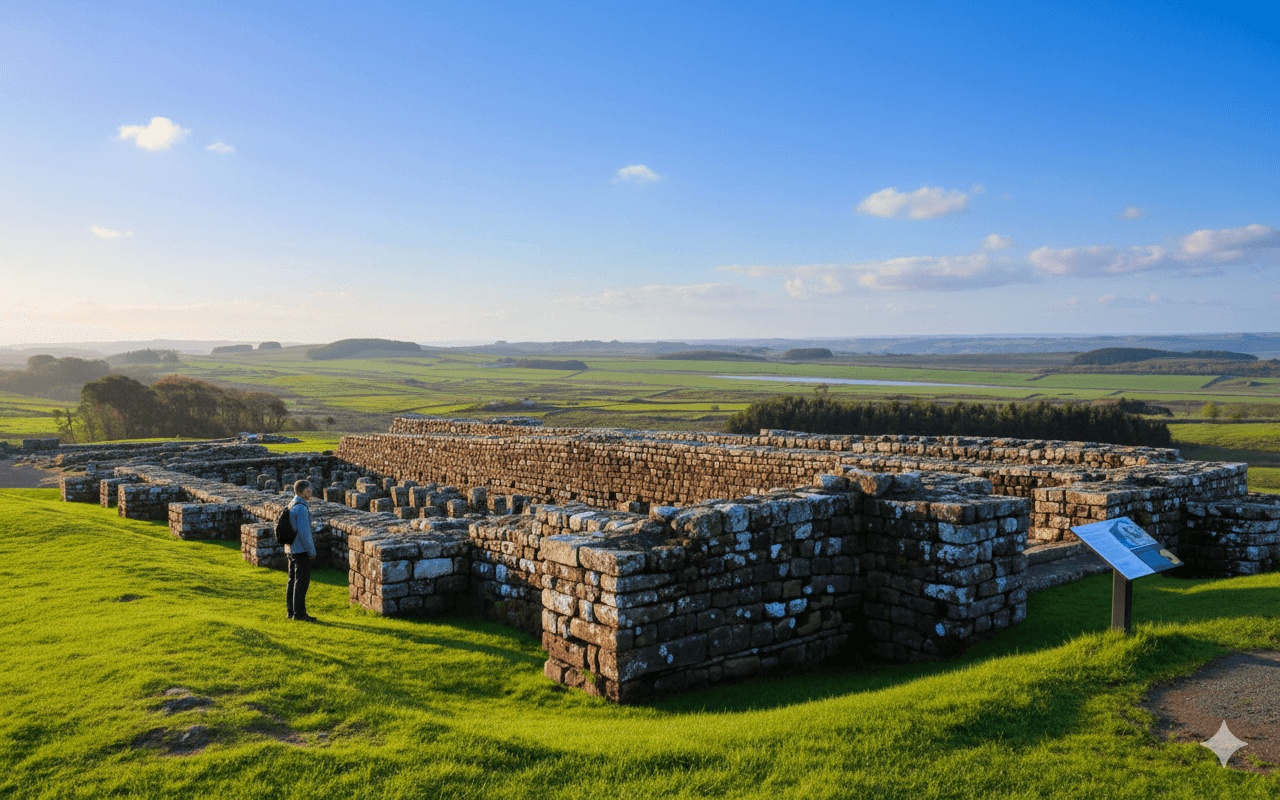
After 84 miles of walking, countless Roman remains, dramatic crags, and quiet country lanes, your journey along Hadrian's Wall culminates at Bowness-on-Solway—a small village on the marshy shores of the Solway Firth where the Wall finally meets the sea. This is where Roman ambition ended, where the great barrier begun at Wallsend reached its western terminus, and where modern walkers complete one of Britain's finest long-distance trails. The sense of achievement on arriving here, knowing you've crossed the width of England along an ancient frontier, is one of walking's great rewards.
Bowness itself is modest: a quiet village with a pub, a few houses, and views across the Solway to Scotland. There's no visitor centre, no gift shop selling completion certificates, no fanfare beyond what you create for yourself. This understated ending suits the honest nature of long-distance walking. You've walked the Wall. The satisfaction of that accomplishment needs no embellishment.
The Western End of Hadrian's Wall
The Romans called this place Maia, and they constructed a substantial fort here to anchor the Wall's western end. The fort covered approximately seven acres—making it one of the largest on the Wall—and housed a significant garrison to guard this coastal terminus. The strategic logic was clear: the Solway Firth might seem an adequate natural barrier, but at low tide its sands are crossable on foot. Roman military planners, thorough as always, extended their frontier to ensure complete control.
Little visible Roman remains survive in Bowness today. The village sits directly atop the ancient fort, and centuries of building and rebuilding have incorporated Roman stones into more recent structures. The parish church of St Michael's, parts of which date to the 12th century, undoubtedly contains Roman masonry in its walls. Walk through the village and you're walking on Roman ground, even if the precise layout is no longer visible.
The Wall extended slightly beyond Bowness along the Cumbrian coast, with milefortlets and towers continuing the defensive line as far as Maryport and possibly beyond. This coastal extension shows the comprehensiveness of Roman frontier thinking—they intended to control not just the obvious crossing points but any location where the barrier might be outflanked.
Arriving at the Finish
Most walkers approach Bowness from Carlisle on the final day of their journey, covering approximately 14 miles through predominantly flat coastal terrain. After the exertions of the central crags, this final stretch provides a gentler conclusion to the walk, though the distance remains substantial for tired legs.
The path follows the line of the Wall—marked by hedges, field boundaries, and occasional visible stonework—across farmland that's changed little in character for centuries. Wide Solway views accompany you for much of the route, with Scotland visible across the water. On clear days, the Galloway hills provide a dramatic backdrop; on greyer days, the atmospheric quality of this borderland has its own appeal.
The final approach to Bowness follows the main street into the village, past stone cottages and the village hall, to reach the King's Arms pub where many walkers mark their completion. A plaque on the pub wall acknowledges this as the Wall's western terminus and the end of the Hadrian's Wall Path. Touching this plaque has become a ritual for completing walkers—a physical conclusion to a physical journey.
Celebrating Your Achievement
Completing 84 miles of walking deserves proper celebration. The King's Arms pub, conveniently located at the trail's end, has welcomed finishing walkers for decades. A pint of Cumbrian ale, a substantial meal, and the company of fellow completers make for a satisfying conclusion. The pub is accustomed to walkers arriving in varying states of tiredness and celebration.
Some walkers continue the tradition of dipping their feet (or more) in the Solway—matching the beginning at Wallsend, where many start by visiting the Tyne. The shore at Bowness is accessible, though the marshy terrain means picking your route carefully. The tidal nature of the Solway adds drama: at low tide, vast expanses of sand are exposed; at high tide, the water comes surprisingly close to the village.
Photography opportunities abound, whether you want formal posed shots with the King's Arms plaque or more atmospheric images of the Solway landscape. The light on this coast can be remarkable, particularly in the long evenings of summer or the dramatic skies that roll in from the Irish Sea.
Practical Matters
Accommodation in Bowness itself is limited—the village has B&Bs but not many. We typically arrange for our guests to either stay in Bowness, return to Carlisle for their final night, or continue to further destinations depending on onward travel plans. If you want to wake up in the village where you finished your walk, early booking is essential.
Getting away from Bowness requires some planning. There's no railway station, and bus services are limited. Most walkers return to Carlisle—either by bus (check current schedules as services vary seasonally), by taxi (advance booking recommended), or by using transport we arrange as part of your walking holiday package.
If you're returning to collect a car left at the eastern end, trains from Carlisle to Newcastle provide a straightforward route, with Metro connections to Wallsend if that's where you started. Alternatively, some walkers arrange return taxi transfers—a not-inconsiderable expense but convenient for those with time constraints.
After the Walk
The immediate post-walk period often involves a mixture of satisfaction, tiredness, and perhaps a touch of anticlimactic feeling after the buildup. Many walkers find that the significance of their achievement grows in the days and weeks following completion, as they reflect on the experiences, share stories with others, and perhaps start planning their next adventure.
The Hadrian's Wall Path passport, if you've been collecting stamps along the way, provides a tangible record of your journey. The stamps from visitor centres and other locations document your progress and make a meaningful memento. If you haven't collected stamps, the memories and photographs you've gathered serve the same purpose.
Some walkers develop lasting connections to Hadrian's Wall following their walk. They return to explore sites more thoroughly, bring friends and family to share favourite sections, or use their experience as the foundation for further long-distance walking. The Wall has a way of getting under people's skin, creating a relationship that persists long after blistered feet have healed.
Looking Back
From Bowness, you can look back along the line of your journey—84 miles stretching to the North Sea coast. You've walked through Roman history, crossed the dramatic crags of the Whin Sill, passed through quiet villages and along lonely stretches of Wall. You've experienced the full range of northern English landscapes, from urban Newcastle through rolling farmland to the Solway marshes.
What you've accomplished connects you to nearly two thousand years of history. The soldiers who garrisoned these walls, the civilians who lived in their shadow, the medieval farmers who robbed their stones, the antiquarians who preserved what remained, and the walkers who now follow the trail—you've become part of that long story. The Wall belongs to everyone who engages with it seriously, and you've earned your place in its continuing history.
Congratulations on completing Hadrian's Wall. The journey from Wallsend to Bowness represents one of the great walks in Britain—an achievement worth celebrating and remembering.
If you haven't yet made this journey, explore our range of itineraries to find the walking holiday that suits you. From the challenging 4-day walk to the leisurely 10-day experience, we'll help you plan every aspect of your Roman frontier adventure. Contact us to start planning your walk to Bowness and beyond.
Useful resources: National Trail and English Heritage.