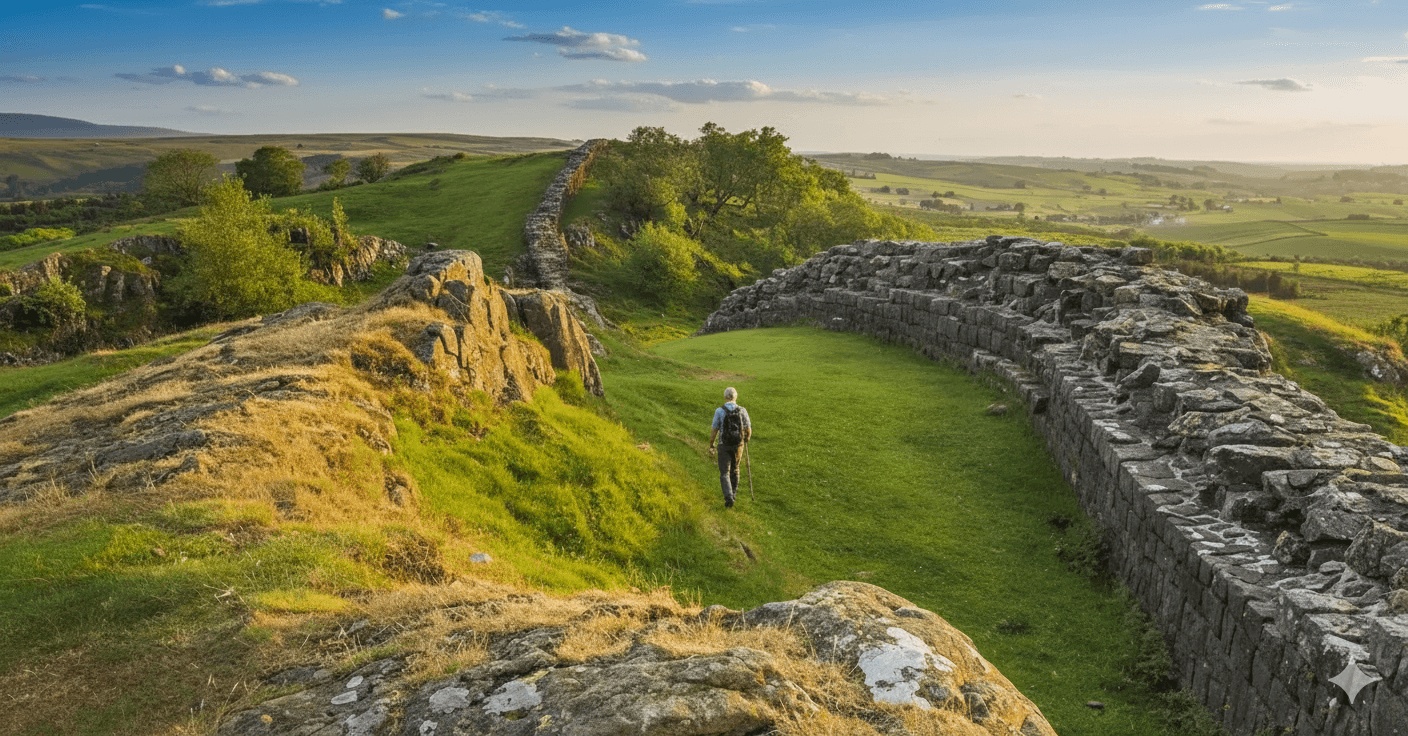
Crag Lough is one of those places that stops walkers in their tracks, demanding a pause to simply take in the scene before them. This beautiful lake, cradled beneath the dramatic cliffs of the Whin Sill, provides one of the most photogenic viewpoints anywhere on Hadrian's Wall—a place where the natural landscape and Roman heritage combine to create something genuinely special. As you walk along the crags above, the dark waters of the lough reflect the surrounding cliffs and whatever sky the Northumbrian weather provides, creating images that linger in memory long after you've returned home.
The lough (a northern English term for lake, from the same root as the Scottish and Irish "loch") occupies a hollow scooped out by glacial action during the last Ice Age. The retreating ice left behind this natural basin, fed by streams draining the surrounding moorland and by the rain that falls frequently on these exposed heights. The result is a landscape feature that would be remarkable anywhere but becomes extraordinary when viewed from the Roman Wall that marches along the crags above.
The View from the Wall
Walking the Hadrian's Wall Path from Steel Rigg towards Housesteads, you encounter Crag Lough from above, looking down over the cliff edge to the waters below. The perspective emphasises the drama of the Whin Sill—the volcanic ridge that the Romans exploited for their frontier. The dark columns of dolerite rock drop steeply to the lough's shores, while the Wall follows the crest above.
From various points along the crags, different compositions present themselves. Photographers will find themselves stopping repeatedly as light changes, clouds move, and new angles reveal themselves. The reflections in the lough's surface—of crags, Wall, and sky—add complexity to images and create that doubled beauty that water brings to landscapes.
The best viewpoints are generally found between Highshield Crags and Hotbank Crags, roughly two miles east of Steel Rigg. Here the path runs close to the cliff edge (take care in wind or wet conditions) and the full extent of the lough is visible below. Time your visit for different effects: morning light from the east illuminates the crags; evening light creates warm tones and longer shadows; grey days give the scene an atmospheric quality that photographers often prefer.
Wildlife and Nature
Crag Lough and its surroundings support rich wildlife that adds another dimension to any visit. The lough itself is home to various waterfowl, including great crested grebes whose elaborate courtship displays can be observed in spring. Teal, tufted duck, and other species use the lough as a breeding site or stopping point during migration.
The cliffs above the lough provide nesting sites for peregrines and other raptors. Watching these magnificent birds hunting above the ancient Wall creates a powerful sense of wildness. The area's designation as a Site of Special Scientific Interest (SSSI) reflects its ecological importance, protecting both the lough and the surrounding heathland habitats.
The moorland vegetation includes heather, which creates purple carpets in late summer, and various grasses and sedges. Curlews call across the moors; meadow pipits rise from the grass at your approach; ravens cronk from the crags. For those with time to stop and observe, the natural environment provides constant interest beyond the Roman heritage.
Accessing Crag Lough
For walkers on the Hadrian's Wall Path, Crag Lough is visible from the main route with no detour required. The crags above the lough form part of the spectacular central section that most walkers consider the highlight of the trail. You'll pass the viewpoints as a natural part of your journey.
For those wanting to explore more closely, paths descend from the main trail to the lough shore. These paths are steep and can be slippery, so only attempt them if you're confident on rough ground and have appropriate footwear. The shore itself offers different perspectives on both the lough and the crags above, though the classic views are generally from the Wall itself.
Day visitors typically access the area from Steel Rigg car park (limited spaces, arrive early during busy periods) or from Housesteads car park. Walking from Steel Rigg, you'll reach the Crag Lough viewpoints after approximately 1.5-2 miles of walking along the crags. From Housesteads, the distance is approximately 2.5 miles heading west.
Photography Tips
Crag Lough is one of the most photographed locations on Hadrian's Wall, but there's always room for fresh perspectives. Some suggestions for getting the best images:
Light and timing: The crags face roughly south, meaning they're lit from the side in morning and evening and can appear flat under midday sun. Golden hour light (the hour after sunrise and before sunset) produces the warmest, most dramatic illumination. However, don't dismiss overcast conditions—the soft, even light suits the moody landscape well.
Reflections: The lough's surface creates mirror reflections when still, doubling the visual impact. Calm conditions are most common in early morning before wind picks up. Any breeze disturbs the reflections, creating a different but equally valid look.
Include the Wall: The combination of lough and Wall creates images that tell the full story of this landscape. Look for compositions that include both elements, using the Wall to lead the eye into or across the frame.
Changing conditions: Northern weather is famously changeable, and this can work to your advantage. Shafts of sunlight breaking through clouds, rain sweeping across the moor, mist rising from the water—all create atmospheric images that sunny postcard conditions cannot match.
Safety: The cliffs above the lough are genuine hazards. Don't take risks for photographs, and be especially careful in wind or wet conditions when the rock can be slippery. No image is worth a fall.
The Roman Context
While the Romans appreciated defensive terrain more than scenic beauty, they must have noticed the dramatic landscape they were building through. The crags above Crag Lough represented ideal ground for their frontier—natural cliffs facing north that an enemy would struggle to ascend, with wide views across the territory beyond the Wall.
Milecastles and turrets along this section watched over the approaches, their garrisons alert for any movement in the valleys below. The lough itself would have appeared much as it does today, a landmark visible from the Wall's walkway as soldiers patrolled their rounds. Perhaps some found beauty in it; more certainly found their attention fixed on potential threats rather than scenic appreciation.
The Wall sections visible above Crag Lough include some of the best-preserved stretches anywhere on the frontier. Here you can see the actual facing stones laid by Roman hands, the rubble core that gave the Wall its strength, and the foundations that have survived nearly two millennia of weather and human interference.
Including Crag Lough in Your Walk
On our 6-day and 7-day itineraries, you'll pass Crag Lough as part of the classic central section. The dramatic terrain here represents the highlight of the entire walk for many guests, with Crag Lough providing one of the most memorable individual viewpoints.
For those on more relaxed 8-day or 9-day itineraries, shorter daily distances allow more time to linger at viewpoints like Crag Lough. You might choose to descend to the shore, take extensive photographs, or simply sit and absorb the scene.
Whatever your itinerary, plan to pass Crag Lough in good light if weather cooperates. If staying in the Once Brewed area, an early morning walk to catch sunrise light on the crags can be magical—though it requires an early start, particularly in summer when dawn comes early this far north.
To discuss your Hadrian's Wall walking holiday including time at Crag Lough and other spectacular viewpoints, contact us. We'll help plan an itinerary that allows proper appreciation of the landscape's most remarkable features.