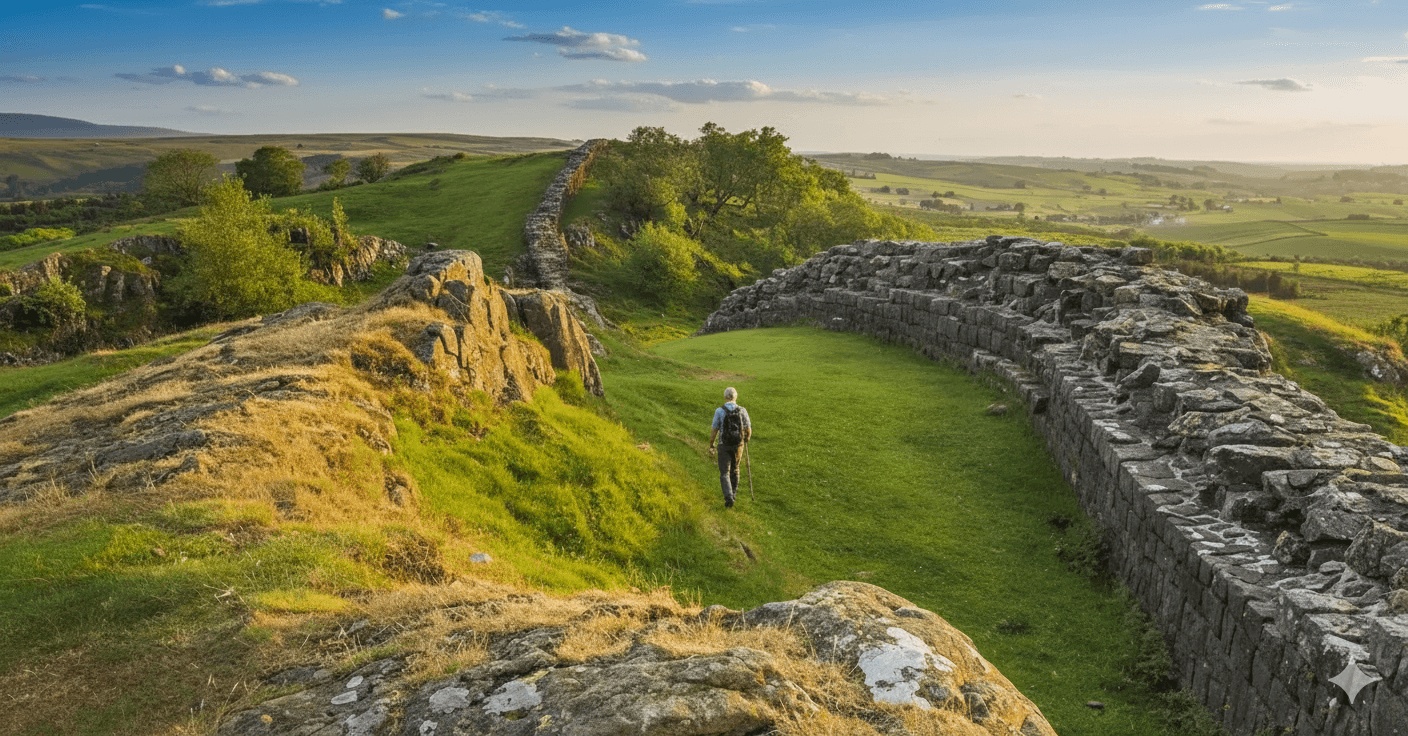
Not everyone has a week to devote to walking the full 84 miles of Hadrian's Wall Path, but that doesn't mean you can't experience some of the finest stretches of this ancient frontier. The Wall offers outstanding opportunities for day walks that capture the essence of what makes this landscape so special—dramatic Roman remains, stunning scenery, and a tangible connection to nearly two thousand years of history. Whether you're visiting the area on holiday, live within striking distance, or simply want to sample the trail before committing to a longer walk, a well-chosen day walk delivers all the magic of Hadrian's Wall in a single memorable outing.
The key to a successful day walk lies in choosing the right section. While the entire trail has its merits, certain stretches concentrate the best Roman remains and most spectacular landscapes into manageable distances. This guide explores the finest day walking options along Hadrian's Wall, with practical information on parking, distances, refreshments, and what you'll discover along the way.
Steel Rigg to Housesteads Circular: The Unmissable Walk
If you can only walk one section of Hadrian's Wall in your lifetime, make it this one. The stretch from Steel Rigg car park to Housesteads and back delivers everything that makes the Wall extraordinary: the most dramatic scenery, the most impressive Roman remains, and some of the most photographed views in northern England. This circular walk of approximately 6 miles takes 3-4 hours at a comfortable pace, with ample time for exploring.
Starting from Steel Rigg car park (limited spaces, arrive early in peak season), the path immediately climbs to the ridge where Hadrian's Wall strides across the landscape in its most dramatic fashion. From the first crest, the views are breathtaking: the Wall marching east across the crags towards Housesteads, with deep valleys falling away to the north and the gentler slopes of the Roman Military Way visible to the south.
The walking here follows the undulating Whin Sill, the volcanic ridge that the Romans exploited for its natural defensive properties. You'll encounter Milecastle 39 (known as Castle Nick) perched on the cliff edge, offering spectacular views north into what was once barbarian territory. Further east, Sycamore Gap frames perhaps the most iconic view of the entire Wall—though the famous tree that stood here for hundreds of years sadly fell in 2023, the landscape remains powerfully evocative.
Continuing east, the Wall climbs over Highshield Crags and Hotbank Crags before reaching Housesteads Roman Fort, the most complete auxiliary fort visible in Britain. Allow at least an hour to explore the extensive remains: the granaries with their ventilated floors, the commanding officer's house, the headquarters building, and the famous communal latrine that gives visitors such vivid insight into Roman practical engineering.
For the return journey, you can either retrace your steps along the Wall for those magnificent views from a different angle, or take the lower path via Hotbank Farm and the Roman Military Way for variety. The latter option is slightly easier on the legs and offers different perspectives on the crags above.
Once Brewed to Cawfields Quarry: Roman Engineering Excellence
This linear walk of approximately 4 miles (8 miles return) showcases some of the best-preserved stretches of Hadrian's Wall and includes several outstanding milecastles. Starting from the Twice Brewed Inn—an excellent spot for refreshments before or after your walk—the path heads west along well-maintained trails that follow the Wall's original course.
The first highlight is Milecastle 42, one of the best-preserved milecastles on the entire Wall. Its stone gateway and internal structures remain clearly visible, allowing you to understand exactly how these small fortifications functioned as crossing points and garrison posts. Every Roman mile (slightly shorter than our modern mile) featured one of these installations, each housing a small contingent of soldiers.
Continuing west, the Wall passes through increasingly dramatic terrain. Caw Gap represents one of the significant valleys that the Wall crosses, requiring a steep descent and climb. Beyond, the crags become ever more imposing until you reach Cawfields Quarry, where 19th-century quarrying created a dramatic cliff face beside the Wall. The quarry pool below now provides a picturesque endpoint for the walk, with picnic facilities and toilets available.
This section is particularly good for understanding Roman construction techniques. Where the Wall rises over the crags, you can see how the builders adapted their methods to the terrain, sometimes setting foundations directly on the bare rock, sometimes constructing elaborate footings to level the ground. The curtain wall, the north ditch where possible, and the Vallum to the south all demonstrate the comprehensive nature of the frontier system.
Wallsend to Newcastle: Urban Origins
For a completely different perspective on Hadrian's Wall, the urban section from Wallsend to Newcastle city centre offers an accessible walk of approximately 5 miles that can be combined with visits to excellent museums. While lacking the dramatic scenery of the central section, this stretch provides crucial context for understanding the Wall as a complete system stretching from coast to coast.
Begin at Segedunum Roman Fort in Wallsend, where a modern museum and reconstructions help you visualise the original frontier installation. The viewing tower provides an overview of the excavated remains, while the museum houses significant finds from the site and explains the Wall's purpose and construction.
The walk westward follows Hadrian's Way, a marked trail that traces the Wall's course through modern Newcastle's eastern suburbs. While the Wall itself has largely disappeared beneath centuries of urban development, information panels mark significant locations and help you imagine the frontier that once stood here. The route passes through parks and along the River Tyne, eventually reaching Newcastle city centre and its remarkable array of Roman remains and museums.
At Newcastle, the Great North Museum houses outstanding Roman collections including altars, sculptures, and a scale model of the Wall. Nearby, the ruins of the Roman fort of Pons Aelius lie beneath the Castle Keep, creating layers of history that span almost two millennia.
Birdoswald to Gilsland: Western Wilderness
The western sections of Hadrian's Wall offer a different character from the famous central crags. This walk of approximately 3 miles one way (6 miles return) from Birdoswald Roman Fort to Gilsland crosses lonely moorland where the Wall takes a gentler line but maintains its impressive presence across the landscape.
Birdoswald itself ranks among the most evocative sites on the entire Wall. The turf-topped stone walls enclose an atmospheric space where imagination easily reconstructs the bustle of Roman military life. The remains of medieval buildings within the Roman walls show how later generations reused this commanding location, creating layers of history that stretch from the second century to the present.
Walking east from Birdoswald, the Wall crosses Willowford Bridge abutment, where the Roman crossing of the River Irthing remains partially visible. This engineering achievement, carrying the Wall across the river, demonstrates Roman ambition and capability even in challenging terrain. The path then climbs to Harrow's Scar milecastle and continues through increasingly wild country.
Gilsland provides an excellent endpoint, with the Samson Inn offering refreshments and the Willowford Roman Wall remains accessible via a short detour. The stretch of Wall east of Gilsland shows excellent facing stones and gives a strong sense of the Wall's original appearance.
Practical Considerations for Day Walkers
Parking along Hadrian's Wall can be challenging, particularly in peak season. The main car parks at Steel Rigg, Housesteads, Cawfields, and Once Brewed fill quickly on summer weekends and school holidays. Arriving before 10am significantly improves your chances of finding a space. Some car parks charge fees; others request donations for maintenance of the Wall and its surroundings.
The AD122 bus service, running between Hexham and Haltwhistle railway stations, provides an excellent alternative to driving. The bus stops at most major Wall locations, allowing you to walk linear sections without needing two cars. Check the Hadrian's Wall Country website for current timetables, as services are seasonal and limited on certain days.
For refreshments, the central section offers several good options. The Twice Brewed Inn provides substantial meals and excellent local beer. The café at Housesteads serves hot drinks and light snacks. Further west, the tea room at Birdoswald offers refreshments in atmospheric surroundings. Packing a picnic extends your options significantly—there's something particularly satisfying about lunching beside an ancient milecastle with Roman legionary views.
What to Bring
Even for a short day walk, proper preparation ensures an enjoyable experience. The exposed nature of the Wall means weather conditions can change rapidly. Layered clothing allows you to adapt as cloud cover and wind vary. Waterproof jacket and trousers should be considered essential regardless of the forecast—showers blow in quickly from the west.
Sturdy footwear with good grip is essential. The paths can be muddy after rain, and the rocky sections over the crags require ankle support and sure footing. Walking poles help on the steeper sections, particularly when descending the stepped paths cut into the crags.
A detailed guidebook or OS map (Explorer OL43 covers the central section) enhances any walk by identifying features that might otherwise be missed. Many milecastles and turrets are visible only as low mounds unless you know to look for them. Understanding what you're seeing transforms a pleasant walk into an education.
Extending Your Visit
A day walk often proves to be just the beginning. Many visitors return to walk further sections, eventually completing the entire 84 miles over multiple visits. Others decide immediately that they want to walk the full trail, returning months or years later for a week-long adventure across the entire frontier.
If a day walk inspires you to tackle the complete Hadrian's Wall Path, our range of itineraries offers options from the challenging 4-day walk to the leisurely 10-day experience. We handle all the logistics—accommodation booking, baggage transfer, route notes—leaving you free to enjoy every step of your journey along Rome's most northern frontier.
To discuss your plans or ask questions about either day walks or longer expeditions, please complete our enquiry form. We're always happy to share our knowledge of this extraordinary landscape and help you plan the perfect Hadrian's Wall experience.