- Start training 8–12 weeks before the walk, gradually increasing distance and intensity
- Focus on building leg strength, core stability, and cardiovascular endurance through regular hill walking
- Break in walking boots properly and test all gear during training walks
- Practice walking consecutive days with a loaded rucksack to simulate the holiday
- Include rest days and cross-training activities to prevent injury and maintain motivation
- Train on varied terrain including hills, uneven paths, and muddy sections when possible
Why Training Matters for Hadrian’s Wall
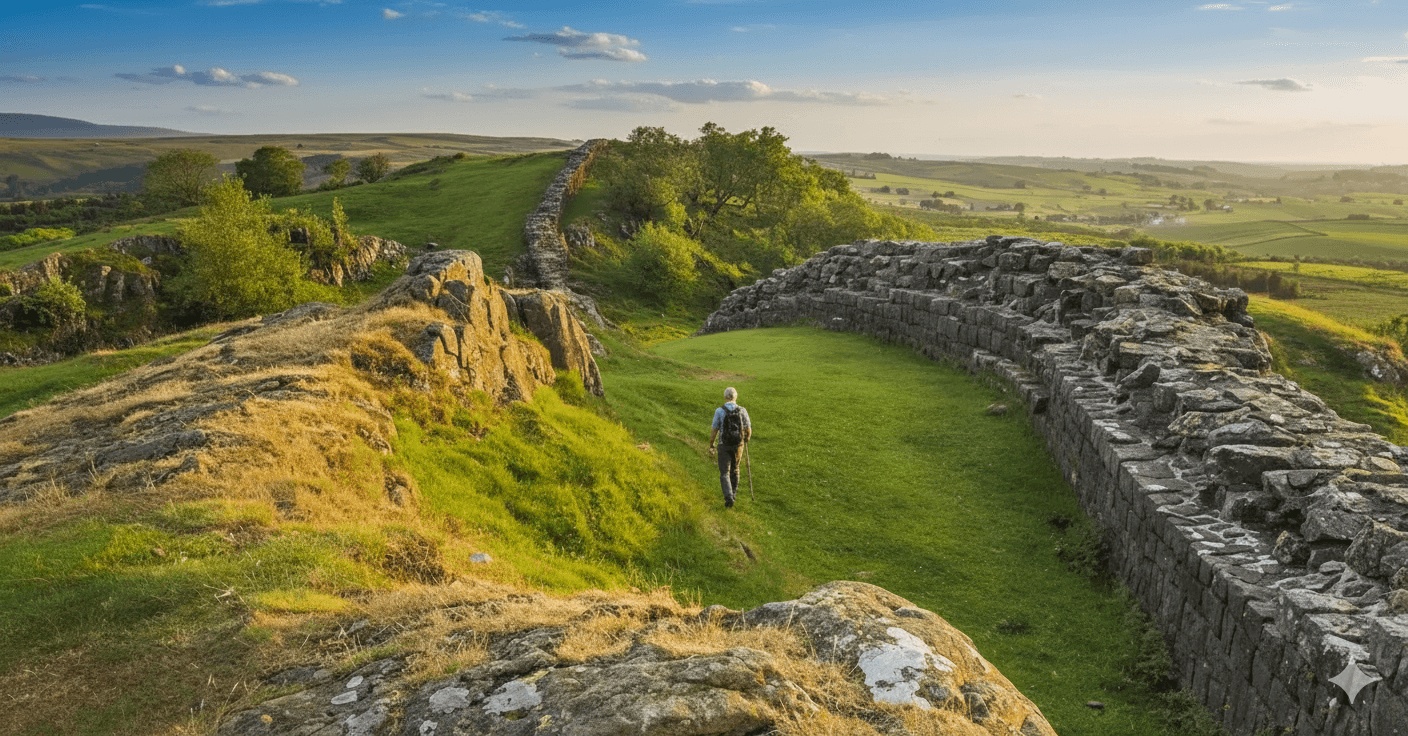
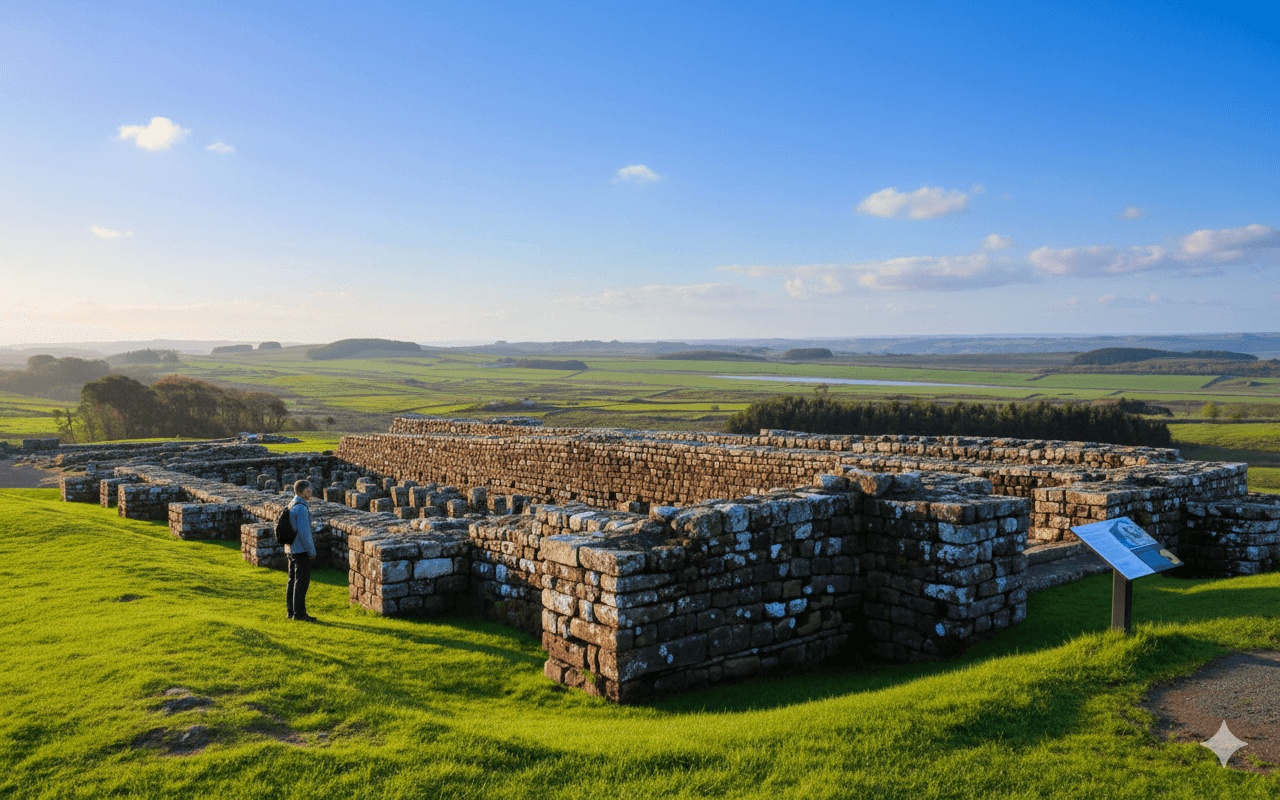
The Hadrian’s Wall Path stretches 84 miles from Wallsend in the east to Bowness-on-Solway in the west. Whilst the trail doesn’t demand mountaineering skills, underestimating the physical challenge can turn an incredible walking holiday into an uncomfortable slog. The route includes significant climbs, particularly in the central section where the Wall follows the dramatic crags of the Great Whin Sill.
Most walkers complete Hadrian’s Wall over 6–8 days, meaning daily distances of 10–15 miles with a rucksack. Even with baggage transfer services handling the heavy luggage, day packs still weigh 5–7 kg with water, snacks, waterproofs, and essentials. Walking these distances on consecutive days places demands on joints, muscles, and feet that sedentary lifestyles rarely prepare the body for.
Proper training transforms the experience. Well-conditioned walkers enjoy the Roman history, spectacular Northumberland landscapes, and charming villages along the route rather than simply enduring them. The difference between hobbling into accommodation each evening and arriving with energy to explore local pubs is largely determined by preparation.
When to Start Training
Begin a structured training programme 8–12 weeks before the walking holiday. This timeframe allows gradual fitness improvements without risking overuse injuries from rushed preparation. Walkers with existing fitness levels might manage with 8 weeks, whilst those currently inactive should aim for 12 weeks minimum.
The training schedule should mirror the walk itself: building gradually, with progressive challenges, and incorporating rest for recovery. Cramming fitness work into the final fortnight before departure typically causes injuries rather than conditioning.
Building Your Walking Base
Start with Regular Shorter Walks
Begin with comfortable distances that can be completed without difficulty. For many people, this means 3–4 miles on flat terrain. Walk at least three times weekly, allowing rest days between sessions for muscle recovery and adaptation.
Every week or two, increase either the distance or difficulty. Add an extra mile, introduce modest hills, or extend one walk significantly whilst keeping others shorter. This progressive overload principle allows the body to strengthen gradually without overwhelming it.
Increase Distance Systematically
By week 4–5, aim for at least one longer walk of 6–8 miles. By week 8, one weekly walk should reach 10–12 miles. In the final weeks before the Hadrian’s Wall holiday, complete at least two walks of 12–15 miles to build confidence in managing the daily distances.
Consistency matters more than occasional heroic efforts. Three moderate walks weekly produce better results than sporadic long slogs followed by recovery weeks.
Hill Training for the Central Section
The section between Chollerford and Birdoswald includes the most challenging terrain on Hadrian’s Wall Path. The trail climbs repeatedly as the Wall follows the rolling crags, with steep ascents at Sewingshields, Housesteads, and Winshields—the highest point on the entire route at 345 metres.
Finding Hills to Train On
Seek out local hills, even modest ones. The repeated stress of uphill walking strengthens quadriceps, glutes, and calves whilst building cardiovascular capacity. Walking downhill, often underestimated, requires significant eccentric muscle control and places substantial force through knees and ankles.
If local geography lacks proper hills, alternatives include:
- Stadium or tower stairs (climbing with a weighted rucksack)
- Treadmills set to 8–12% incline
- Repeated climbs of the steepest local inclines
- Multi-storey car park staircases
Aim for at least one weekly session including 200–300 metres of cumulative ascent. This needn’t be a single huge hill—several modest climbs during a longer walk achieve the same conditioning effect.
Strengthening Key Muscle Groups
Walking uses muscles differently than gym workouts or other sports. Specific strengthening exercises complement walking training and reduce injury risk.
Exercises for Walkers
Quadriceps and Glutes
- Step-ups onto a stable platform
- Squats and lunges (bodyweight or weighted)
- Single-leg balance exercises
Core Stability
- Planks (front and side variations)
- Bridge exercises
- Standing balance work
Ankles and Feet
- Calf raises on steps
- Ankle circles and flexion exercises
- Barefoot balance work on uneven surfaces
Hip Flexors and Stability
- Hip bridges
- Clamshells
- Lateral leg raises
Perform these exercises 2–3 times weekly, ideally on non-walking days. Each session need only take 15–20 minutes but provides significant benefits for trail endurance and injury prevention.
Training with a Loaded Rucksack
Walking with weight differs substantially from unloaded walking. A 5–7 kg rucksack shifts the centre of gravity, increases energy expenditure, and places additional stress on shoulders, back, hips, and feet.
Start carrying a light pack (2–3 kg) on training walks from week 3–4. Gradually increase the weight until it matches what will be carried on the Wall. Pack items to distribute weight close to the back, with heavier objects positioned high and central.
Practice adjusting straps and hip belts to transfer load from shoulders to hips. This simple skill dramatically reduces shoulder and neck fatigue over long distances.
Back-to-Back Walking Days
Single long walks build fitness, but consecutive walking days reveal whether the body can recover and perform again. This endurance matters enormously on multi-day walking holidays.
In weeks 8–10 of training, schedule back-to-back walking days on weekends. Walk 8–10 miles on Saturday, then repeat on Sunday. This tests and builds the specific recovery capacity needed for the Hadrian’s Wall Path.
Monitor how the body responds. Persistent pain (rather than general tiredness) indicates excessive training load. Adjust intensity or take extra rest before trying again.
Breaking In Walking Boots
Nothing ruins a walking holiday faster than blisters and foot pain from ill-fitting or insufficiently broken-in boots. Start the boot-breaking process immediately when training begins.
Boot Selection and Fitting
Visit a specialist outdoor retailer for proper fitting. Feet swell during long walks, so boots should allow thumb-width space at the toes when standing on an incline. Try boots late in the day when feet are naturally larger.
Wear the socks intended for the walk when fitting boots. Consider boots with some ankle support for the rough terrain sections of Hadrian’s Wall.
The Breaking-In Process
Wear new boots around the house for short periods initially. Progress to local walks of 2–3 miles, then longer distances as comfort increases. Address any rubbing points immediately with different lacing techniques, insoles, or targeted padding.
By mid-training, boots should feel comfortable for 10+ mile walks. If persistent problems remain, consider different boots rather than hoping they’ll improve. Many experienced walkers keep backup boots ready specifically for this scenario.
Cross-Training Activities
Varying exercise types prevents overuse injuries and maintains motivation during training. Incorporate activities that complement walking without duplicating its stress patterns.
Swimming provides excellent cardiovascular conditioning with zero impact on joints. It particularly benefits the upper body and core.
Cycling builds leg strength and endurance whilst giving feet and ankles a break from impact stress.
Yoga or Pilates improve flexibility, balance, and core strength—all valuable for trail walking.
Light Jogging (for those without joint issues) efficiently builds cardiovascular fitness in shorter timeframes than walking.
Schedule cross-training 1–2 times weekly alongside walking sessions rather than replacing them entirely.
Terrain-Specific Practice
Hadrian’s Wall Path includes varied surfaces: paved paths, grassy tracks, rocky sections, muddy fields, and uneven stone steps. Training on similar terrain builds the specific balance, proprioception, and technique these conditions demand.
Seek out:
- Uneven natural trails rather than flat pavements
- Muddy or wet sections (especially before winter months)
- Rocky or root-covered paths
- Stiles and gates to practice scrambling with a pack
The Northumberland National Park terrain can be unforgiving in poor weather. Experience walking in wind and rain during training builds valuable skills for managing waterproofs, maintaining pace, and staying motivated in challenging conditions.
Rest and Recovery
Training effectiveness depends as much on recovery as exertion. Muscles strengthen during rest periods between workouts, not during the walks themselves.
Schedule at least two complete rest days weekly. These aren’t wasted time—they’re essential training components. Consider gentle activities like stretching, foam rolling, or easy swimming on rest days, but avoid loading the legs significantly.
Sleep requirements increase during training periods. Aim for 7–9 hours nightly to support recovery and adaptation.
Testing Your Gear
Training walks provide the perfect opportunity to test all equipment under realistic conditions. Discover gear problems on local walks rather than halfway along Hadrian’s Wall.
Items to test thoroughly:
- Walking boots (comfort over distance)
- Socks (blister-free performance)
- Waterproof jackets and trousers (breathability and coverage)
- Rucksack (comfort, adjustment, capacity)
- Walking poles (if using)
- Blister prevention products
- Hydration systems
- Snacks and energy foods
Make equipment adjustments or replacements well before the holiday. Breaking in replacement boots or adapting to new rucksacks requires time.
Monitoring Progress and Adjusting Training
Keep a simple training log noting distances, terrain, how the body felt, and any discomfort. This record reveals patterns, tracks improvement, and identifies potential problems before they escalate.
Signs of productive training include:
- Previously challenging distances feeling manageable
- Reduced next-day soreness after walks
- Improved pace without increased effort
- Confidence in managing the planned daily distances
Warning signs requiring training adjustments:
- Persistent pain (rather than general tiredness)
- Declining performance despite rest
- Recurring injuries in the same location
- Extreme fatigue lasting multiple days
Don’t hesitate to reduce training load if warning signs appear. An extra week of recovery beats risking injury that cancels the holiday entirely.
The Final Week Before Departure
Resist the urge to cram in last-minute training. The final week should emphasise rest and preparation rather than fitness gains. Any conditioning work completed now won’t benefit the walk, but fatigue or injuries certainly will affect it.
Take 3–4 days of complete rest before beginning the walk. Use this time for final gear checks, packing, and mental preparation. Arrive at Wallsend or Bowness-on-Solway fresh rather than pre-fatigued.
FAQs
How fit do you need to be to walk Hadrian’s Wall?
Moderate fitness suffices for most walkers tackling Hadrian’s Wall over 6–8 days. The ability to comfortably walk 10–12 miles daily with a light rucksack forms the baseline requirement. Regular walking practice over 8–12 weeks adequately prepares people with average fitness. The central section between Chollerford and Birdoswald proves most demanding, with significant climbs and rough terrain requiring reasonable leg strength and stamina.
Can beginners walk Hadrian’s Wall?
Beginners can successfully complete Hadrian’s Wall with proper preparation. Starting a training programme 12 weeks before the walk allows sufficient time to build necessary fitness from a relatively sedentary baseline. Choosing an 8-day itinerary rather than 6 days reduces daily distances to more manageable levels. Using baggage transfer services means carrying only a day pack rather than full camping gear. Many first-time long-distance walkers successfully complete Hadrian’s Wall as their inaugural multi-day trail.
What is the hardest part of walking Hadrian’s Wall?
The 14-mile section from Chollerford to Steel Rigg (often split across two days) presents the most challenging terrain. The Wall follows the dramatic basalt crags of the Great Whin Sill, requiring repeated steep ascents and descents. Winshields Crags reaches 345 metres—the trail’s highest point—with exposed conditions in poor weather. The rocky, uneven path demands concentration and secure footing. This central section rewards effort with spectacular views and the best-preserved Roman remains, but requires good fitness and sturdy boots.
Should I use walking poles for Hadrian’s Wall?
Walking poles significantly benefit most walkers on Hadrian’s Wall, particularly through the hilly central section. Poles reduce stress on knees during descents, assist with balance on uneven terrain, and distribute effort across arms and legs during climbs. They prove especially valuable when ground conditions turn muddy or slippery. However, poles require practice to use effectively, so experiment with them during training walks rather than introducing them on the trail. Some narrow stile sections require stowing poles temporarily.
How do I prevent blisters when walking Hadrian’s Wall?
Blister prevention starts with properly fitted boots broken in over many training walks. Wear moisture-wicking socks designed for walking, avoiding cotton which retains dampness. Apply preventative tape or specialist anti-blister products to known problem areas before walks rather than waiting for hot spots to develop. Keep feet dry by changing socks at lunchtime if conditions are wet. Address any rubbing or discomfort immediately rather than hoping it improves. Carrying basic blister treatment supplies allows quick intervention if prevention measures fail.
Do I need to train if I’m already quite active?
Existing fitness certainly helps, but specific training for multi-day walking remains valuable regardless of current activity levels. Running, cycling, or gym work don’t precisely replicate the demands of walking 10–15 miles daily over consecutive days with a rucksack. The cumulative impact on feet, the specific muscle groups used, and the multi-day recovery requirements differ from other activities. At minimum, complete several long walks (12+ miles) on consecutive days with full gear to verify current fitness translates to trail readiness.