- The Hadrian’s Wall Path stretches 84 miles (135km) from Wallsend to Bowness-on-Solway, typically walked in 6-7 days
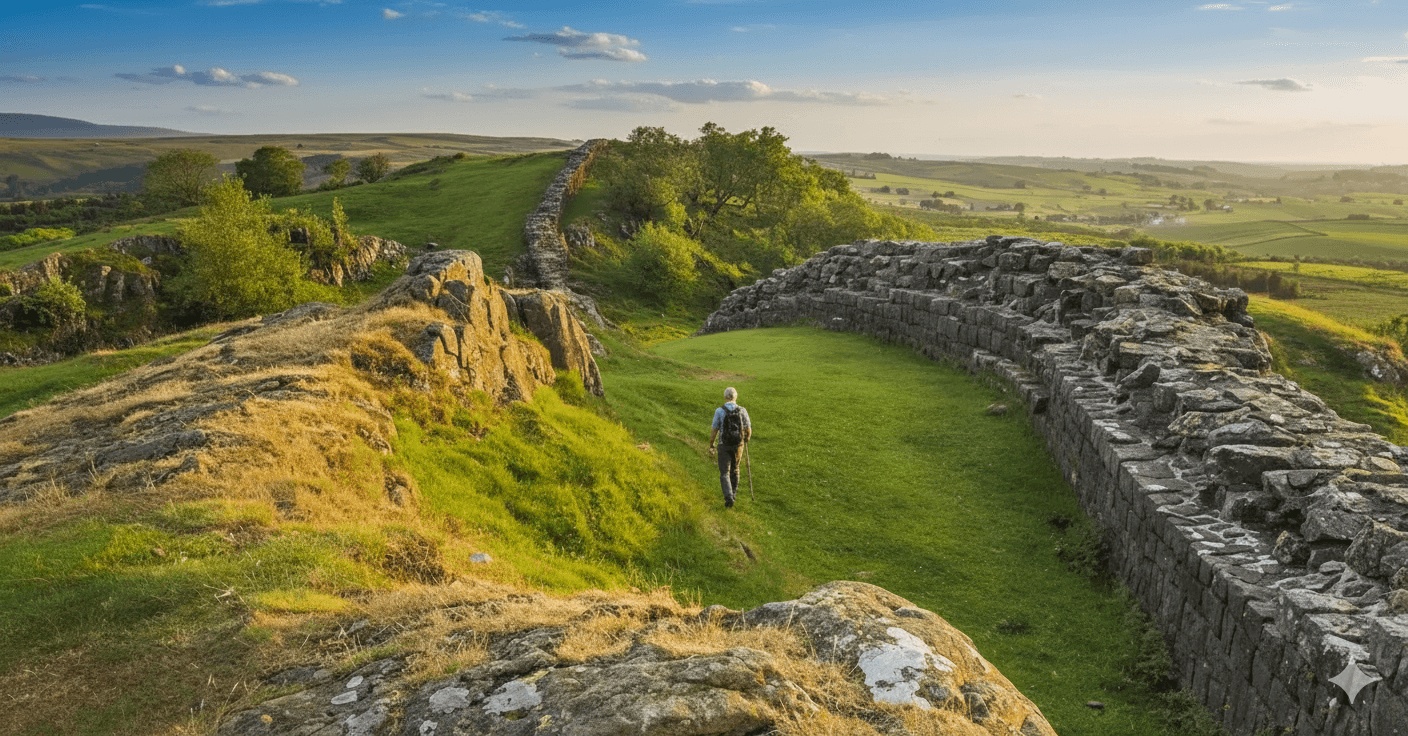
- The central section between Chollerford and Birdoswald offers the most dramatic scenery and best-preserved Roman remains
- Spring (April-May) and autumn (September-October) provide ideal walking conditions with fewer crowds than summer
- Self-guided walking holidays include detailed maps, accommodation bookings, and baggage transfer services
- Proper preparation with layered clothing, sturdy boots, and OS maps is essential for the varied terrain
- The trail passes 16 major Roman forts and countless milecastles, offering unparalleled historical immersion
Planning Your Hadrian’s Wall Walk
Walking Hadrian’s Wall ranks among Britain’s most rewarding long-distance trails, combining spectacular Northumberland landscapes with remarkable Roman history. Whether you’re an experienced rambler or tackling your first multi-day walk, proper planning transforms this journey from challenging to truly memorable.
The 84-mile Hadrian’s Wall Path National Trail follows the line of Rome’s most famous frontier, built in AD 122 on the orders of Emperor Hadrian. Unlike many heritage sites, this isn’t a passive museum experience—you’ll walk in the footsteps of Roman legionaries, scrambling over the same dramatic crags they once patrolled.
Understanding the Route Options
The Full Hadrian’s Wall Path
The complete trail runs coast-to-coast from Wallsend in the east to Bowness-on-Solway in the west. Most walkers tackle it west to east, keeping the prevailing wind at their backs and saving the best scenery for the middle days.
The official trail begins at Segedunum Roman Fort in Wallsend, though the first 15 miles through Newcastle and along the Tyne Valley offer limited wall remains. The landscape transforms dramatically at Chollerford, where the trail climbs onto the Whin Sill escarpment.
The Classic Central Section
If time is limited, the 23-mile stretch from Chollerford to Birdoswald delivers the essence of Hadrian’s Wall. This section features the most impressive remaining wall sections, including the famous vista at Sycamore Gap (though note the iconic tree was sadly felled in 2023), Housesteads Roman Fort, and the dramatic crags of Winshields.
Walking this central section typically takes 2-3 days and can easily be linked with visits to Vindolanda and the Roman Army Museum.
Shorter Day Walks
Several excellent circular walks allow you to experience Hadrian’s Wall without committing to the full trail:
- Steel Rigg to Housesteads (4.5 miles) – showcases the most dramatic wall section
- Once Brewed circular (5 miles) – includes Vindolanda and Housesteads
- Heddon-on-the-Wall to Chollerford (15 miles) – a manageable day with good transport links
Daily Itinerary Breakdown
The Standard 6-7 Day Itinerary
Most self-guided walkers complete Hadrian’s Wall Path in six to seven days, allowing comfortable daily distances of 11-15 miles. Here’s the typical breakdown:
Day 1: Wallsend to Newburn (14 miles) Urban walking through Newcastle, following the Tyne riverside. Light on Roman remains but good for easing into your stride.
Day 2: Newburn to Chollerford (14 miles) The trail enters countryside, passing through Heddon-on-the-Wall where substantial wall sections emerge.
Day 3: Chollerford to Once Brewed (12.5 miles) The route climbs onto the Whin Sill. Expect undulating terrain, Chesters Roman Fort, and increasingly dramatic views.
Day 4: Once Brewed to Steel Rigg to Banks (13 miles) The most spectacular day. You’ll tackle the famous crags, visit Housesteads, and experience the wall at its most impressive.
Day 5: Banks to Walton (13 miles) Passing Birdoswald Roman Fort and entering gentler, pastoral Cumbrian countryside.
Day 6: Walton to Bowness-on-Solway (16 miles) The final push through farmland to the Solway Firth, where you can ceremonially dip your boots in the water.
The Leisurely 8-Day Option
Adding an extra day or two reduces daily mileage to 9-12 miles, ideal if you want more time exploring Roman sites or simply prefer a gentler pace. Consider splitting Day 4 into two shorter days—there’s easily enough to see.
Essential Maps and Navigation
The Ordnance Survey Explorer Map OL43 (Hadrian’s Wall) covers the central section at 1:25,000 scale and proves invaluable for detailed navigation. For the full trail, you’ll also need OS Explorer 316 (Newcastle) and 315 (Carlisle).
Harvey Maps produces a dedicated Hadrian’s Wall Path map at 1:40,000 scale, showing the entire route on a single waterproof sheet—excellent for planning and lighter to carry than multiple OS maps.
While the trail is generally well-signposted with acorn waymarkers, weather can reduce visibility on the exposed central sections. A compass and the ability to use it shouldn’t be optional equipment.
Many walkers now use GPS apps like OS Maps or ViewRanger as backup navigation, particularly useful in poor visibility around the crags.
What to Pack for Hadrian’s Wall
Essential Gear
Invest in properly fitted walking boots—you’ll encounter everything from urban pavements to muddy farmland and rocky scrambles. Waterproofs are non-negotiable in Northumberland; pack both jacket and overtrousers.
Layering is crucial for the exposed central section. Even in summer, temperatures drop noticeably on the crags, and wind chill can be significant. Pack:
- Moisture-wicking base layers
- Insulating mid-layer (fleece or lightweight down)
- Weatherproof outer shell
- Walking trousers (quick-drying)
- Hat and gloves (even in summer for early mornings)
- Sun cream and sunglasses
Daily Essentials
Your daysack should include water (1.5-2 litres), snacks, blister plasters, basic first aid supplies, phone, and a portable charger. Villages are spaced at comfortable intervals, but you’ll find few facilities between Chollerford and Greenhead on Day 4.
Accommodation Along the Trail
The Hadrian’s Wall Path offers varied accommodation every 2-3 miles throughout most of the route, from country house hotels to welcoming B&Bs and bunkhouses. Most self-guided walking holidays pre-book your accommodation, ensuring you have guaranteed rooms during busy periods. We specialise in offering the very best accommodation which is one important reason to book with a tour company.
Walkers often underestimate accommodation demand between April and October. Independent bookers should reserve rooms at least 3-4 months ahead for summer walks, particularly around Once Brewed and Banks where options are limited.
Baggage transfer services collect your main luggage each morning and deliver it to your next accommodation, allowing you to walk with just a daypack. This service transforms the experience, particularly on the demanding central section.
Best Time to Walk Hadrian’s Wall
Spring (April-May)
Spring offers lengthening days, emerging wildflowers, and lambs in the fields. The weather remains changeable—pack for all conditions. Easter and May bank holidays see increased visitor numbers around major forts.
Summer (June-August)
Longest daylight hours and warmest temperatures make summer popular, but expect crowds at key sites like Housesteads. Book accommodation well in advance. Midges can be bothersome in calm, humid conditions around Birdoswald.
Autumn (September-October)
Many experienced walkers consider autumn ideal. Cooler temperatures suit steady walking, autumn colours enhance the landscape, and sites are noticeably quieter. Weather becomes more unpredictable from mid-October.
Winter (November-March)
Winter walking demands proper equipment and experience. Days are short (sunset by 4pm in December), some B&Bs close, and exposure on the crags becomes serious in poor weather. However, you’ll have the wall virtually to yourself.
Training and Fitness Requirements
Hadrian’s Wall Path is classified as moderate to challenging. The eastern and western sections involve gentle gradients, but the central section demands good fitness and sure-footedness.
The crags between Steel Rigg and Cawfields require scrambling over uneven stones and navigating steep ascents and descents. Cumulative elevation gain across the full trail exceeds 4,000 metres—more than climbing Ben Nevis from sea level.
Prepare with regular walks carrying a loaded daypack. Build up to 10-12 miles on varied terrain, including hills if possible. Strong ankles and core stability help immensely on the rocky sections. Read more on our training guide to get a true step by step plan.
Transport and Access
Getting to the Start
Wallsend lies 20 minutes by Metro from Newcastle Central Station, which has direct rail services from London, Edinburgh, York, and Birmingham. Newcastle Airport offers additional access.
Returning from Bowness-on-Solway
Bowness lacks direct public transport to major stations. Most walkers use the AD122 Hadrian’s Wall bus (seasonal service, typically Easter-October) to reach Carlisle Station, or arrange private transfer through their accommodation provider.
The AD122 Bus
This dedicated heritage bus service runs between Hexham and Haltwhistle, stopping at major Roman sites. It’s invaluable for accessing day walks, collecting supplies, or bailing out if needed. Service runs daily in peak season (June-September), weekends only in shoulder months.
Exploring the Roman Sites
Sixteen major Roman forts punctuate the wall, each telling part of the frontier story. Entry fees apply at English Heritage sites (annual membership offers value if visiting multiple locations).
Must-Visit Forts
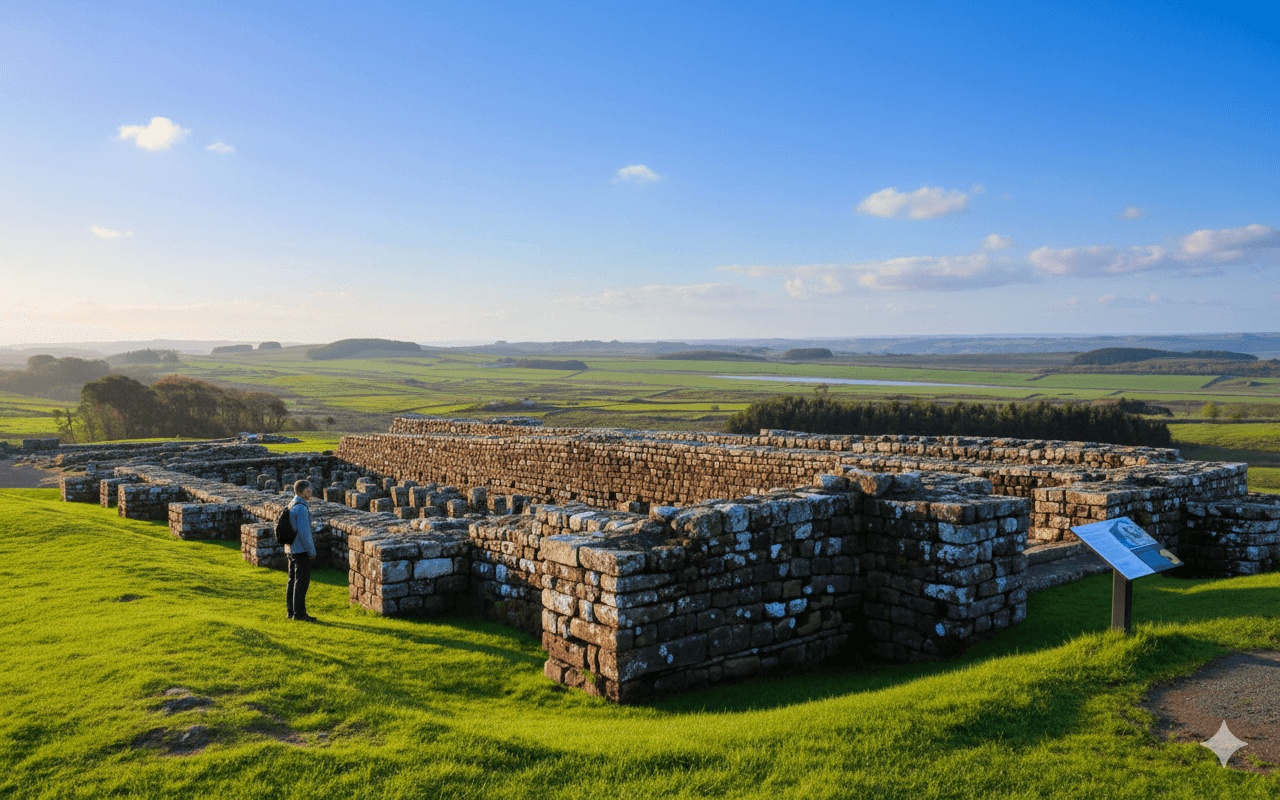
Housesteads (Vercovicium) remains the most complete Roman fort in Britain. Allow 1-2 hours to explore the barrack blocks, hospital, and famous latrines. The site sits directly on the trail.
Vindolanda, slightly off-route near Once Brewed, offers active archaeological excavations and an excellent museum displaying the famous writing tablets. Budget half a day if visiting.
Birdoswald (Banna) provides the best-preserved section of wall running into the fort itself, plus insightful exhibitions about frontier life.
Smaller Sites Worth Stopping For
Milecastles and turrets appear regularly, requiring only brief detours. Milecastle 39 (Castle Nick) and Milecastle 42 (Cawfields) offer particularly atmospheric settings with stunning views.
Frequently Asked Questions
How difficult is walking Hadrian’s Wall?
The Hadrian’s Wall Path is classified as moderate to challenging. The central section between Steel Rigg and Birdoswald includes steep climbs and rocky terrain requiring good fitness and sure-footedness. The eastern and western sections are gentler with easier gradients. Most people with reasonable fitness who train beforehand complete the trail successfully.
Do I need to book accommodation in advance?
Yes, definitely book accommodation ahead, especially between April and October. The most popular sections around Once Brewed, Steel Rigg, and Banks have limited options that fill quickly. Independent walkers should book 3-4 months ahead for summer walks; self-guided holiday companies handle all bookings for you.
Can I walk Hadrian’s Wall in either direction?
You can walk east-to-west or west-to-east, though most people choose east-to-west (Wallsend to Bowness-on-Solway). This direction keeps prevailing winds behind you, saves the best scenery for the middle days when you’re in your stride, and follows the historical flow of Roman supply lines from the Tyne.
What’s included in a self-guided walking holiday?
Self-guided walking holidays typically include pre-booked accommodation each night, daily baggage transfer between stops, detailed route notes and maps, and 24-hour emergency support. You walk independently at your own pace but without the hassle of booking logistics. Some packages include breakfast and packed lunches.
Is wild camping allowed along Hadrian’s Wall?
Wild camping is generally not permitted along the Hadrian’s Wall Path as it crosses private farmland and sensitive archaeological sites. The trail is well-served by accommodation every few miles, making wild camping unnecessary. Some designated campsites exist near Once Brewed and Banks for those preferring to camp.
How long does it take to walk the full Hadrian’s Wall Path?
Most walkers complete the 84-mile trail in 6-7 days, covering 11-15 miles daily. Fit, experienced walkers can manage it in 5 days, while a more leisurely 8-9 day itinerary allows extra time for exploring Roman forts and museums. Day walks of the highlights section are also popular for those with limited time.